Springtails in Collin County, TX | Identification and Control
Springtails are the tiny jumping bugs that turn up in tubs, sinks, windowsills and houseplant soil, often in large numbers. The University of California puts them at about 1/16 inch long and says they do not bite people or pets, spread disease or damage furnishings. They live in damp mulch and soil, and a steady crowd indoors almost always means moisture is collecting somewhere close by.
Tiny jumping bugs in the tub or on the windowsill? Our office sits where McKinney, Plano, Frisco and Allen meet, 5 to 10 minutes from most homes in those four cities. Call and we will find the moisture that keeps drawing them in.
Springtail
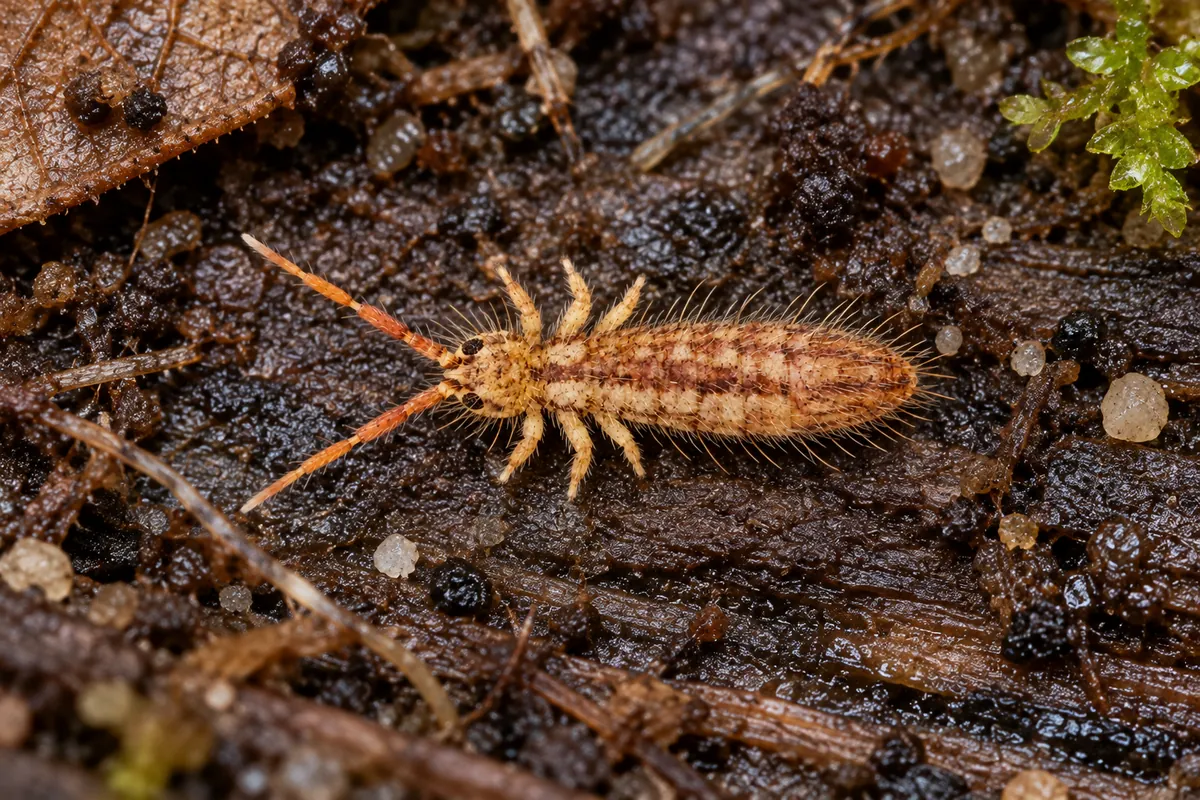
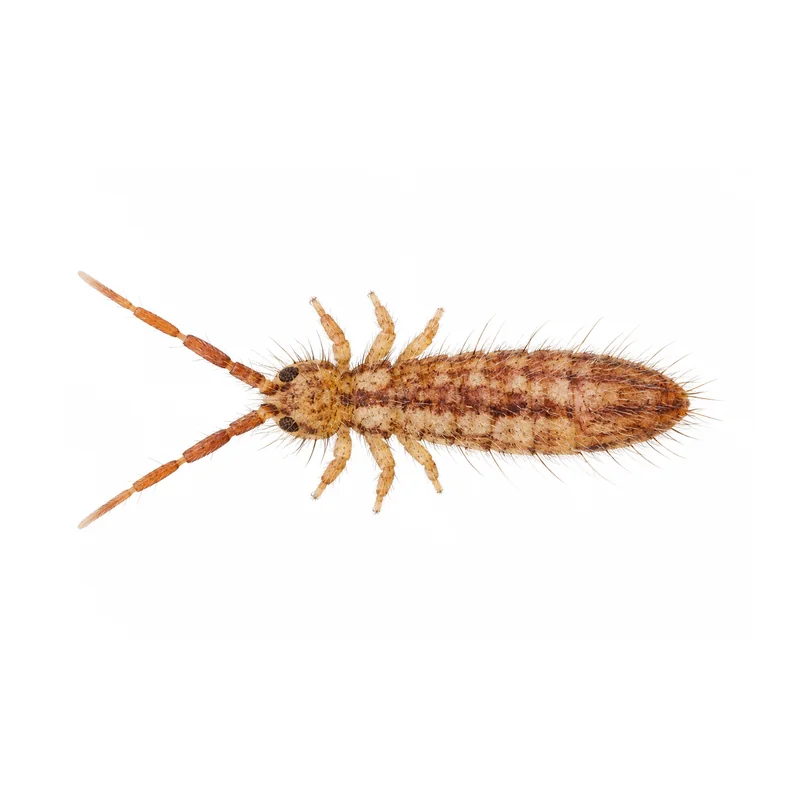
The springtail is a tiny, wingless soil animal that feeds on mold and rotting plant matter and hops away when touched. Clemson University’s Home and Garden Information Center counts around 700 species in North America.
Risk Assessment
Choose a row for the full detail- Color
- Whitish, gray, bluish or black, some patterned
- Diet
- Mold, mildew, fungi, algae and rotting plant matter
- Threat level
- Low, a nuisance only
- Defining behavior
- Jumps like a flea when touched, but never bites
- Habitat
- Damp mulch, leaf litter, lawns and houseplant soil
- Young to adult
- Hatch as tiny pale copies of the adult and molt to full size
- Size
- About 1/16 inch, most 1 to 2 mm long
What Does a Springtail Look Like?
A speck-sized, wingless bug that springs away when you reach for it
A springtail is so small that most people see a moving speck before they see a bug. Penn State Extension says the kinds that get into homes are 1 to 2 mm long, and Texas A&M’s Field Guide to Common Texas Insects describes them as usually white, though some are yellowish brown or gray. Most are slender, some are round, and all have six legs, a pair of antennae and no wings.
The giveaway is the jump. A forked spring called the furcula folds under the rear of the body and snaps down when the springtail is disturbed. Penn State Extension says it can launch a springtail up to 100 times its body length, so a bug on the sill seems to vanish the moment you touch it. In a tub or sink they get trapped and collect at the bottom like a sprinkle of pepper.
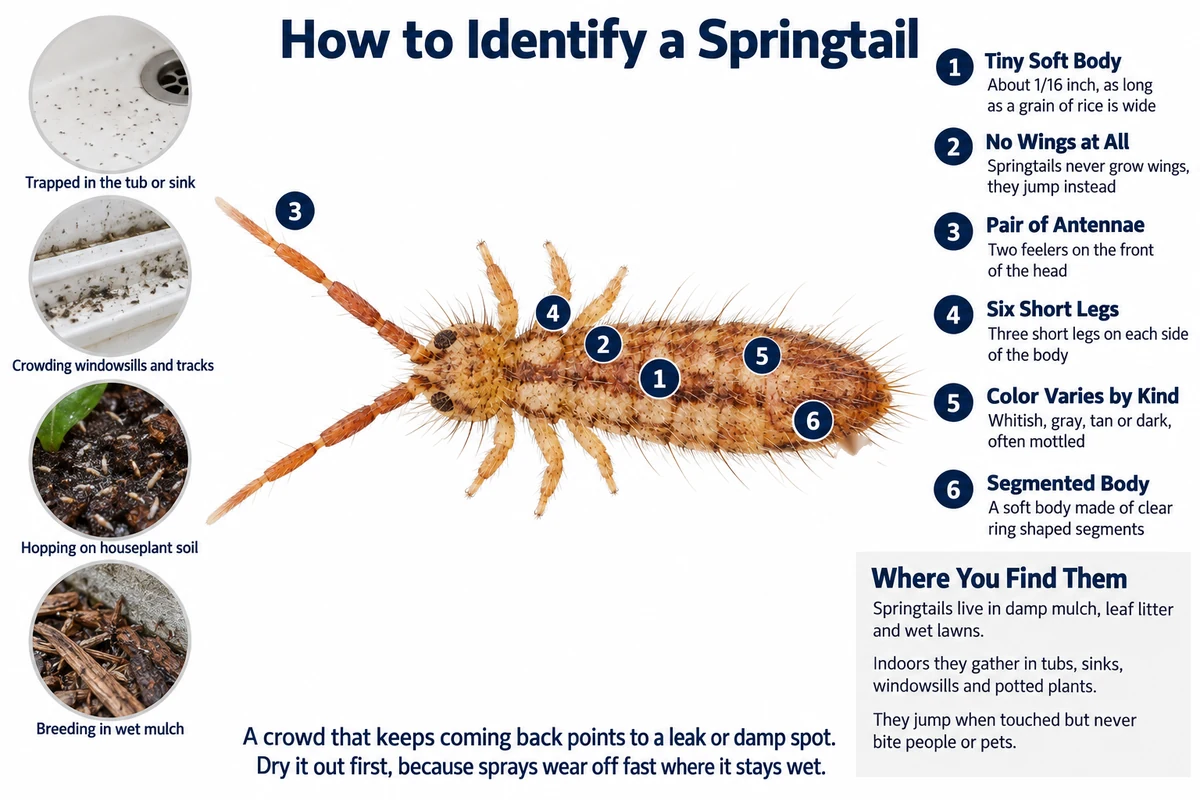
How to identify a springtail by its tiny wingless body, antennae and the spring under its rear, with the damp places it gathers
- Specks that jump when you touch them, but no one in the house is getting bitten
- A crowd of specks at the bottom of a tub, sink or shower
- Crowds on windowsills and in window tracks, often after rain or a hot, dry spell
- Tiny bugs on the soil of a houseplant right after watering
- Bugs gathered near a slow leak, a wet cabinet floor or a spot of mold
- No wings, and too small to make out legs without a closer look
Other Names for the Springtail
The springtail is named for the spring under its tail end. Scientists place all springtails in the group Collembola, and both Penn State Extension and Colorado State University Extension note they were once counted as insects but are now usually kept apart from them, partly because their mouthparts sit hidden inside the head.
The name that causes the most trouble is flea. Springtails jump like fleas, but they are not fleas, they do not bite and they do not live on pets. Snow flea is a name for springtails seen massed on thawing snow, which does not happen in Collin County homes.
| Name | What it means |
|---|---|
| Springtail | For the spring folded under its tail end. |
| Collembolan | From Collembola, the scientific group they belong to. |
| Snow flea | Springtails seen hopping on thawing snow up north. |
| Jumping dirt | What a crowd of them looks like, in Colorado State’s words. |
| Flea | A mistake. Fleas bite and live on pets, springtails do neither. |
How to Tell a Springtail from a Flea or Silverfish
All three turn up inside Collin County homes, and the fix is different for each. Fleas are a pet problem, silverfish are a dry storage problem, and springtails are a moisture problem. Size, the jump and whether anyone is being bitten tell them apart.
| Species | Size and Color | Key Feature | Where Found |
|---|---|---|---|
|
Springtail
AKA: Snow Flea, Jumping Dirt
Collembola
This species
|
About 1/16 inch. Whitish, bluish, or dark gray to black. | Soft and wingless, with a forked spring under the body. Jumps when touched but never bites people or pets. | Damp spots. Tubs, sinks, windowsills, houseplant soil, and wet mulch and lawns outside. |
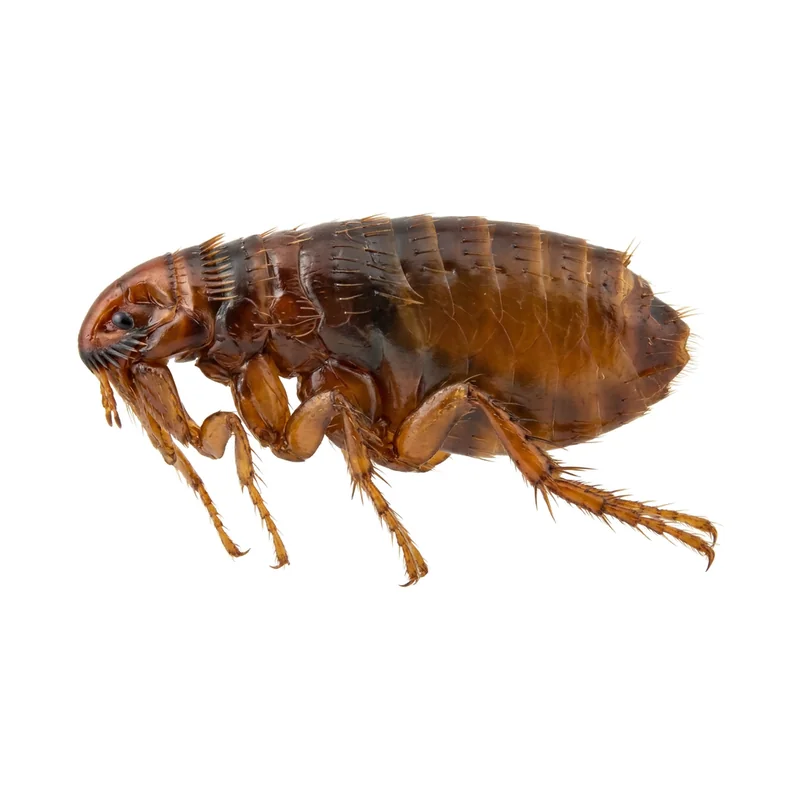
Cat Flea
AKA: Flea
Ctenocephalides felis
|
Up to 1/8 inch. Reddish brown. | Flattened side to side, so it looks like it walks on edge. Bites people, dogs and cats. | On pets and where they sleep, in bedding, carpet and furniture. |
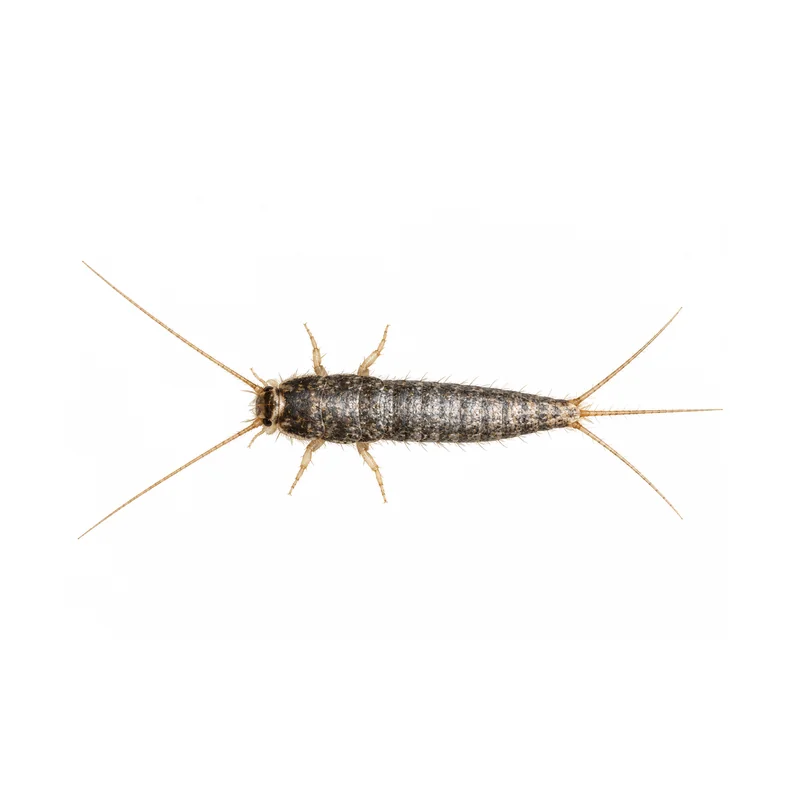
Silverfish
AKA: Common Silverfish
Lepisma saccharina
|
About 1/2 inch, up to 3/4 inch. Shiny silver or pearl gray. | Slender body tapering to 3 long tail threads, with 2 long antennae. Runs fast but does not jump. | Bathrooms, closets and bookshelves, near paper, glue, starch and dry food. |
Springtail vs Flea
The Springtail in Three Numbers
100,000
Penn State Extension estimates that springtails can number as many as 100,000 in a cubic meter of soil, about 35 cubic feet, under mulch, leaf litter and damp lawns.
Penn State Extension
100 times
Penn State Extension says the forked spring under a springtail can launch it up to 100 times its own body length, which is why it seems to vanish when touched.
Penn State Extension
1/16 inch
The University of California gives the springtail’s length as about 1/16 inch, small enough to pass for a speck of pepper until it jumps.
University of California, springtail guide
Do Springtails Bite?
No. The University of California’s guide to springtails says they do not bite humans or pets, do not spread disease and do not damage household furnishings, and Colorado State says plainly that they cannot bite and are harmless to people. If you are waking up with itchy bites while tiny jumping bugs are about, look for fleas instead, because springtails are not the cause.
Are Springtails Harmful to Pets?
No. Springtails do not live on dogs or cats, do not feed on them and do not bite them. A pet that sniffs or licks a few has met a harmless soil bug. What matters for a pet is the mix-up. A dog or cat that scratches all day has fleas or another problem, and springtail sightings in the house should not be mistaken for the answer.
When Springtail Activity Needs Fast Action
Bites Along With the Jumping Bugs
Springtails do not bite. Itchy bites on ankles, or a pet that keeps scratching, point to fleas, which need a different plan.
A Crowd Under One Sink Every Day
Springtails that keep coming back to one cabinet, tub or closet usually mean water is collecting there. Check for a slow drip or a wet floor.
Mold or Water Stains Nearby
Springtails feed on mold and mildew. Where they gather beside stains, soft trim or a musty smell, the moisture is the real problem to fix.
A Few After a Storm or a Dry Spell
A handful on the sill after heavy rain or a hot, dry week is common. Most die off indoors once they dry out.
Why You Have Springtails in Your House
Springtails come in when the weather pushes them out of the yard. Penn State Extension says homeowners usually notice them during long droughts or long, soaking rains, because dry mulch sends them looking for moisture and waterlogged soil drives them out. They slip in under doors, around windows and siding and through screens, and the University of California’s guide notes they are drawn to light and can gather on the side of a house in great numbers after a hot day.
Once inside they head for water, so they end up in tubs, sinks, shower floors and the soil of potted plants, and in a wet kitchen or bathroom cabinet. Most die soon after they come in unless they find steady moisture. A crowd that keeps showing up in the same spot is the useful clue, because it means that spot is staying damp, whether from a slow leak, a sweating window, an overwatered plant or poor airflow in a bathroom. It is not a sign of a dirty home. We find them in very clean homes, usually ones with wet mulch beds against the foundation.
Where Springtails Live Around Collin County Homes
Springtails live in the damp layer at the top of the ground, under mulch, leaf litter and the thatch of a wet lawn, in compost and in houseplant soil. Penn State Extension estimates their numbers as high as 100,000 in a cubic meter of soil, about 35 cubic feet. They feed on mold, mildew, fungi and rotting plant matter, so a thick, wet mulch bed against the foundation is close to ideal for them. California’s guide also lists swimming pools, sidewalks beside flower beds and the surface of puddles.
Springtail Pressure Across Collin County
Springtail calls come to us most from McKinney and Frisco, usually from homes with mulch beds right against the foundation, regular sprinkler runs and windows that collect condensation. Penn State Extension notes that new homes can hold them too, when rain soaked the framing before the walls were closed and mold grew inside.
We also find them in Prosper, Princeton, Melissa and Plano, in kitchens, back bedrooms and patios, most often in the summer months.
Springtails start showing up indoors in spring and peak in the heat of July and August, when dry mulch and lawns send them looking for moisture. They can turn up in any month where a spot stays wet.
Pattern from Pest Me Off springtail calls from 2024 to 2026, which run from spring into fall and are busiest in July and August, and from Colorado State’s note that summer heat and drying drive springtails toward houses.
Why Springtails Keep Coming Back
How Pest Me Off Gets Rid of Springtails
Springtail control is four steps, every job. Killing the springtails you can see is only part of the fix, because the damp spot that drew them keeps drawing more.
Inspect and Identify
We confirm they are springtails and not fleas, then find where they gather and why, from window tracks and bathroom plumbing to mulch beds and sprinkler runs.
Treat Inside Where They Gather
A targeted treatment of the cracks and gaps around windows, baseboards and plumbing in the rooms where they show up, most often bathrooms, kitchens and bedrooms.
Treat Outside Where They Breed
The foundation, the mulch beds and the damp parts of the lawn are treated, focusing on the wet areas they are moving in from.
Dry Out the Source
We show you the moisture we found, such as overwatering, a leaking sprinkler, standing water or mulch piled against the house, and what to change, like a band of stone in place of mulch.
& Other Companies
How to Get Rid of Springtails Yourself
Most DIY springtail work is drying things out. California’s guide and Clemson both put fixing leaks, cutting back water and thinning mulch ahead of any spray.
Why Some DIY Responses Fail for Springtails
Most DIY springtail trouble comes from treating them as fleas, spraying without drying anything out, or pouring chemicals down the drain where they gather.
Spraying Without Fixing the Water
Indoor sprays are often no better than a vacuum, says California’s guide, and Clemson notes they break down fast in wet places. While the spot stays damp, more keep coming.
Chemicals Down the Drain
Springtails in a tub or sink can simply be rinsed away. The same guide warns never to pour or spray insecticide down a drain.
Flea Bombs and Pet Treatments
Springtails do not live on pets or in pet bedding, so flea collars, pet shampoos and flea bombs miss them entirely and leave the damp spot untouched.
Common Springtail Questions
What are springtails, and what do they look like?
Do springtails bite people or pets?
Are springtails fleas?
Why do I have springtails in my bathroom, tub or sink?
Why are there springtails on my windowsills?
Do springtails mean I have mold or a leak?
Do springtails damage the house or furniture?
Are springtails in my houseplants harmful?
Will springtails go away on their own?
How do I get rid of springtails?
Springtails in the Tub or on the Sill? We Find the Water They Follow.
We confirm they are springtails, treat where they gather and where they breed, and show you the moisture that keeps drawing them in. Pest control across McKinney, Allen, Frisco, Plano, and all of Collin County.