
Asian Tiger Mosquitoes in Collin County, TX | Identification and Control
The Asian tiger mosquito (Aedes albopictus) is the small black mosquito with bright white stripes that bites in broad daylight, most of all in the shade. It lays its eggs in any container holding a little water, from a flowerpot saucer to a clogged gutter. Texas A&M Mosquito Safari says it usually flies less than 1 or 2 blocks from where it hatched, so the mosquitoes biting you are almost always breeding close by.
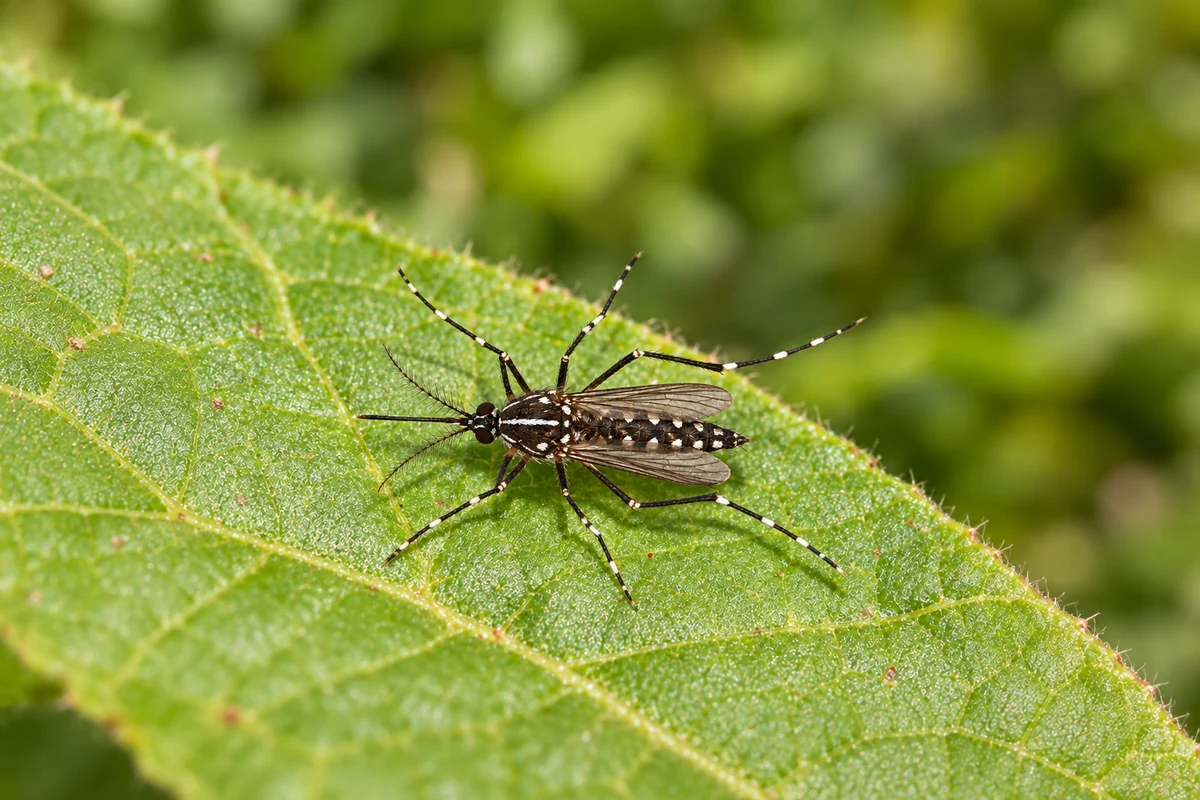
Getting bitten in the backyard in the middle of the day? Our office sits where McKinney, Plano, Frisco and Allen meet, 5 to 10 minutes from most homes in those four cities. Call and we will find the water they are breeding in and the shade they are resting in.
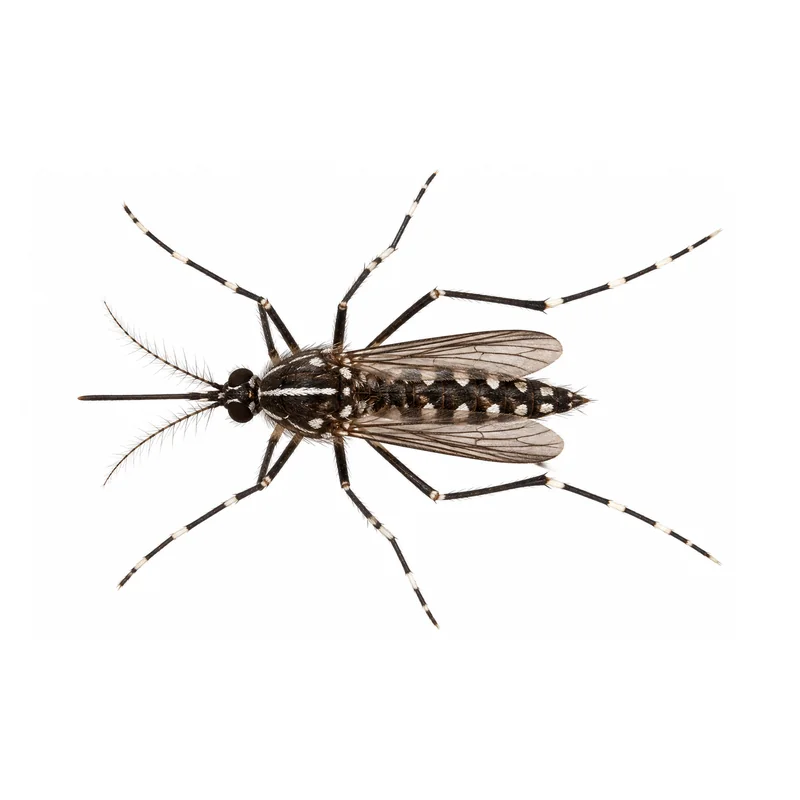
Asian Tiger Mosquito
The Asian tiger mosquito is a container-breeding mosquito that lives right alongside people and bites by day. The University of Florida Featured Creatures account says it was first found in the United States in Texas, in 1985.
Risk Assessment
Choose a row for the full detail- Color
- Shiny black, one white stripe down the back, white bands on the legs
- Diet
- Females take blood from people, pets and wild animals, males drink nectar
- Threat level
- Moderate
- Defining behavior
- Bites by day, most in early morning and late afternoon
- Travel range
- Usually less than a block or two from where it hatched
- Egg to adult
- 7 to 10 days in warm weather
- Size
- Small, up to about 0.4 inch, males about 20 percent smaller
What Does an Asian Tiger Mosquito Look Like?
A small, shiny black mosquito with one white stripe down its back and white bands on its legs
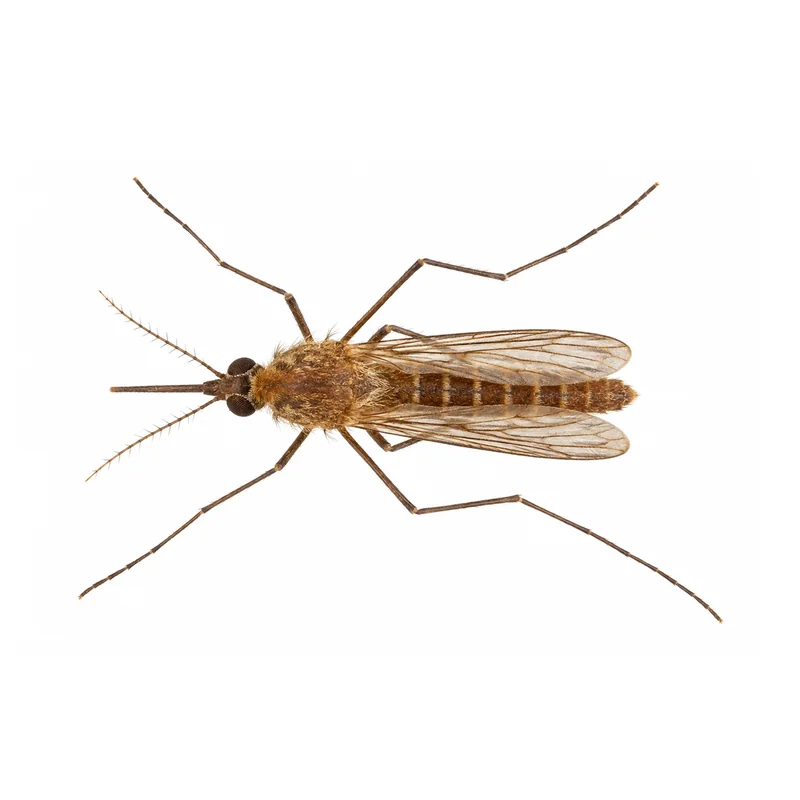
The Asian tiger mosquito is easy to name once it lands on you. The University of Florida’s species account describes bold, shiny black scales, a single white stripe running from the head down the middle of the back, and black legs with a band of white at the base of each segment. It is a small mosquito, up to about 0.4 inch long, and the males are about 20 percent smaller than the females. The tip of the body narrows to a point.
What gives it away just as much is when and where it bites. It is a daytime feeder that rests in shrubs near the ground in shady spots, and its feeding peaks in the early morning and late afternoon. The Texas A&M Mosquito Safari page on the tiger mosquito calls it the most widespread nuisance mosquito in towns across the southern two thirds of the eastern United States.
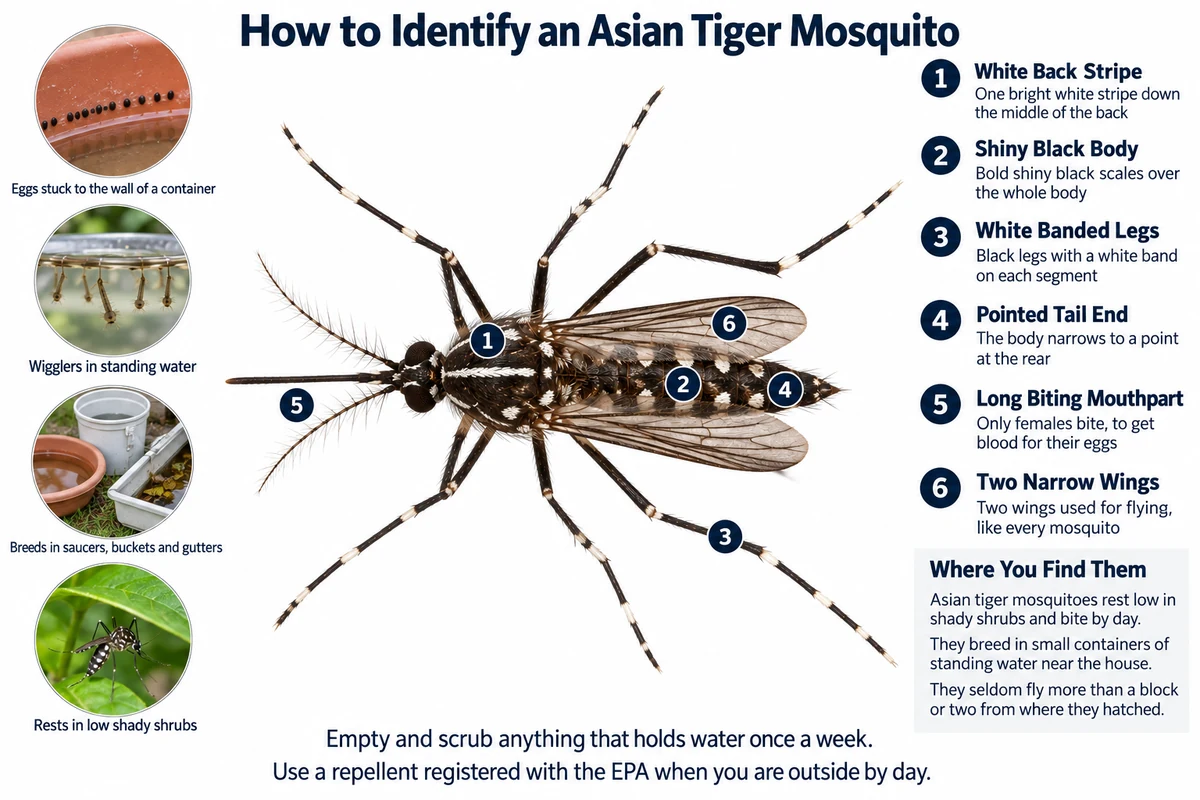
How to identify an Asian tiger mosquito by its single white back stripe and banded legs, with the small water-holding containers it breeds in
- Bites in broad daylight, even in full shade
- A black body with one bright white stripe down the middle of its back
- Black legs ringed with white bands
- Mosquitoes rising from low shrubs, ground cover and shady fence lines when you walk past
- Wigglers in a birdbath, plant saucer, bucket or clogged gutter nearby
- Bites come in the yard and on the patio far more than inside the house
Other Names for the Asian Tiger Mosquito
The Asian tiger mosquito is named for two things, where it came from and how it looks. The University of Florida account says it is native to Asia and the Pacific islands and has spread to the Americas, Africa and Europe, and its black and white stripes earned it the tiger name. Most people just call it the tiger mosquito. In Spanish it is the mosquito tigre.
The name that causes confusion is the yellow fever mosquito. That is a close relative, also black and white and also a daytime biter, but a different species with different markings on its back. The look-alike table below shows how to tell them apart.
| Name | What it means |
|---|---|
| Tiger mosquito | The short name, after its black and white stripes. |
| Asian tiger mosquito | For its home range in Asia and the Pacific islands. |
| Mosquito tigre | The Spanish name, meaning the tiger mosquito. |
| Aedes albopictus | The scientific name health departments use. |
| Yellow fever mosquito | A different species, not the tiger mosquito. |
How to Tell an Asian Tiger Mosquito from Other Collin County Mosquitoes
Three mosquitoes do most of the biting around Collin County homes, and the clock and the markings tell them apart. The two striped ones bite by day and breed in containers, while the plain brown one bites at night.
| Species | Size and Color | Key Feature | Where Found |
|---|---|---|---|
|
Asian Tiger Mosquito
AKA: Tiger Mosquito
Aedes albopictus
This species
|
Small. Shiny black with silver white bands on the legs. | One single white stripe straight down the middle of the back. Bites by day, especially in shade. | Outdoors, resting in low shrubs and shade, breeding in containers of standing water. |
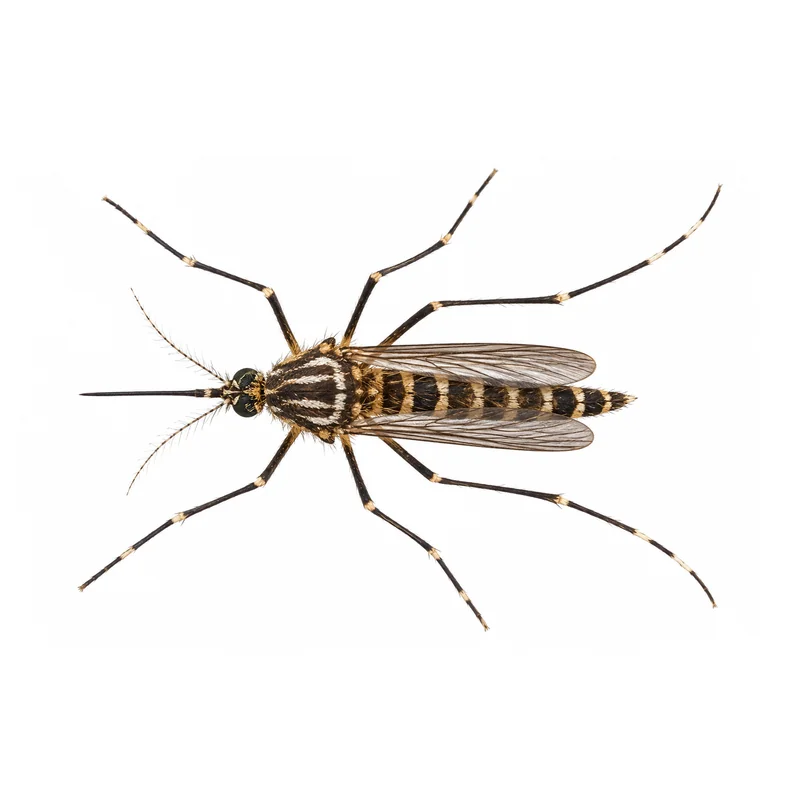
Yellow Fever Mosquito
AKA: Daytime Biter
Aedes aegypti
|
Small. Brown or black with white bands on the legs. | Two thin white lines down the center of the back with Y-shaped white markings beside them. Feeds mostly on people. | Indoors and outdoors, breeding in containers, most common in the southernmost United States. |
Southern House Mosquito
AKA: House Mosquito
Culex quinquefasciatus
|
Delicate and dull brown, with no bands on the legs. | Plain with no stripes. Bites in the evening, at night and in the early morning. | Breeds in dirty standing water and containers, and comes through open doors and unscreened windows. |
Asian Tiger Mosquito vs Yellow Fever Mosquito
The Asian Tiger Mosquito in Three Numbers
1 or 2 blocks
Texas A&M Mosquito Safari says the Asian tiger mosquito usually flies less than 1 or 2 blocks from the water where it hatched, so the source of the bites is close to home.
Texas A&M Mosquito Safari
8 months
The CDC says Asian tiger mosquito eggs stick to the inside walls of containers and can survive drying out for up to 8 months, then hatch when rain or a sprinkler covers them.
CDC, Life Cycle of Aedes Mosquitoes
1985
The University of Florida Featured Creatures account says the Asian tiger mosquito was first found in the United States in Texas in 1985, and it has spread through the eastern states since.
University of Florida Featured Creatures
Do Asian Tiger Mosquitoes Bite During the Day?
Yes. The Asian tiger mosquito is a daytime biter, and the University of Florida account describes it as an opportunistic and aggressive biter whose feeding peaks in the early morning and late afternoon. Only the females bite, because they need blood to make eggs. The CDC’s page about mosquitoes says the usual reaction to a bite is itching and swelling.
Are Asian Tiger Mosquitoes Dangerous?
They can carry disease, but they are not the main danger among mosquitoes here. The CDC’s page on the range of Aedes mosquitoes says the Asian tiger mosquito can spread dengue, chikungunya and Zika, but is less likely to than the yellow fever mosquito, because it feeds on animals as well as people. The same page notes small local outbreaks of these viruses have been reported in parts of Texas. Texas A&M Mosquito Safari adds that the tiger mosquito is not thought to carry West Nile virus, and names the night-biting southern house mosquito as the most important carrier of that virus.
Are Asian Tiger Mosquitoes Dangerous to Dogs and Cats?
They can be, through heartworm. The Food and Drug Administration’s page on heartworm disease says heartworm spreads only through the bite of an infected mosquito and can cause severe lung disease, heart failure and death in dogs, cats and ferrets. A University of Florida laboratory study, Nayar and Knight, 1999, found the Asian tiger mosquito can carry heartworm, though only a small part of the wild population picked up the infection. Keep dogs on the heartworm prevention your vet prescribes.
When Asian Tiger Mosquito Activity Needs Fast Action
A Fever After Mosquito Bites
Fever, aches or a rash after heavy biting, above all after travel, needs a doctor. Mention the bites and where you have been.
A Dog With No Heartworm Prevention
A dog outside in a yard full of mosquitoes with no prevention is at risk. Heartworm prevention needs a prescription, so call your vet.
Bitten Every Time You Step Out
Being bitten within minutes in the shade at midday means they are breeding in or right next to your yard.
Wigglers in Standing Water
Tiny wriggling specks in a birdbath, saucer or bucket are young mosquitoes. Dump and scrub it today, before they fly.
Why You Have Asian Tiger Mosquitoes Around Your House
Because they are breeding nearby, almost always within sight of where they bite. The CDC’s page on the life cycle of Aedes mosquitoes says they need only a small amount of water to lay eggs, and that bowls, cups, fountains, tires, barrels and vases all make a nursery. The University of Florida account adds pet water dishes, birdbaths, flowerpots and holes in trees. A saucer under a potted plant, a toy holding rainwater or a gutter that never drains is enough.
The same CDC page says these mosquitoes fly only a few blocks in their lifetime and that the Asian tiger mosquito lives outdoors, in or near homes or in the neighboring woods. So a yard can be clean and still get them from the yard next door, a greenbelt or a drainage area down the street. It is not a sign of a dirty home. It is a sign of water sitting somewhere close.
Where Asian Tiger Mosquitoes Live Around Collin County Homes
Adults rest in shade close to the ground, in shrubs, ground cover, along fence lines and under decks, and come out to bite when someone walks by. The CDC’s page on mosquito control at home adds dark, humid spots such as under patio furniture, the carport or the garage. Their eggs sit on the inside walls of anything that holds water.
Asian Tiger Mosquito Pressure Across Collin County
Our mosquito service notes come most often from McKinney, Frisco and Prosper, and the heaviest pressure we see is on lots that back onto a greenbelt, a pond or wooded land. Drainage areas, French drains and irrigated beds that stay damp are where we find breeding water most.
In Plano and Allen the pattern is the same on a smaller scale, with pool areas, planters and birdbaths the usual sources, often fed by sprinklers that keep refilling them between rains.
Asian tiger mosquitoes spend winter as eggs. Biting starts with the warm spring rains, builds through early summer, peaks from July into September and fades as October cools.
Pattern from Pest Me Off mosquito service records, which climb from March and are busiest July through September, and the University of Florida account of the species spending winter as eggs.
Why Asian Tiger Mosquitoes Keep Coming Back
How Pest Me Off Gets Rid of Asian Tiger Mosquitoes
Asian tiger mosquito control is four steps. Spraying the air alone kills only the mosquitoes flying at that moment, so the work goes after the resting shade and the breeding water as well.
Inspect and Identify
A free inspection of the yard. We confirm the species first, since daytime bites point to the Asian tiger mosquito and after-dark bites to the southern house mosquito, and walk the property for every container and drain holding water.
Remove Them at the Source
A treatment across the shaded resting spots, shrubs, fence lines, under decks and around tree bases, and the breeding sites drained or flagged, from the clogged gutter to the forgotten dog bowl.
Install the Barrier
On the same first visit, the Scorched Earth Barrier goes on the perimeter plants, fence lines and eaves. For yards near ponds, creeks and greenbelts, In2Care stations can be added for the water we cannot reach.
Defend All Season
The Skeeter Beater seasonal program returns every 3 weeks, April through October, to renew the barrier and walk the property again for new standing water.
& Other Companies
How to Get Rid of Asian Tiger Mosquitoes Yourself
Most of the work is taking away the water they breed in. The CDC’s page on preventing mosquito bites puts that alongside protecting yourself when you are outside.
Why Some DIY Responses Fail for Asian Tiger Mosquitoes
Most DIY mosquito trouble comes from treating the air at the wrong time, leaving the eggs behind, or trusting a product nobody has tested.
Spraying or Misting Only at Dusk
Texas A&M Mosquito Safari notes most mosquitoes are busiest at dawn, dusk and night, which is when misting timers run. The tiger mosquito bites by day, so a dusk-only spray misses it.
Dumping Water Without Scrubbing
Pouring out a birdbath leaves the eggs glued to its sides, dry and waiting. The next rain or sprinkler hatches them. Scrub the container, then refill it.
Repellents With No EPA Number
The CDC says it does not know how well repellents work that are not registered with the EPA, including some natural ones. Look for the EPA registration number on the label.
Common Asian Tiger Mosquito Questions
What is an Asian tiger mosquito, and what does it look like?
Why do Asian tiger mosquitoes bite during the day?
Do Asian tiger mosquitoes carry West Nile virus?
Are Asian tiger mosquitoes dangerous?
Are Asian tiger mosquitoes dangerous to dogs?
Where do Asian tiger mosquitoes breed?
How far do Asian tiger mosquitoes fly?
Do Asian tiger mosquitoes come inside the house?
Where do Asian tiger mosquitoes go in winter?
How do I get rid of Asian tiger mosquitoes?
Bitten in Your Own Backyard by Day? We Find Where They Breed.
We find the water they hatch in and the shade they rest in, treat both, and come back through the season before the next wave hatches. Mosquito control across McKinney, Allen, Frisco, Plano, and all of Collin County.