
Dog Fleas in Collin County, TX | Identification and Control
The dog flea (Ctenocephalides canis) looks almost exactly like the cat flea, but in the United States it is by far the rarer of the two. A 1987 study in Veterinary Parasitology found not one dog flea among 1,887 fleas taken from dogs and cats in Gainesville, Florida. So the flea on a Collin County dog is almost always a cat flea, and both are treated the same way.
Fleas on your dog and now on your ankles? Our office sits where McKinney, Plano, Frisco and Allen meet, 5 to 10 minutes from most homes in those four cities. Call and we will treat the home and the yard together, whichever flea it turns out to be.
Dog Flea
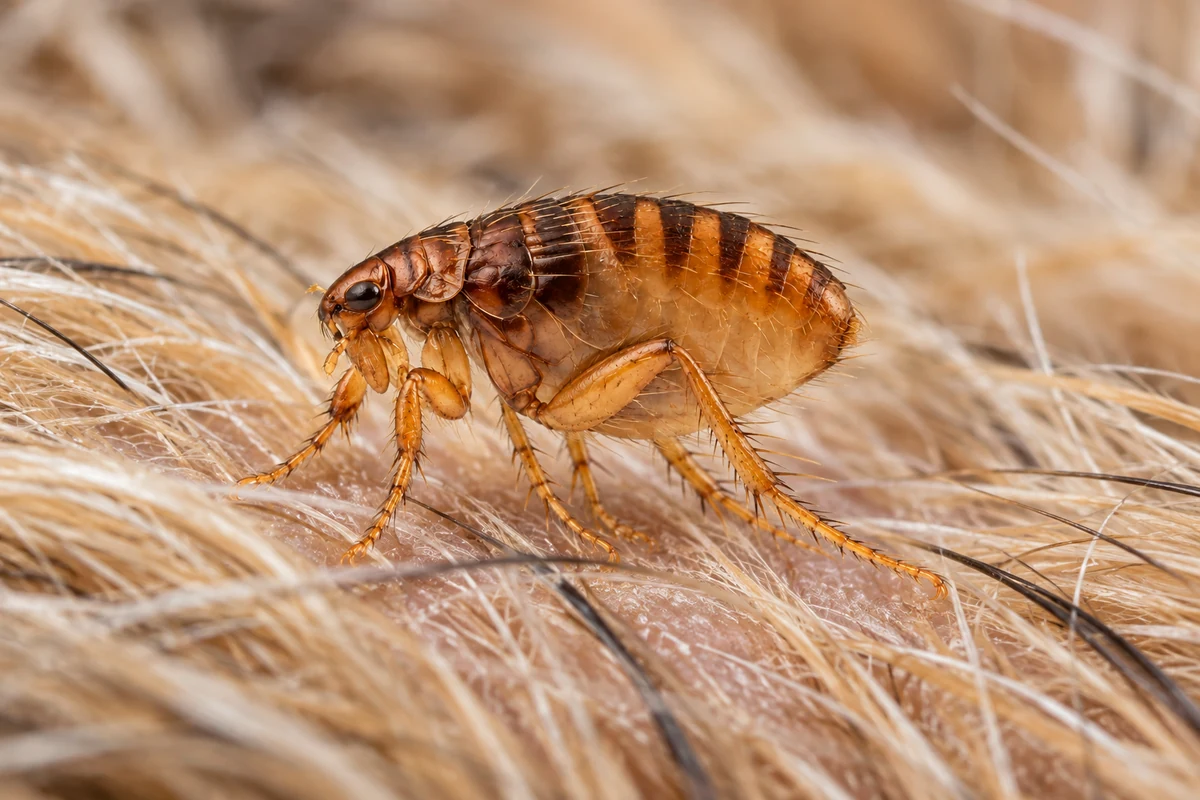
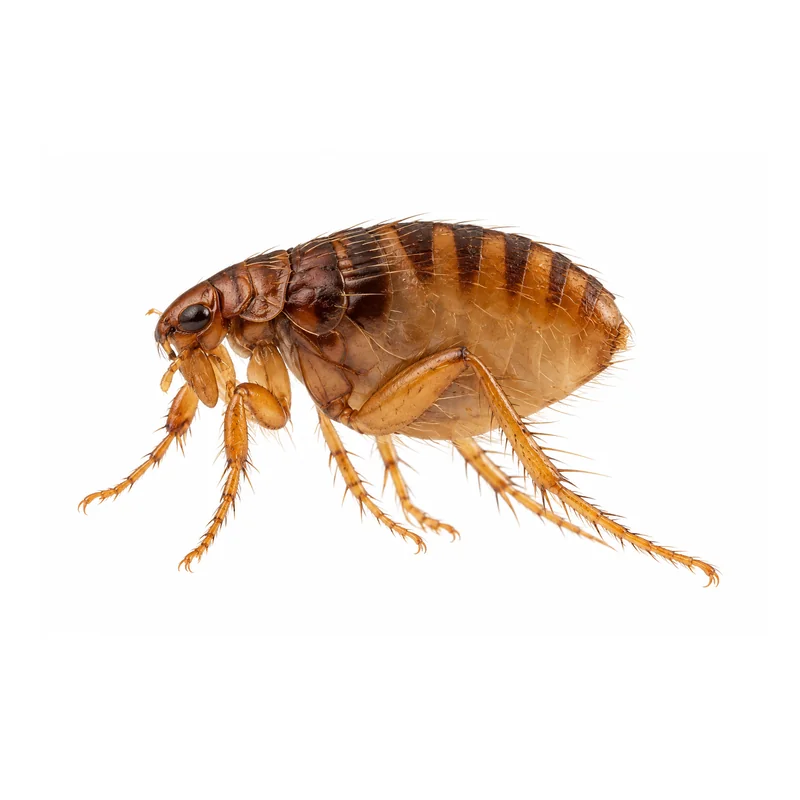
The dog flea is a tiny, wingless insect that drinks blood, mostly from dogs. It looks like the cat flea, but the University of Florida says it is rarely found in the United States, and Texas A&M says the cat flea causes most flea problems in Texas.
Risk Assessment
Choose a row for the full detail- Color
- Reddish brown to black
- Diet
- Blood, mostly from dogs
- Threat level
- Moderate
- Where it hides
- On the dog, with eggs and young in its bedding and the carpet
- Collin County status
- Rare, most fleas on dogs here are cat fleas
- Egg to adult
- About 21 days in one study
- Size
- About 1/8 inch, the same as a cat flea
What Does a Dog Flea Look Like?
To the eye, exactly like a cat flea, a tiny, flat, reddish brown insect that jumps
A dog flea is about 1/8 inch long, reddish brown to black and has no wings. Its body is flattened from side to side so it slips through fur, it has a comb of stiff spines on its head and long back legs for jumping. The University of Florida’s Featured Creatures profile of the cat flea says the dog flea appears similar to the cat flea and that the two are told apart by a slight difference that shows only under high magnification. The University of California’s flea guide says the same, that dog fleas look like cat fleas.
So you cannot tell which flea your dog has by looking at it, and you do not need to. What you can see are the signs any flea leaves: black specks of flea dirt in the fur and bedding, small itchy bumps on your ankles, and a dog that scratches and chews. Those signs, and the flea most Collin County dogs actually carry, are covered in full on our Cat Flea page.
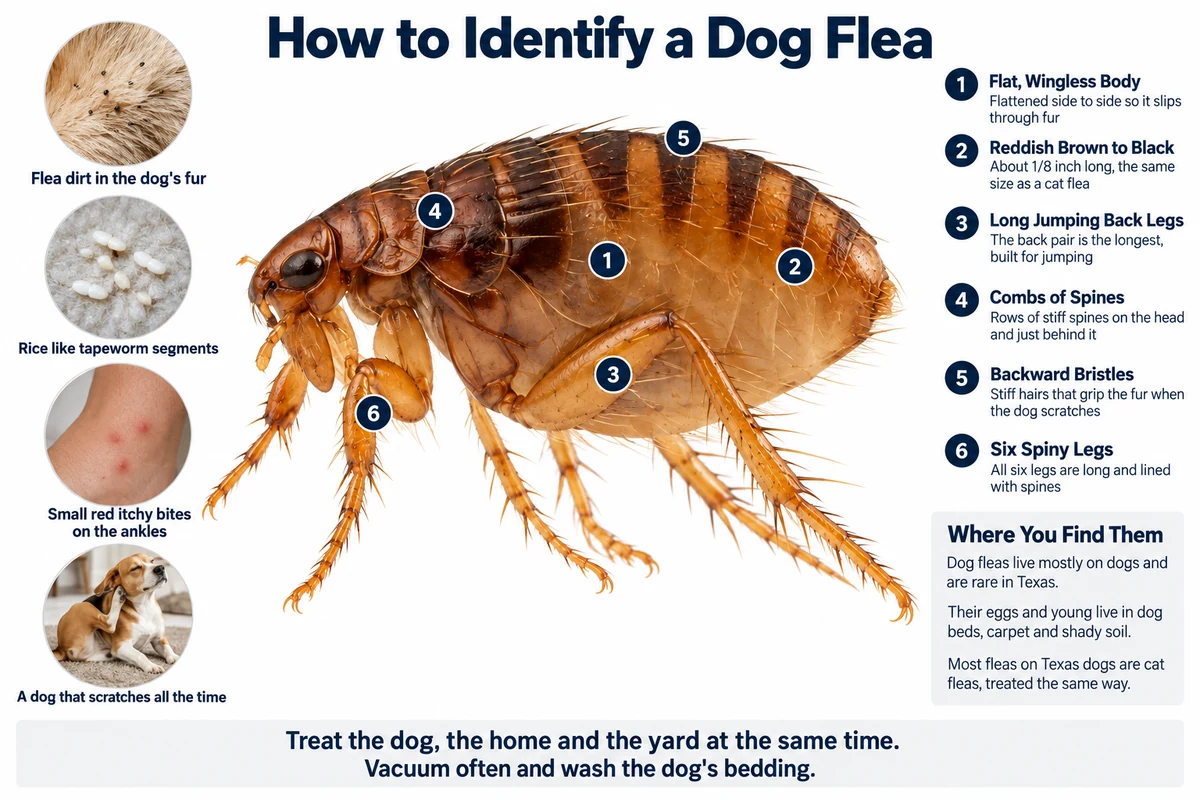
How to identify a dog flea by its flat, reddish brown body and long back legs, with the flea dirt, bites and tapeworm segments it leaves behind
- Tiny dark insects that dart through the fur and jump off the dog or the carpet
- Black specks like ground pepper in the dog’s fur, thickest near the tail
- Small, red, itchy bumps on your ankles and lower legs
- A dog that scratches and chews, with a rough, dirty-looking coat
- Small white segments like grains of rice near the dog’s tail, a sign of tapeworm
- Biters that move and jump rather than hold on and swell the way a tick does
Other Names for the Dog Flea
Most people call any flea on a dog a dog flea, and that is where the confusion starts. The true dog flea is one species, Ctenocephalides canis, the comb-headed flea of the dog, and in Spanish it is the pulga del perro. The flea people usually mean is the cat flea, which Texas A&M AgriLife Extension says feeds on cats, dogs and wildlife and causes most flea problems in Texas.
The same Texas A&M guide lists the dog flea among the fleas that are less common on pets and in homes, and the Texas A&M insect identification site names it among the other flea species that occur in Texas. It is here, just seldom.
| Name | What it means |
|---|---|
| Flea | What nearly everyone calls any flea on a pet. |
| Pulga del perro | The Spanish name, meaning the dog flea. |
| Ctenocephalides canis | The scientific name, the comb-headed flea of the dog. |
| Cat flea | A different species, and the flea usually on a Texas dog. |
How to Tell a Dog Flea from a Cat Flea or Brown Dog Tick
A dog owner who finds small dark biters on the dog is choosing between fleas and ticks, and then between the two fleas. The two fleas are near twins that need a microscope to separate, while a tick is a different animal that crawls, holds on and swells as it feeds.
| Species | Size and Color | Key Feature | Where Found |
|---|---|---|---|
|
Dog Flea
AKA: Flea, Pulga del Perro
Ctenocephalides canis
This species
|
About 1/8 inch. Reddish brown to black. | Flat from side to side, no wings, long back legs, and it jumps. Only high magnification separates it from a cat flea. | Mostly on dogs. Rarely found in the United States. |
Cat Flea
AKA: Flea, Pulga del Gato
Ctenocephalides felis
|
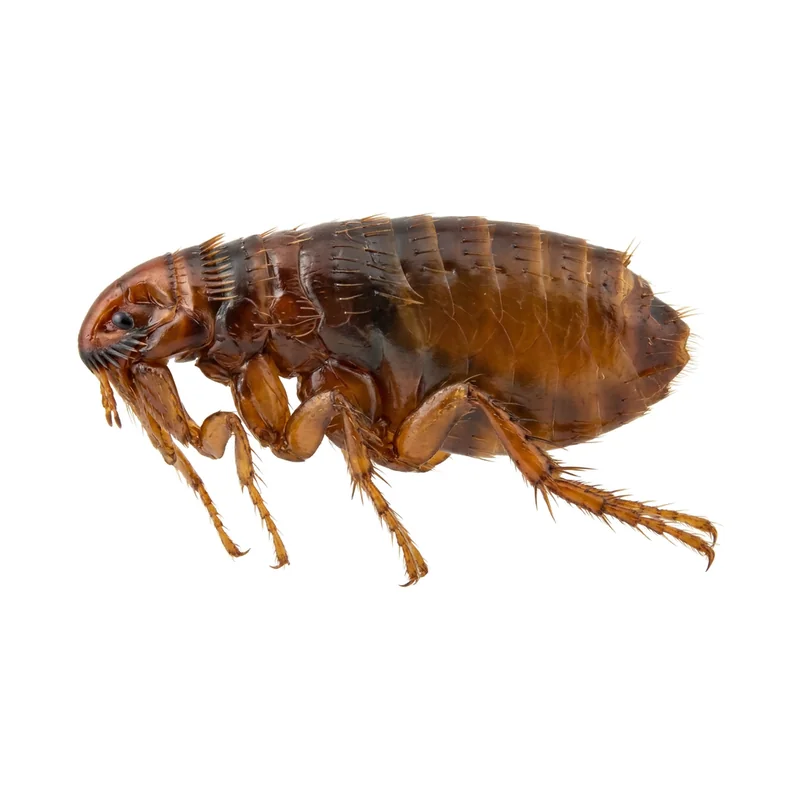
The same size and color as the dog flea. | Looks the same to the eye. Feeds on cats, dogs and wildlife alike. | On nearly every dog and cat with fleas in Texas, and in the carpet, bedding and shady yard around them. |
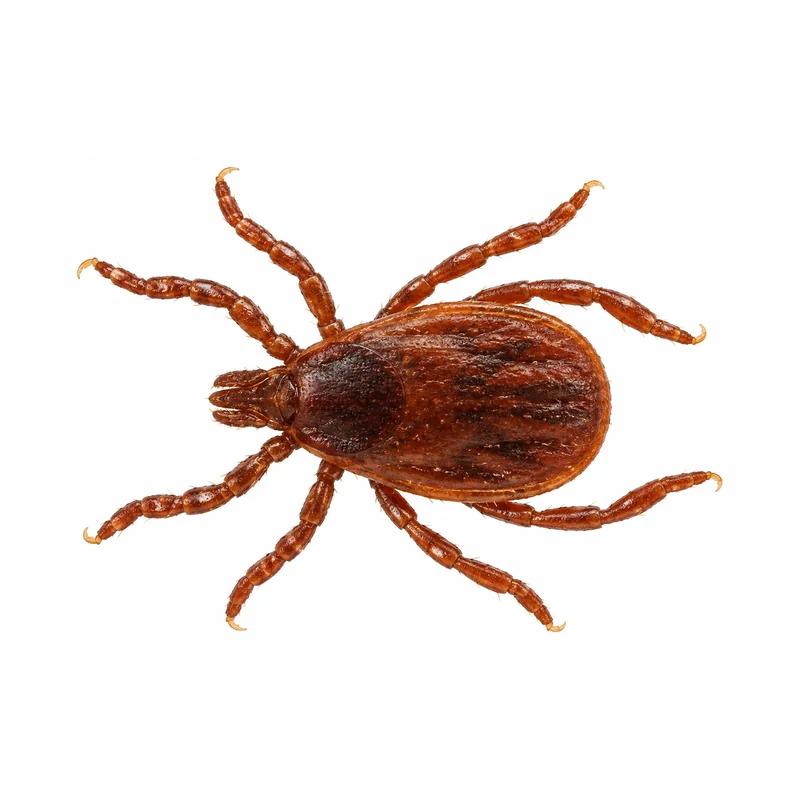
Brown Dog Tick
AKA: Kennel Tick
Rhipicephalus sanguineus
|
Bigger than a flea, flat and oval, and it swells as it feeds. Reddish brown. | Eight legs. It crawls and holds on, and the CDC says ticks cannot fly or jump. | On dogs, which the CDC says are its main host at every stage of its life. |
Dog Flea vs Cat Flea
The Dog Flea in Three Numbers
None of 1,887 fleas
A 1987 study in Veterinary Parasitology found not one dog flea among 1,887 fleas taken from 100 dogs and 60 cats at a veterinary hospital in Gainesville, Florida.
Veterinary Parasitology, 1987
535 of 2,518 fleas
Georgia Southern University researchers found 535 dog fleas among 2,518 fleas collected from dogs in Bulloch County, Georgia, from 1996 to 2004, about 1 in 5.
Georgia Southern University, 2005
21 days
University College Dublin researchers raising dog fleas on dogs in 1992 found the dog flea took 21 days to grow from egg to adult.
University College Dublin, 1992
Do Dog Fleas Bite People?
Yes. A flea on a pet will bite the people around it, even though it would rather feed on the animal. Texas A&M AgriLife Extension describes flea bites as small, red, itchy bumps, usually on the ankles and lower legs, and says people allergic to flea bites can get hives, rashes or itching all over, usually 12 to 24 hours after a bite. Bites day after day mean fleas are living on the dog or in the carpet nearby.
Are Dog Fleas Dangerous?
Less than their name suggests. The CDC’s page on flea-borne typhus names the Oriental rat flea and the cat flea, not the dog flea, as the fleas that most often spread that disease. The dog flea’s real health risk is tapeworm, and for an allergic dog, the itching. Since the flea on your dog is most likely a cat flea anyway, see a doctor about any fever that follows flea bites and mention the fleas.
Can You Get Tapeworms From Dog Fleas?
You can, by swallowing an infected flea. The CDC’s parasite identification page on the dog tapeworm says the young of the dog flea or the cat flea are its usual carriers, picking up tapeworm eggs in the pet’s bedding. The CDC’s page on the dog and cat tapeworm says dogs catch it by swallowing a flea while grooming, that people catch it the same way, that most reported human cases are in children, and that it is easily treatable in dogs, cats and people.
Are Dog Fleas Dangerous to Dogs?
They are hardest on dogs that are allergic to flea bites. Texas A&M AgriLife Extension says as few as 1 or 2 bites can cause severe itching and scratching in an allergic pet, and that heavily infested dogs scratch constantly, leaving their coats soiled and rough. A dog that swallows a flea while grooming can also get tapeworm. Your veterinarian is the one to treat the dog itself.
When Dog Flea Activity Needs Fast Action
A Dog That Will Not Stop Scratching
Constant scratching, chewing and a rough coat can mean a flea allergy. Take the dog to the vet and treat the home at the same time.
A Fever After Flea Bites
Fever, chills, headache or a rash in the 2 weeks after flea bites needs a doctor. Mention the fleas, since cat fleas can carry flea-borne typhus.
Rice-Like Segments Near the Tail
White segments near the dog’s tail or in its bedding mean tapeworm from swallowed fleas. The vet treats the dog, and children should wash hands after play.
Fleas Back Soon After the Dog Was Treated
Fleas that return weeks after the dog was treated are hatching in the carpet and yard. The home and the yard need treating as well.
Why You Have Dog Fleas in Your House
Fleas ride in on the dog. A dog picks them up in a shady yard, on a walk, from another animal or from wildlife passing through, and once a flea is on the dog it stays there, feeding and laying eggs that roll off wherever the dog rests. Texas A&M AgriLife Extension says the young fleas are usually found under furniture and in pet bedding, where they feed on the dried blood adult fleas leave behind.
That is why a home can keep producing fleas after the dog has been treated. It is not a sign of a dirty house. A clean house with a dog that spends its days in a shady backyard can have fleas, and the fix is to treat where the young fleas live as well as the dog.
Where Are Dog Fleas Found?
Mostly outside the United States. The University of Florida says dog fleas are found in Europe and rarely here, and the University of California’s flea guide calls them rare in California. In rural Georgia, at least, they do turn up. Georgia Southern University researchers found 535 dog fleas among the 2,518 fleas they collected from dogs in Bulloch County, Georgia, between 1996 and 2004, about 1 in 5, though cat fleas were still the most common. Around a home, any flea lives where the dog rests, in its bedding, the carpet and the shady parts of the yard.
Dog Flea Pressure Across Collin County
Flea species are only told apart under a microscope, so our service records count fleas, not species. Flea calls show up most in McKinney, then Frisco, Allen and Plano, in houses and apartments alike. By every survey above, nearly all of those fleas are cat fleas, and every one is treated the same way.
In Princeton, Prosper and Farmersville we often treat the lawn along with the house, where fleas and ticks share the yard edges dogs patrol.
Fleas never fully stop in Collin County, because a heated home keeps them breeding through winter. Our flea calls climb from March, peak from May through August and taper through the fall. In Georgia, dog fleas on dogs peaked in late summer or autumn.
Pattern from Pest Me Off flea service records, 2024 to 2026, which count all fleas, the Georgia Southern University study of fleas on dogs, and the University of California’s flea guide, which notes that flea numbers climb sharply in spring and early summer.
Why Dog Fleas Keep Coming Back
How Pest Me Off Gets Rid of Dog Fleas
Dog flea control is the same four steps as any flea job, because the two fleas live the same way. The fleas on the dog are the smallest part of it. Most of the problem is eggs, young fleas and cocoons in the bedding, the carpet and the yard.
Inspect and Identify
A free inspection of the rooms where the dog rests and the shady parts of the yard. We confirm it is fleas and not ticks or bed bugs, and find the hot spots and any wildlife using the yard.
Treat Inside the Home
We flush out the live fleas and treat the carpet, rugs, dog beds and resting spots, under furniture and along baseboards, with a growth-stopper so the eggs already there never reach biting age.
Treat the Yard the Same Visit
On the same visit we treat the shady dog runs, fence lines, leaf litter and the ground under decks and shrubs, with granules worked into the shaded beds a spray cannot reach.
Line Up the Dog and Follow Up
We time the visit with the flea treatment your vet puts on the dog, so all three turn over together. On a recurring plan we come back to catch the fleas that hatch late from their cocoons.
& Other Companies
How to Get Rid of Dog Fleas Yourself
The CDC’s guide to getting rid of fleas starts with cleaning, treating every pet and treating the home at the same time, then follow-up treatments.
Why Some DIY Responses Fail for Dog Fleas
Most DIY trouble with dog fleas comes from treating only the dog, putting a dog product on a cat, or trusting remedies that studies say do little.
Treating Only the Dog
The University of Florida calls removing fleas from the animal alone futile. Fleas keep hatching in the carpet and jump straight back on.
Dog Products on the Cat
Texas A&M warns that products safe for dogs may not be safe for cats, puppies or kittens. Treat the cat too, with a product made for cats.
Collars and Home Remedies
The University of Florida found ultrasonic and insecticidal flea collars not very effective, and garlic and brewer’s yeast of little value.
Common Dog Flea Questions
What is a dog flea, and what does it look like?
Is the flea on my dog a dog flea or a cat flea?
Are dog fleas found in Texas?
How can you tell a dog flea from a cat flea?
Do dog fleas bite humans?
Can dog fleas live on cats?
Are dog fleas dangerous to dogs?
Can you get tapeworms from dog fleas?
Do dog fleas need a different treatment than cat fleas?
How fast do dog fleas multiply?
How do I get rid of dog fleas?
Fleas on the Dog? We Treat the Home and Yard Together.
We confirm it is fleas, treat the carpet, dog resting spots and shady yard on the same visit, and line it up with your vet’s treatment on the dog. Flea and tick control across McKinney, Allen, Frisco, Plano, and all of Collin County.