
Signs of a Brown Recluse Infestation and the Risks to Your Home
A brown recluse infestation can build for a year before anybody notices it. These spiders hunt after dark, live inside stored objects rather than out on walls, and leave behind almost nothing that reads as a pest problem. Families in McKinney and across Collin County often find out the hard way, either because somebody was bitten or because a garage cleanout turned up spiders in boxes nobody had opened since they moved in. The signs are readable long before that, once you know what you are looking at.

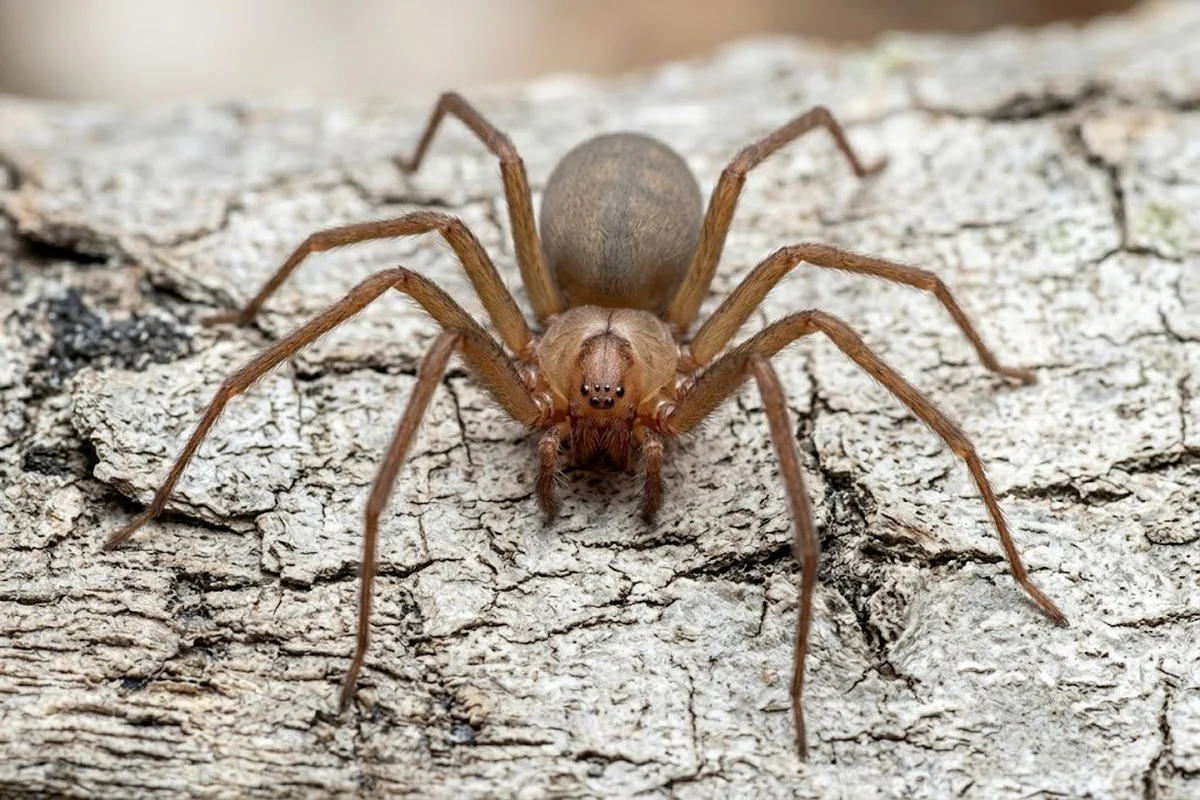
- Legs spread across about the area of a quarter to a half-dollar. The body itself is smaller than people picture, and the color runs tan to gray.
- They hunt at night. A daylight look around a closet misses a population that a flashlight at midnight finds in minutes.
- They live inside things rather than on them. Sealed-up boxes, stored clothing, shoes and the back corners of closets are where they concentrate.
- One female can make up to five egg sacs of about 50 eggs each, between April and early July here in Texas.
- Texas A&M AgriLife Extension says brown recluses often share a house with people without incident. Finding one is not the same as being in danger.
- A bite can turn into a slow-healing open wound, and a suspected recluse bite on a child gets seen by a doctor the same day.






What Are the Signs of a Brown Recluse Infestation?
Five things give a population away, and only one of them is the spider itself. They are small off-white webbing, translucent tan shed skins, round off-white egg sacs, live spiders after dark, and a bite nobody can explain. The usual mistake is to look for the spider, find nothing in daylight, and conclude there is no problem.
| What you find | What it actually means | Where to look for it |
|---|---|---|
| Small off-white webbing | A retreat and an egg site, not a trap. Loose, flat and messy, with no shape you would call a web and no insects caught in it | Back corners, inside boxes, under stored material |
| Translucent tan shed skins | Spiders have been living and growing in that spot for months rather than passing through it. More than one together is the stronger signal | Closet corners, storage bins, along baseboards |
| Round off-white egg sacs | Breeding on site. This is the one sign that turns a spider you saw into a population you have | Inside the retreat itself, never out in the open |
| Live spiders after dark | Active hunting. A daytime look finds nothing in the same room, which is why people conclude there is no problem | Garage and storage closets, with a flashlight, late on a summer night |
| A bite nobody can explain | A spider was pressed against skin while somebody slept or dressed. Often the first sign a family gets, and the most expensive one | Skin that was covered by clothing or bedding |
Two or more of these in the same room is an established population, not a stray spider.
Any one of these on its own is worth a second look. Two or more of them in the same room is an established population.
So how many brown recluse spiders is considered an infestation? No agency sets a number. The signs above matter more than a count of spiders seen, and egg sacs or shed skins mean they are breeding where you found them, however few you have actually seen.
Do Brown Recluse Spiders Make Webs?
Yes, but not the kind anybody goes looking for, which is why people so often decide there is no spider problem. Texas A&M AgriLife Extension describes brown recluses as hunting spiders that do not spend much time on webs at all.
When they do build one it is inconspicuous and put up in a protected site, and it works as a place to lay eggs and a place to retreat to rather than as anything that catches prey.
In practice that means the webbing you are looking for is a small, untidy, off-white mesh in a dark out-of-the-way corner, in a box, or under debris. It has no shape, it collects no insects, and it looks like nothing much. A house can hold a serious population with no web anywhere a visitor would notice.
If You Find One Brown Recluse, Are There More?
Usually, and the honest answer is that one spider is not proof of an infestation while it is a very good reason to check. Brown recluses are not social the way ants are, but they tolerate each other and they build up in the same sheltered places, so numbers concentrate rather than spread out evenly.
The one you saw also tells you something by where you saw it. A recluse out in the open in daylight has almost always been displaced, by a box being moved, a closet being cleared, or a room being redecorated. That means the retreat it came from is close by and worth finding.
If you found a brown recluse in your house, should you be worried? Worried enough to look, not to panic. Check the room it came from for the signs in the table above, and set sticky cards before deciding there is only the one.
Sticky cards settle the question without guesswork. Extension guidance treats them as both control and monitoring: laid flat along walls, in closet corners and under furniture, they catch spiders moving at night and turn an argument about whether there is a problem into a count. Cards run for two weeks will tell you far more than any amount of looking.
Where Do Brown Recluse Spiders Hide in a House?
In the places nothing disturbs. AgriLife puts them under old boards, in piles of discarded junk, and in seldom-disturbed storage, and indoors puts them most commonly in cluttered closets, garages, crawl spaces and attics. Homes in Allen, Frisco and Plano are no different from anywhere else in the state on this.
The specific spots worth checking are the ones where people actually get bitten. Inside shoes left on a closet floor. Folded seasonal clothing in storage bins. The back corners of closets, especially where hanging clothes touch the floor. Cardboard boxes in the garage that have not moved in months. The folds of stored bedding. Behind and underneath furniture that never gets shifted. None of those are hypothetical locations. They are where the bite reports come from, because they are the places where a hand or a foot goes in and presses a spider against skin.
What Are the Symptoms of a Brown Recluse Bite?
The bite itself is often painless or barely noticed, which is why people wake up with one. Over the first day or two the site can develop a pale center with a red ring around it, and it may become sore out of proportion to how small it looks.
The University of Kentucky says the majority of bites stay local and heal within 3 weeks, without serious complication or medical treatment.
A minority go further. The venom carries an enzyme that breaks down cell membranes, and in those cases the skin at the bite site dies and opens into a wound that takes weeks to months to close, often leaves a scar, and can pick up a secondary infection along the way. There is no approved antivenom in the United States, so care is supportive and the wound is managed rather than reversed. Rarely, and mostly in children, a bite brings on fever, chills and nausea. Any suspected recluse bite on a child should be seen the same day.
One thing worth saying plainly, because it drives needless worry. A spider walking across your arm is not going to bite you. Recluse bites happen when the spider is trapped against skin, inside a sleeve, a shoe, a glove or a bed sheet. That is also why the prevention advice is about stored clothing and boxes rather than about the spider’s temperament.
The University of Kentucky fact sheet on the brown recluse spider says the same. Most bites happen when a spider is trapped against bare skin, and it is quite common to live in a heavily infested building and never be bitten.
 Source:
 What Happens If a Brown Recluse Infestation Is Left Alone?
It grows, because nothing indoors stops it. The structure supplies shelter, a stable temperature and food, so there is no season that knocks the numbers back and no reason for the spiders to leave. A small population in an undisturbed garage or storage room does not stay small over a year.
What feeds them is the other half of the problem. Extension guidance is direct about it: when a building holds large numbers of spiders it usually means their prey is abundant too, and for recluses that prey is crickets, silverfish and cockroaches. A recluse problem in a house that also has a cricket season every August is not a coincidence, and treating the spiders while ignoring what they eat gives you the same population back.
The risk to people rises with the numbers, but it rises faster with disturbance. The dangerous moment is not living alongside them. It is the weekend somebody finally clears out the garage and puts bare hands into twenty boxes that have not moved in three years.
How Is a Brown Recluse Infestation Treated?
Not with a can from the hardware store, and not with anything sprayed across open floors and walls. Recluses spend almost no time on exposed surfaces, so a treatment aimed at open areas mostly treats places the spiders never go.
AgriLife recommends hiring a professional for this species outright, and notes that even for professionals a well-established population is difficult to control.
Four things do the work, and they run together rather than one at a time.
- Clutter reduction and sealing. Cardboard is the single best recluse habitat in a house. Taping stored boxes shut removes them as nesting sites, and clearing genuine junk out of closets, garages and attics removes the rest. This is the part the homeowner does, and it is best done before the technician arrives.
- Sticky cards. Placed against walls, in closets and under furniture, they remove part of the population and, more importantly, measure whether the rest is falling. Without them nobody can tell a successful treatment from a quiet week.
- Residual liquid treatment. Applied to the exterior foundation, the eaves, closet edges, storage areas and room perimeters, chosen for how long the residue stays active rather than for how fast it knocks down what it touches.
- Residual dust. Placed into wall voids, attics and crawl spaces, where a spray cannot reach and where a dust keeps working far longer. Attics get targeted placement rather than blanket coverage, because a general attic treatment risks contaminating whatever is stored up there.
There is one measured fact that explains why a single visit rarely ends it. In testing, spray residue on wood and masonite kept controlling brown recluses for only about seven days, while residue on some vinyl surfaces held up for as long as 60 days. The surface decides the lifespan, a house is not made of vinyl, and a population that took a year to build will not be gone by Friday. Follow-up inspection, with the sticky card counts to read, is what turns a treatment into a result.
If you have found shed skins, egg sacs or more than one spider, professional spider control is the right call rather than a starting point for a weekend project. Get a free estimate and we will inspect the retreat sites, put monitoring down, and treat where the spiders actually live.
Brown recluses in your home? Same-day spider control in McKinney and the surrounding cities when you call before noon.
We find the retreats, treat where they hide, and set sticky cards so you can see whether the count is falling.

Ryan has spent more than 16 years in pest control and wildlife management across McKinney and Collin County, from inspecting homes and treating infestations to sealing the entry points pests use to get in. He built Pest Me Off on that field experience, and every technician on the team is trained against it.
More about the Pest Me Off team