Same-Day Appointments Available

 – Call Now!

Wasp Control for McKinney, Allen & Frisco Properties

Paper wasps on your eaves in March. Yellow jackets in the ground by July. Hornets building a football-sized nest in your tree by September. Pest Me Off identifies the species, removes the nest, and treats the structure so new queens cannot re-establish next spring.

📞 Call (972) 866-4720
Every Review, 5.0 Stars on Google
🏆Best of McKinney 2025
🐱Pet-Safe Treatments
📋No-Contract Options
Same-Day Available
Stinger Smackdown: It's What We Do

Wasp & Hornet Exterminator in McKinney, Allen, Frisco & Collin County

Most people treating a wasp problem at home are spraying the wrong target. A can of wasp spray pointed at a paper wasp nest removes visible workers but leaves the nest structure and its pheromone signature intact. A yellow jacket ground colony treated from above still has thousands of workers below the visible entry point. Identifying which species you are dealing with before doing anything is the difference between solving the problem and making it more dangerous.

Each species shows up for a different reason. Paper wasps are drawn to any sheltered overhead surface on your home. Yellow jackets follow ground disturbance, which is why new construction throughout Prosper, Celina, Anna, and Melissa accelerates nest establishment in freshly graded soil. Carpenter bees drill into unfinished wood, and Stonebridge Ranch and Craig Ranch HOA communities report carpenter bee damage to cedar fences and pergola beams every spring. Knowing what drew them in is part of how Pest Me Off keeps them from coming back.

💡 Pro Tips for Wasp Control
Paint Bare Wood Before February.
Carpenter bees specifically target raw, unpainted, or weathered wood. A single coat of paint or sealant on exposed fascia boards, fence posts, deck railings, and pergola beams before spring removes the primary attractant. If wood stays raw through winter, plan on carpenter bees in March.
Your Outdoor Lights Are a Wasp Buffet Table.
Bright cool-white LED bulbs at night draw flying insects to your exterior walls and soffits, and wasps follow the food supply. Switching porch and eave lights to warm yellow or amber bulbs reduces the insect activity that makes your eaves attractive to paper wasp queens scouting for nest sites in spring.
August Trash Day Is When Yellow Jackets Get Mean.
Yellow jacket colonies reach peak size in late summer and shift from hunting insects to scavenging anything sweet or protein-rich. Open bins, uncovered outdoor pet food, and fallen fruit become hotspots. Keep trash can lids sealed, clean up dropped fruit regularly, and never leave sugary drinks outside unattended from July through October.
Stinging Insect Identification

Stinging Insect Species in McKinney TX & Collin County

Every species below nests differently and requires a different treatment approach. Identifying what you have before treating is the difference between solving the problem and making it worse.

Paper Wasp McKinney TX

Paper Wasp

AKA: umbrella wasp

Most common stinging insect call Pest Me Off receives April through September. Nests directly on home structures.

FOUND

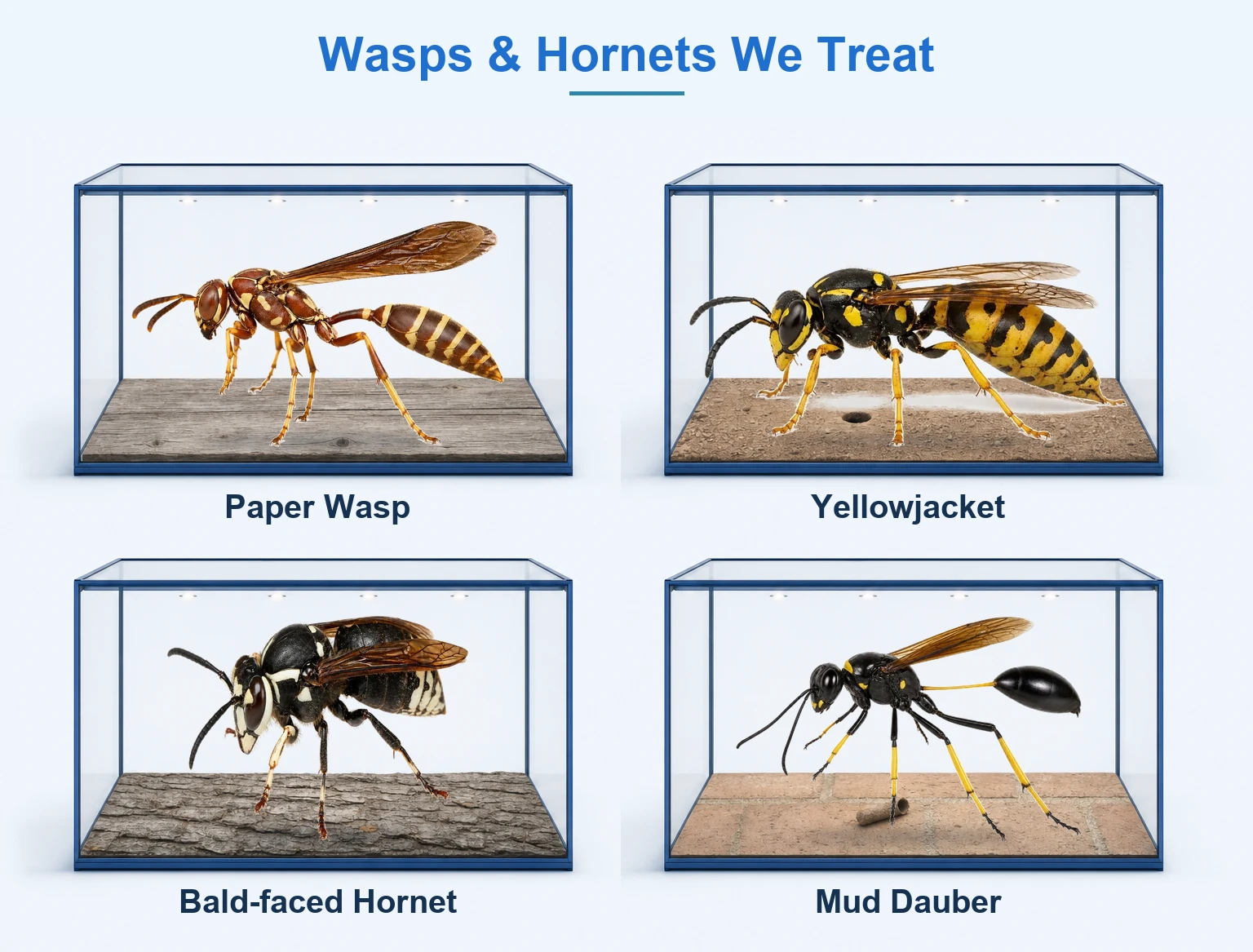
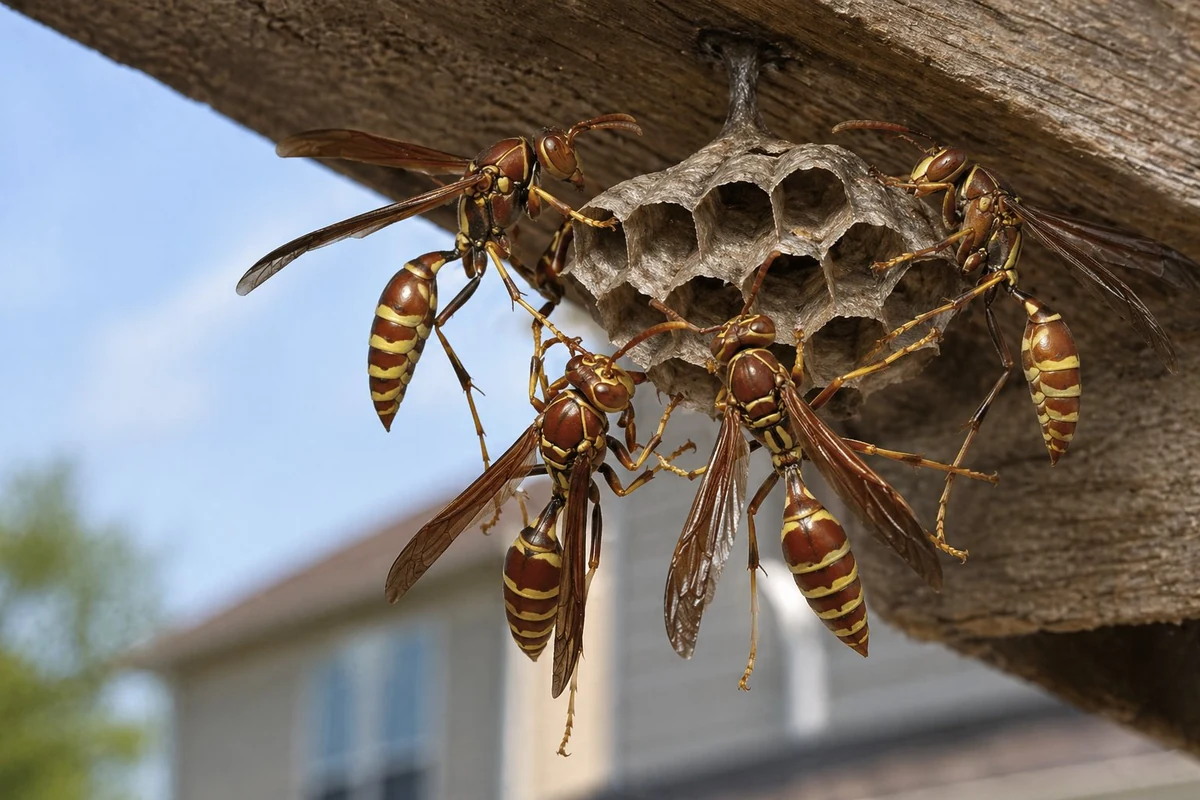
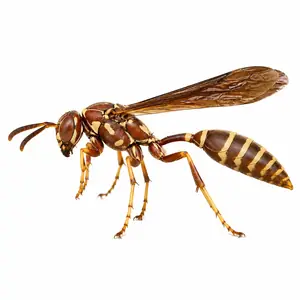
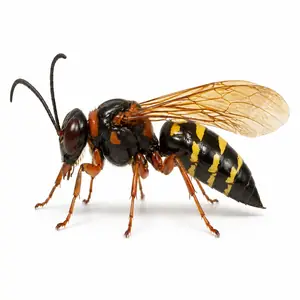
Slender brownish-orange body with long legs that dangle visibly in flight. Builds open-cell paper nests shaped like an upside-down umbrella. Nests attached directly to eaves, porch ceilings, deck railings, shutters, door frames, and outdoor light fixtures.

NEIGHBORHOODS

Stonebridge Ranch and Craig Ranch HOA communities in McKinney report high paper wasp pressure on covered patio structures every spring. Allen Exchange Pkwy commercial corridor sees paper wasp activity on outdoor signage and building overhangs.

TREATMENT

Direct nest treatment with targeted application when workers are least active. Nest removal after elimination. Surface treatment on attachment points to disrupt pheromone markers and reduce re-nesting probability the following spring.

CAUTION Paper wasps are non-aggressive away from the nest but highly defensive within 18 inches of it. Nests near entry doors and porch lights place them in constant contact zones. Never treat from a ladder without protective gear.
Yellow Jacket McKinney TX

Yellow Jacket

AKA: ground wasp

Most aggressive stinging insect in Collin County. Ground colonies reach 5,000 workers. Late summer and fall are the most dangerous months.

FOUND

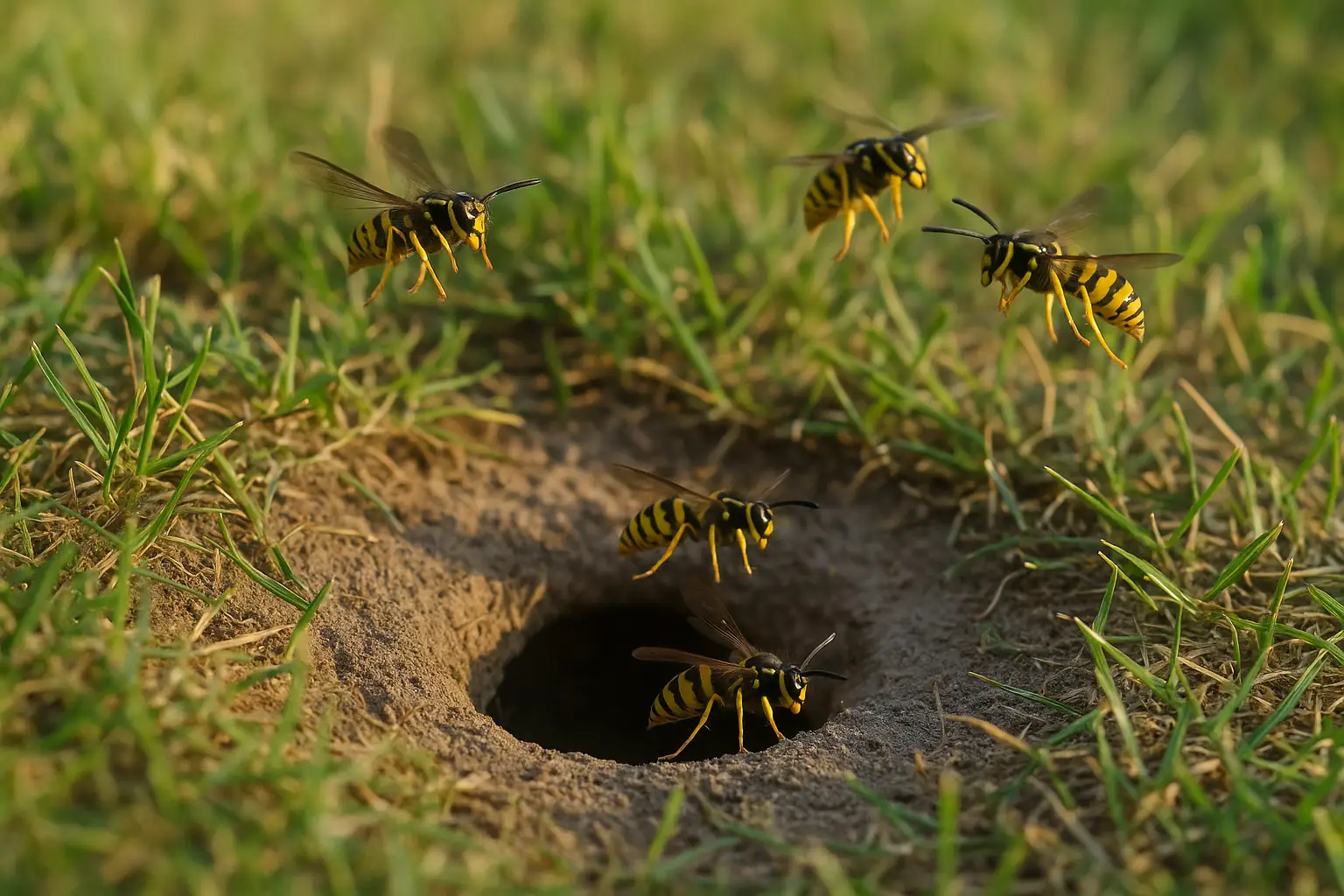
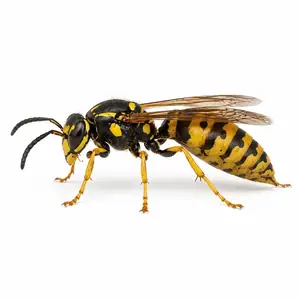
Stocky yellow and black body, often misidentified as honey bees. Nests in ground burrows, inside walls and enclosed structural cavities, and dense shrubs. A mature colony in late summer can contain 3,000 to 5,000 workers and multiple entry points to the same nest.

NEIGHBORHOODS

New construction throughout Prosper, Celina, and Anna disturbs native ground colonies and creates fresh nesting opportunities in graded soil. Rural-edge properties in Farmersville and Princeton with undeveloped adjacent land see consistent late-summer pressure.

TREATMENT

Ground nests require direct injection treatment into the colony cavity after dark when workers are inside. Nests inside walls require locating all entry points before treatment to prevent colony displacement into living areas. Never seal entry points before confirming full colony elimination.

CAUTION Yellow jackets are responsible for the majority of serious stinging incidents in Collin County. They attack in swarms, sting repeatedly, and will chase. If you discover a ground nest, keep children and pets away from the area and call for same-day service.
Bald-Faced Hornet McKinney TX

Bald-Faced Hornet

AKA: white-faced hornet

Builds iconic gray football-shaped paper nests in trees and on overhead structures. One of the most defensive stinging insects in Collin County.

FOUND

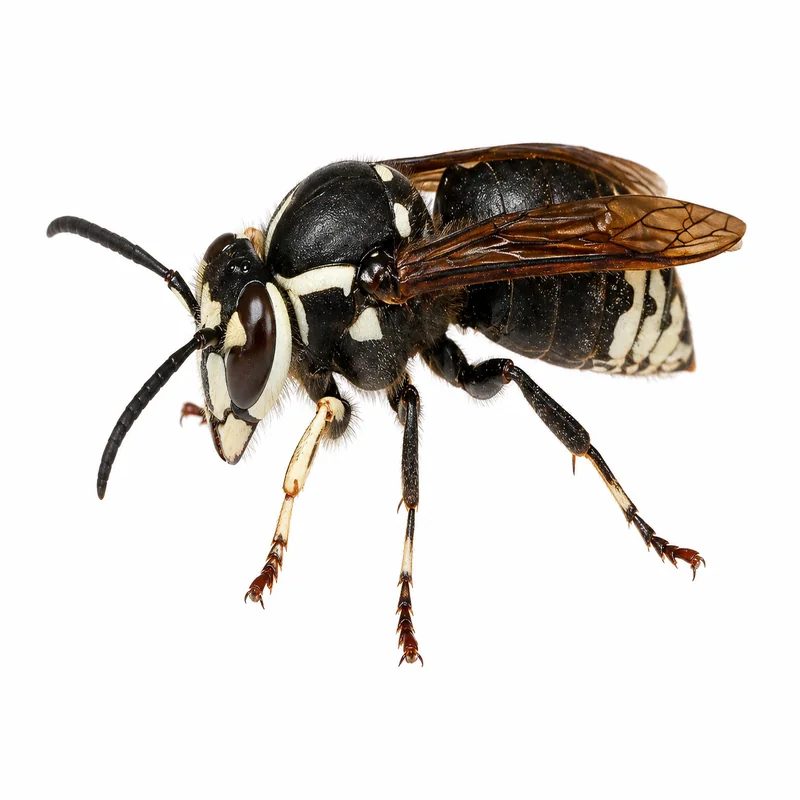
Large, black with bold white facial and abdominal markings. Technically a yellow jacket species. Builds large enclosed paper nests that can reach 14 or more inches by September. Nests in trees, under eaves, on telephone poles, and on any elevated structure with overhead cover.

NEIGHBORHOODS

Mature tree canopy throughout Historic Downtown McKinney and established neighborhoods along Eldorado Pkwy provide ideal nesting habitat. Heritage Ranch golf course in Fairview reports nests in tree canopy each season. Large outdoor structures at Grandscape in The Colony create elevated nesting opportunities.

TREATMENT

Night treatment when all workers are inside the nest. Full nest removal after colony elimination to prevent secondary insect attraction. Hornet nests in trees near high-traffic areas should be treated as soon as they are identified, before colony size peaks in August and September.

CAUTION Bald-faced hornets are highly aggressive defenders and can sting multiple times without dying. A colony disturbed in August or September has reached peak defensive capacity. Never approach a nest above chest height without a professional assessment first.
Carpenter Bee McKinney TX

Carpenter Bee

AKA: wood bee

Drills perfectly round holes into unfinished wood. Males dive-bomb aggressively but cannot sting. Structural damage accumulates over multiple seasons.

FOUND

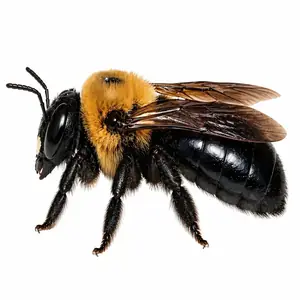
Large, mostly black bee with a glossy hairless abdomen. Drills perfectly round entry holes into unfinished wood: deck fascia boards, fence posts, wood pergola beams, garage door trim, and siding. Females can sting but rarely do unless handled.

NEIGHBORHOODS

Stonebridge Ranch and Twin Creeks HOA communities in McKinney and Allen report heavy carpenter bee activity on wood pergola structures and cedar privacy fences each spring. Any home with unpainted cedar, pine, or redwood trim is a consistent target.

TREATMENT

Dust treatment applied directly into active galleries eliminates nesting bees and discourages re-entry. Holes are sealed after treatment to prevent reinfestation and woodpecker damage. Painting or sealing all exposed wood surfaces is the most effective long-term preventive measure.

CAUTION Carpenter bee galleries weaken wood over multiple seasons. A fence post or deck beam used for 3 to 4 seasons may have extensive internal damage not visible from outside. Sealing holes without treating inside the gallery first does not stop reinfestation.
Honey Bee McKinney TX

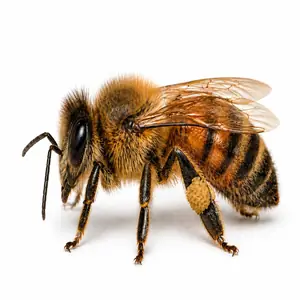
Honey Bee

AKA: honeybee, pollinator

Pest Me Off treats honey bees as a protected species by default. Relocation to a local beekeeper is always the first option we discuss.

FOUND

Golden-brown, fuzzy body. Swarms appear as dense clusters on tree branches, fence posts, or exterior walls for 24 to 72 hours while scouts search for a permanent cavity. Established colonies inside walls, chimneys, and roof soffits can grow for years before homeowners notice.

NEIGHBORHOODS

McKinney's older Historic Downtown homes with original wood siding and chimney structures are common honey bee nesting sites. Swarms are reported throughout Stonebridge Ranch and Eldorado Pkwy corridor communities each spring when colonies divide.

TREATMENT

Relocation to a local beekeeper is always our first recommendation. If the colony poses an immediate safety risk and relocation is not feasible, the customer decides how to proceed. Any established colony should also have the wax comb removed to prevent moisture damage and secondary pest attraction.

CAUTION Honey bees are not federally protected, but they matter enormously to the environment and local agriculture. If you have a swarm on your property, do not spray it. Give it 48 to 72 hours to move on before calling.
Mud Dauber McKinney TX

Mud Dauber

AKA: dirt dauber, mud wasp

Builds mud tube nests on exterior walls, garage ceilings, and utility structures. Solitary. Almost never stings.

FOUND

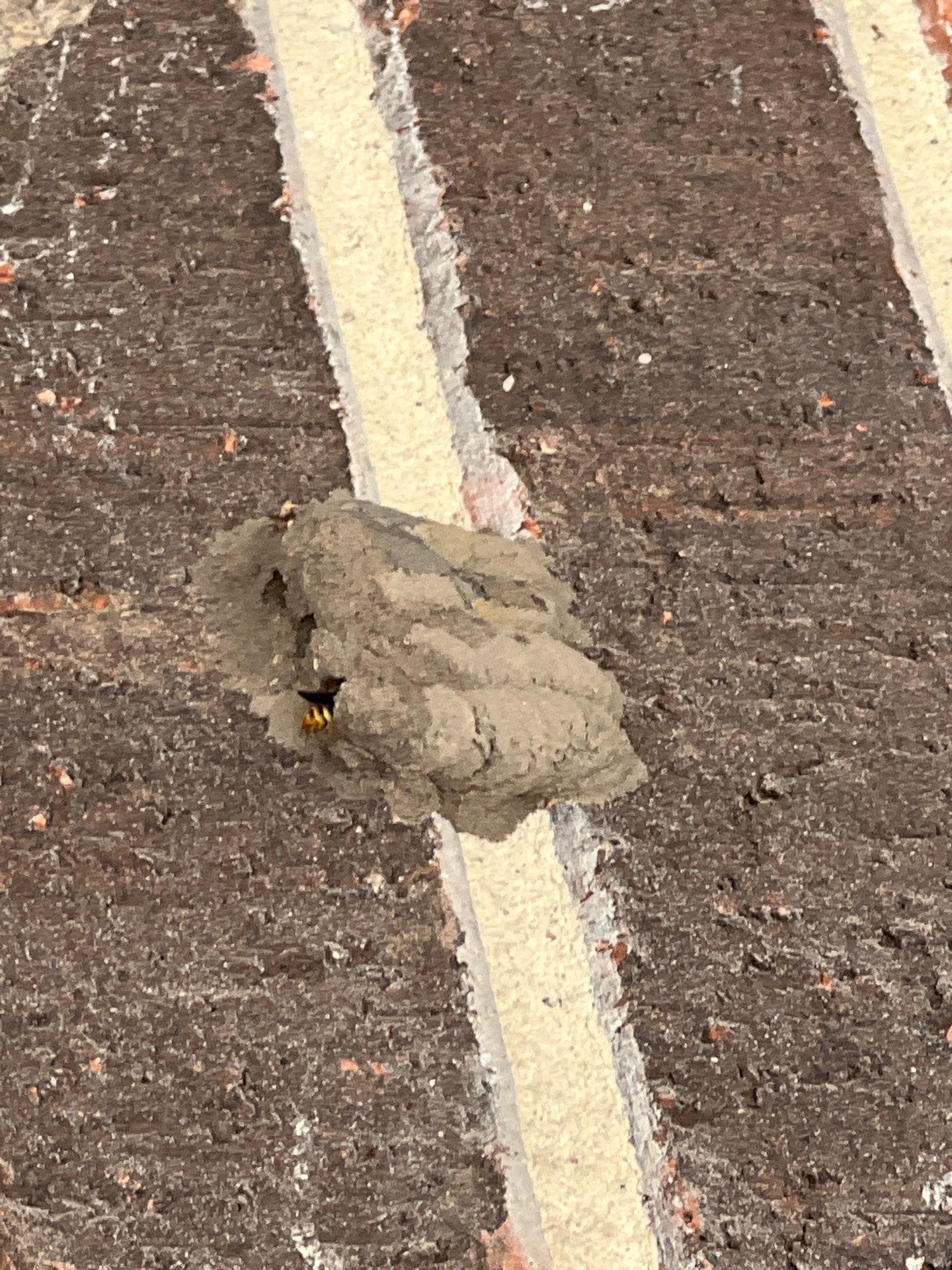
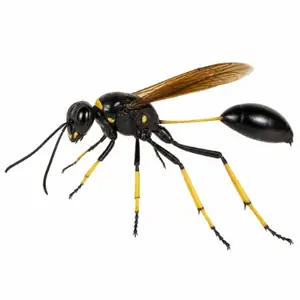
Long, slender black or black-and-yellow body with a distinctly narrow waist. Constructs mud tube nests in sheltered locations on exterior walls, garage door tracks, under awnings, on porch ceilings, and inside utility sheds. Multiple daubers can produce dozens of tubes across a single exterior wall over one season.

NEIGHBORHOODS

Garage-heavy subdivisions throughout Allen and Plano report mud dauber activity on garage interior ceilings and door track channels every summer. Homes with overhanging rooflines adjacent to wooded or unmowed areas in Celina and Prosper see consistent dauber pressure.

TREATMENT

Mud tubes can be physically removed with a stiff brush or pressure wash. A targeted surface application to building attachment points discourages new daubers from selecting the same locations. Removing old tubes promptly reduces the site's attractiveness to new females scouting nesting locations.

CAUTION Mud daubers are largely harmless to humans but the volume of tubes they produce on an exterior wall can be significant. Abandoned tubes attract other insects over time. Removal without surface treatment does not prevent new daubers from returning to the same location the following season.
Cicada Killer McKinney TX

Cicada Killer

AKA: ground hornet

Texas's largest native wasp. Males cannot sting. Females almost never do. The real threat is turf and landscape damage from burrowing.

FOUND

Very large, up to 1.5 inches, reddish-brown with yellow and black abdomen. Digs deep burrows in dry, loose, well-drained soil in late June through August. Multiple females nesting in the same area can produce dozens of burrow openings across a lawn or garden bed.

NEIGHBORHOODS

Sandy, well-drained lawn sections throughout McKinney and Allen that receive full sun are the primary cicada killer habitat in Collin County. Stonebridge Ranch golf course margins and properties adjacent to the Heard Natural Science Museum corridor see consistent annual populations.

TREATMENT

Direct burrow treatment at the nest opening in the evening when females are inside. Multiple applications may be needed when several females are nesting in the same area. Improving lawn density through overseeding and irrigation reduces the bare soil conditions cicada killers require to burrow.

CAUTION Despite their intimidating size and dive-bombing behavior, cicada killers are genuinely low-risk to humans. The threat is almost entirely the landscape damage from burrowing. Treatment is recommended for yards with children or when burrow damage reaches a disruptive level.
Species Identification Guide

Bee or Wasp? Ranked by How Dangerous They Actually Are.

Yellow jackets, hornets, mud daubers, and cicada killers are all technically wasps. Carpenter bees and honey bees are bees. The ranking below is based on how aggressively each one attacks and how dangerous a sting incident is likely to be. Nest type is the fastest way to identify which one you have.

#1
Bald-Faced Hornet
Nest: A gray paper football hanging in a tree or from an overhead structure. Visible from across the yard. Single hole at the bottom. Do not approach it.
Black body with white markings on the face. Bigger than a paper wasp.
DANGER
Extreme
#2
Yellow Jacket
Nest: You won't see the nest. Watch for wasps flying in and out of a hole in the ground, a gap in siding, or under a deck board. The colony is hidden inside.
Bright yellow and black, stocky. Looks like a bee but not fuzzy. Swarms and stings repeatedly.
DANGER
Very High
#3
Paper Wasp
Nest: Open paper comb on your eave or porch ceiling. Every cell is visible, no outer covering. Looks like an upside-down gray honeycomb. You can see it from the ground.
Brownish-orange, slender, long legs that dangle when flying. Calm away from the nest.
DANGER
Moderate
#4
Honey Bee
Nest: Usually inside something: a wall cavity, chimney, or hollow tree. A swarm looks like a dense cluster on a branch. Swarms move on in 24 to 72 hours on their own.
Golden-brown and fully fuzzy. Generally docile. We prefer relocation over extermination.
DANGER
Low
#5
Carpenter Bee
Nest: A perfectly round hole drilled into unpainted wood: fascia, fence posts, pergola beams. Often sawdust-like shavings below the hole. No external nest structure at all.
Large black bee, shiny bare abdomen. Males dive-bomb but cannot sting. Females almost never sting.
DANGER
Very Low
#6
Mud Dauber
Nest: Mud tubes on your exterior wall, garage ceiling, or under an awning. Look like finger-sized clay pipes stuck in clusters. Nothing else looks like them.
Long slender black body with a thread-like waist. Solitary. Almost never stings.
DANGER
Minimal
#7
Cicada Killer
Nest: Large dirt mounds with wide entry holes in bare lawn areas, July through August. Similar location to a yellow jacket ground nest but much bigger holes and obvious disturbed soil. No colony inside.
Very large, reddish-brown with yellow and black abdomen. Terrifying-looking. Actually harmless.
DANGER
Minimal
Quick ID Guide
What You See
What It Is & What To Do
A gray paper ball hanging in a tree or under an eave
Bald-Faced Hornet. Do not go near it. Call same-day.
Wasps flying in and out of a hole with no visible nest
Yellow Jacket colony. Do not block or spray the hole. Call same-day.
An open honeycomb-looking comb on your porch ceiling or eave
Paper Wasp. Manageable but stings if disturbed. Call before it grows.
A dense cluster of bees on a branch, fence post, or wall
Honey Bee swarm. Wait 48 hours. They usually move on. Call if they stay.
Round holes drilled into wood trim, fences, or pergola beams
Carpenter Bee. Not dangerous. Treat before the wood damage compounds.
Clay-colored mud tubes on your garage ceiling or exterior wall
Mud Dauber. Harmless. Remove tubes and treat the surface.
Large dirt mounds with wide holes in bare lawn areas in July
Cicada Killer. Looks scary, essentially harmless. Treat if burrowing damages turf.
The Returning Nest Problem

Why One Wasp Treatment Is Never Enough

Seasonal Return
The nest is gone. The location is not.

Removing a wasp nest solves this year's problem. It does not solve next year's. The chemical signature that marked your eave, your porch ceiling, or that ground burrow as a successful nesting site persists after the nest is gone. New queens find it in spring and start over. A one-time removal without surface treatment is, at best, an annual spring appointment you are not booking yet.

The Defend step in every Pest Me Off recurring service breaks that cycle. Applied to the specific surfaces and entry zones where stinging insects previously established, it disrupts scouting behavior before a new queen commits to your structure.

Every wasp service eliminates the active colony and the queen. What homeowners do not expect is the forager wasps that were away from the nest when treatment happened. They return over the following 24 to 48 hours, circling the old nest location looking for a colony that is no longer there. This is normal and temporary. Without a queen and nest to return to, they cannot rebuild. They disperse within a day or two. If you are still seeing significant activity beyond 72 hours after service, call us back under the free re-service guarantee.

The longer-term question is what happens the following spring. The nest is gone, but the site that drew the original colony remains attractive. That is the argument for the Defend step on every recurring visit.

One-Time Nest Removal
Removes the colony. Not the reason it was there.

Eliminates the active nest and colony including the queen. Forager wasps that were out during treatment will return and circle for 24 to 48 hours, then disperse. They cannot rebuild without a queen. If activity persists past 72 hours, the re-service guarantee applies. Does not include barrier treatment on attachment surfaces, so the same site can attract a new queen the following spring.

Ongoing Program with Defend Step
Breaks the annual return cycle.

Every recurring visit includes barrier treatment applied to the specific eave surfaces, soffits, fence lines, and ground entry zones where activity was previously found. This disrupts scouting behavior before a new queen commits to your structure. Recurring subscribers see significantly fewer active nests year over year as the Scorched Earth Barrier accumulates efficacy across the structure.

Pest Me Off's Branded Methodology

How Our Wasp Exterminator Service Works: The RID Method

Every initial wasp and stinging insect service follows all three steps. Ongoing recurring subscribers get the full RID system on every visit, including the Defend step that keeps the Scorched Earth Barrier active year-round.

R

Remove

We remove stinging insects from your property by locating every active nest and eliminating the colony, not just treating what is visible from the ground.

  • Full property inspection: eaves, soffits, ground surfaces, structural cavities, and tree canopy
  • Species identification before any treatment begins
  • Night treatment on yellow jacket ground nests and hornet nests when all workers are inside
  • Physical nest removal after colony elimination
  • Documentation of nest locations for Defend step targeting
I

Install

We install our Scorched Earth Barrier at every identified nest attachment point, eave soffit, ground entry zone, and perimeter fence line to eliminate returning foragers and discourage new queens from selecting your structure.

  • Targeted barrier application to eave surfaces and attachment points
  • Ground treatment at yellow jacket burrow entrances and adjacent tunnel areas
  • Fence line treatment at top rail level where paper wasps commonly nest
  • Pet-safe and kid-safe formulations on all exterior treated surfaces
  • Treatment timed for maximum contact with returning foragers
D

Defend

Stinging insect pressure is annual. Every spring, new queens emerge and scout for nesting sites. The Defend step keeps the Scorched Earth Barrier active on your structure between visits so scouts cannot establish before your next scheduled service.

  • Recurring exterior applications timed to peak scouting season
  • Ongoing monitoring of previously active nest locations
  • Free re-service guarantee between scheduled visits if a new colony establishes
  • Annual early-spring application to intercept paper wasp queens before colony size builds
  • No-contract options available on all recurring plans
Schedule Your Wasp Service
Free Free re-service guarantee. If a new colony establishes between scheduled visits, we come back at no charge. Same-Day Same-day service available for active nests. Call before noon for afternoon service throughout Collin County. No Contract No-contract options on all recurring plans. Stay on because it works, not because you are locked in.
What McKinney Homeowners Say

Every Review, 5.0 Stars on Google

Wasp Season: Active March Through November

Schedule a Wasp Inspection
Same-Day Still Available

Paper wasp queens in McKinney, Allen, and Frisco are scouting eave locations right now. A colony caught in spring is a handful of workers. A colony left until August is a different problem entirely.

Same-day appointments available No-contract options available Free re-service guarantee Best of McKinney 2025
14 Cities Across Collin County and Surrounding Areas

Wasp Exterminator Near Me

Same-day wasp nest removal throughout every city below. Each card links to that city's pest control page.

Allen TX

CUTX Event Center and Watters Creek outdoor dining structures create consistent paper wasp pressure on large eave systems throughout spring and summer. Cottonwood Creek Trail corridor properties see late-summer yellow jacket activity in ground nests adjacent to the trail edge.

Anna TX

Rural-edge properties in Anna adjacent to undeveloped fields experience high yellow jacket ground nest density, particularly in yards with loose, well-drained soil near unmowed buffer zones. Rapidly expanding residential subdivisions create fresh ground disturbance that accelerates nest establishment each spring.

Carrollton TX

Commercial restaurants and retail along Belt Line Road have outdoor seating structures with overhead covers that paper wasps target as prime nest sites April through August. Established neighborhoods adjacent to Furneaux Creek see bald-faced hornet nests in mature tree branches each summer.

Celina TX

Windsong Ranch and Star Trail master-planned communities have large HOA-maintained amenity structures and covered outdoor gathering areas where paper wasps nest consistently on south-facing eaves. Active construction throughout Celina disturbs native ground colonies, creating predictable yellow jacket pressure in surrounding yards.

Fairview TX

Heritage Ranch Golf and Country Club's 575-acre property with mature pecan and oak tree canopy creates ideal bald-faced hornet nesting habitat throughout the community. Large estate homes on one-acre-plus lots have extensive eave systems and wood pergola structures that paper wasps return to year after year.

Farmersville TX

Rural properties with barn structures and agricultural outbuildings provide prime undisturbed nesting habitat for paper wasps in wooden rafters and ceiling joists throughout the spring season. Yellow jackets are a persistent pressure on properties adjacent to agricultural land and rural creek corridors.

Frisco TX

The Star, Toyota Stadium, and Dr Pepper Ballpark all have massive structural overhangs and eave systems that support large paper wasp populations. Several Frisco HOA communities including Grayhawk and Newman Village require professional removal for nest activity under HOA property maintenance standards.

Little Elm TX

Waterfront homes along Lake Lewisville have wood decks, dock structures, and covered boat slips that paper wasps nest underneath each spring. Properties adjacent to the lake's undeveloped shoreline buffer zones experience consistent late-summer yellow jacket and hornet pressure from colonies established in the natural area.

McKinney TX

Historic Downtown McKinney's older wood-framed commercial buildings, covered storefronts, and mature tree canopy create year-round stinging insect activity for both business owners and residents. Stonebridge Ranch HOA amenity pavilions and wood pergola features throughout the neighborhood generate consistent paper wasp and carpenter bee calls every spring.

Melissa TX

Rapidly expanding new construction throughout Melissa creates freshly exposed wood framing and unfinished trim that paper wasps target as priority nesting material in the weeks before painting is complete. Ground disturbance from active building sites generates predictable yellow jacket pressure in surrounding residential yards.

Plano TX

Legacy West and Shops at Legacy outdoor dining and retail structures generate significant paper wasp and yellow jacket activity on outdoor seating patios and overhead structural elements throughout the season. Dense mature tree canopy in established west Plano neighborhoods creates bald-faced hornet nesting habitat above eye level.

Princeton TX

Princeton's rapid residential expansion means construction sites throughout the city create unprotected wood surfaces and ground disturbance that follow new homeowners into occupied homes at move-in. Yellow jacket ground nests established during construction phases frequently persist into the first occupancy season.

Prosper TX

Frontier Park and Windsong Ranch event lawn structures generate consistent wasp and hornet pressure on covered outdoor facilities each summer. Commercial development expanding along Highway 380 creates new exterior eave surfaces that paper wasps establish on within the first full season after construction.

The Colony TX

Grandscape's outdoor entertainment complex, including the observation wheel structure and Scheels exterior, represents some of the largest eave and structural surface area for stinging insect nesting in the service area. Castle Hills and Waterstone residential communities adjacent to Lake Lewisville see hornet nest activity in mature tree canopy throughout the summer.

Common Questions

Frequently Asked Questions: Wasp Control McKinney TX

The most common stinging insects in McKinney and Collin County are paper wasps, yellow jackets, bald-faced hornets, mud daubers, cicada killers, and carpenter bees. Honey bee swarms are also reported seasonally, particularly in spring when colonies divide. Each species nests differently, peaks at different times of year, and requires a different treatment approach. Paper wasps are the most frequent call from March through August. Yellow jackets are the most dangerous, peaking in late summer and fall.
Yellow jackets and hornets are both technically wasps. The term "wasp" covers the whole group the way "dog" covers multiple breeds. Paper wasps are slender, brownish-orange, and build open-cell umbrella-shaped nests on structures. Yellow jackets are stockier, bright yellow and black, and nest inside ground burrows or enclosed structural cavities with colonies of thousands. Bald-faced hornets are the largest, black with white markings, and build enclosed football-shaped paper nests hanging in trees or on overhead structures. Each has a different level of aggression and requires a different removal approach.
For a small paper wasp nest in a low-traffic area with fewer than 10 visible cells, treated after dark with a direct-contact wasp spray, the risk is manageable. For yellow jackets nesting in the ground or inside a wall, the answer is clearly no. Ground colonies can mobilize hundreds of workers in seconds when the entry point is disturbed. Bald-faced hornet nests should never be approached without protective equipment. If you are not certain of the species or the nest location, call first.
Paper wasp queens begin scouting nest sites as early as late February in Collin County, and active nests form from March through October. Yellow jacket colonies are active March through November, reaching peak size and maximum aggression in August through October when food competition increases. Bald-faced hornets are active May through October, with nests reaching full size by late August. Cicada killers appear reliably in late June through August. There is no true off-season for stinging insects in North Texas.
Each species is drawn by something different. Paper wasps want sheltered overhead surfaces with protection from rain. Yellow jackets want loose, undisturbed soil for ground nests or enclosed structural cavities for hidden colonies. Carpenter bees target unfinished or weathered wood. Bald-faced hornets look for elevated locations with overhead cover in mature tree canopy or on large structures. Remove or treat the specific conditions and you remove the invitation.
Paper wasp queens emerging from overwintering in late winter actively scout for nest sites using two primary signals. First, they seek sheltered structural surfaces with overhead cover. South-facing eaves on homes warm quickly in early spring and are ideal. Second, they detect pheromone markers left by previous nest occupants. These chemical signatures persist on wood and metal surfaces through winter and actively attract new queens to previously successful locations. This is why the same eave or porch ceiling gets a new nest year after year, even when the previous nest was removed.
Cicada killers are far less dangerous than their size suggests. Male cicada killers cannot sting and perform dramatic dive-bombing territory displays that are intimidating but harmless. Female cicada killers can sting but almost never do unless physically handled. The real concern with cicada killers is landscape damage. Multiple females burrowing in the same lawn section create dozens of entry mounds and can damage turf, garden beds, and walkway edges significantly over a single season. Treatment is typically recommended for yards with active children or when burrowing damage reaches a disruptive level.
Keep people and pets away from the area immediately. Do not pour water, gasoline, or insecticide into the entrance hole. Blocking the entry point without treating the colony drives workers deeper into the cavity or into adjacent structural spaces. Yellow jackets nesting inside a wall that are sealed before elimination will often chew through interior drywall to escape into the living space. Call for same-day service and let the technician assess the full extent of the colony before any treatment begins.
A standard paper wasp nest removal on an accessible eave or porch surface typically takes 30 to 45 minutes including inspection, treatment, and nest removal. Yellow jacket ground nest treatment takes longer because the technician works after dark and monitors entry activity to confirm full treatment coverage. Bald-faced hornet nest removal depends on height and accessibility. Multi-species calls or properties with multiple active nests take longer. Your technician will give you a time estimate during the initial assessment.
For exterior nest treatment on eaves, porch structures, and ground entry points, leaving the home is generally not required. Treated surfaces are pet-safe and kid-safe once dry, which is typically within 30 to 60 minutes after application depending on the product and weather. For yellow jacket colonies nesting inside a wall or structural cavity, your technician will discuss the specific treatment approach and any precautions based on the nest location and the structural access required.
Yes, if the structural surface and its pheromone markers are not treated. Removing the nest eliminates the colony, but the chemical signature marking the location as a successful nesting site persists on the attachment surface through winter. New queens scouting in spring detect these markers and prioritize locations that smell like prior successful colonies. Surface treatment applied after nest removal disrupts these markers and significantly reduces the probability of re-nesting at the same location the following spring.
The most effective approach is early-season surface treatment applied to eave soffits and porch ceilings before paper wasp queens commit to a location, typically in February or early March in Collin County. Treating attachment surfaces before nests appear is significantly more effective than removing nests after colonies establish. Painting or sealing bare wood removes the material texture that wasps prefer for nest attachment. Recurring exterior treatment through the spring and summer is the most reliable long-term prevention.
Pest Me Off treats honey bees as a protected species by default, because healthy bee populations matter for the environment. When honey bees establish inside a wall cavity or roof space, we assess the situation and discuss options directly. Relocation to a local beekeeper is always the first recommendation. If the colony poses an immediate safety risk and relocation is not feasible, the customer decides how to proceed. A swarm resting temporarily on a fence post or tree branch will usually move on within 24 to 72 hours on its own.
Carpenter bees are solitary nesters, not colony insects. Each female drills her own gallery into unfinished or weathered wood rather than building a shared colony structure. The shiny black abdomen is the easiest visual identifier. Bumble bees have a fully fuzzy body. Honey bees are smaller and golden-brown. Carpenter bee males hover aggressively near nest sites and will dive-bomb approaching people, but males lack stingers. Females sting only when directly handled. The structural risk accumulates over multiple seasons as galleries extend deeper into the same wood members.
Yes. Same-day wasp nest removal is available throughout McKinney, Allen, Frisco, and all 14 cities we serve across Collin County and surrounding areas. Call before noon for same-day afternoon service. Our technicians are based in McKinney and typically arrive within a few hours. Text or call the number in the nav to get started.

Ready to remove that nest?

Same-day wasp and stinging insect removal throughout McKinney, Allen, Frisco, and all of Collin County. No-contract options available.

📞 (972) 866-4720 💬 Text Us Get a Free Estimate