
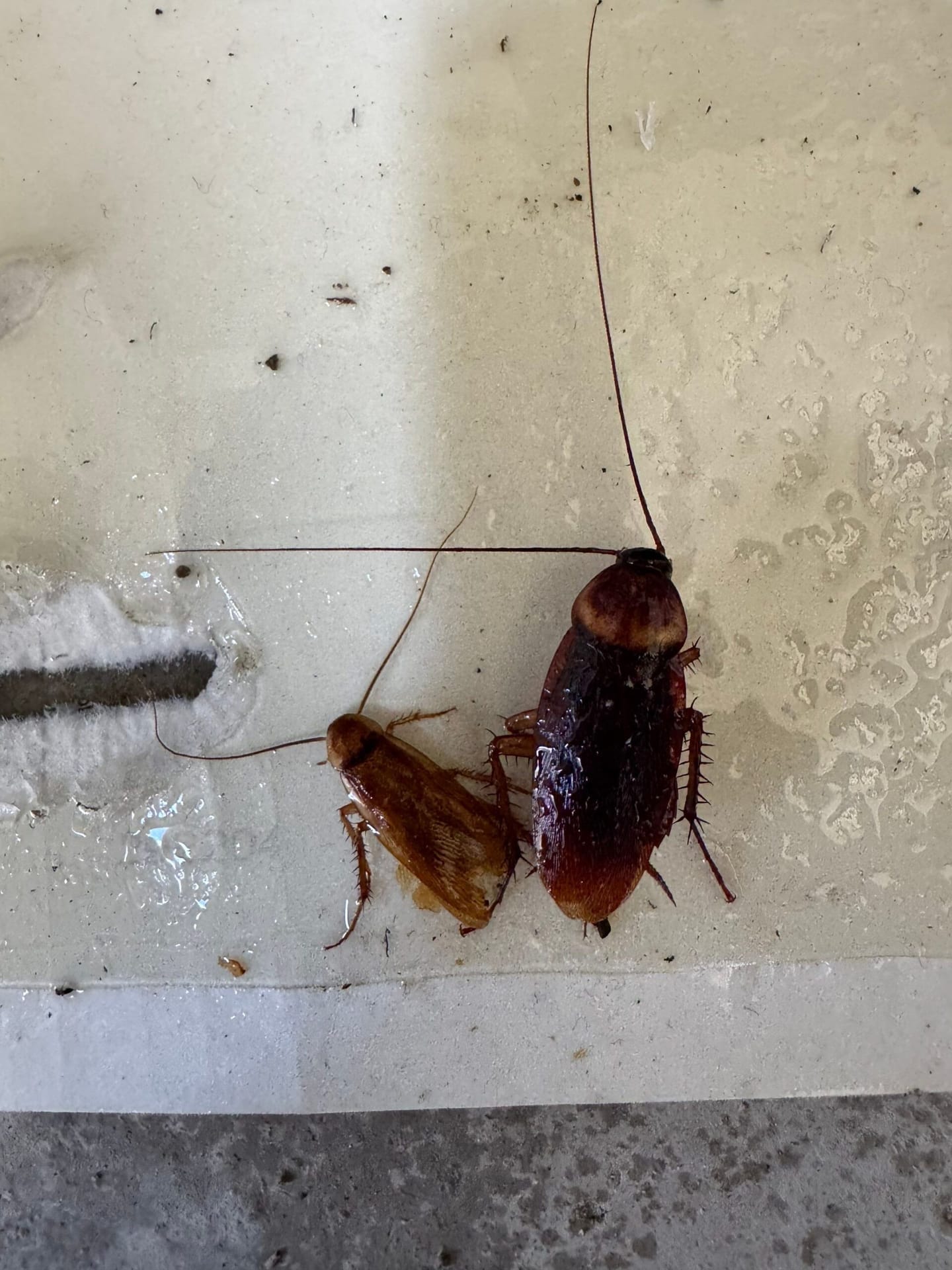
When Cockroach Season Is in Texas, and Why Winter Does Not End It
Cockroach season in Texas is not one season, it is three, and only two of them have anything to do with the weather. The roaches that come inside from the yard have a clear calendar and you can plan around it. The ones already living in the kitchen do not, because the inside of a house in McKinney holds the same temperature in January as it does in July. That is the short answer to why a cold snap changes nothing, and the longer answer is worth 5 minutes because it decides what to do and when.

- There is no one season. German roaches run all year indoors, American peak in summer heat, Oriental in spring and fall.
- Warmth and water decide everything, not the month. A heated house supplies both through the coldest week of the year.
- Seeing fewer in winter usually means they moved deeper into the building, not that the population fell.
- One American cockroach female averages 800 offspring a year. That is a year, not a summer.
- Winter pushes them toward water heaters, dishwashers, the space behind the refrigerator and the warm side of a wall.
- Winter is the best time to treat a German cockroach problem, because the population is concentrated and cannot go outside.






When Is Cockroach Season in Texas?
It depends entirely on which roach you have. German cockroaches run all twelve months with no peak, American cockroaches peak in July and August, and Oriental cockroaches peak in spring and fall. A single month is the wrong answer, and giving one would be wrong for two of the three species we deal with here.
| Which roach | When it peaks here | What is actually driving it |
|---|---|---|
| German cockroach | All twelve months, with no peak at all | It lives indoors permanently and breeds in kitchen voids. The weather outside never reaches it, so nothing about the calendar applies |
| American cockroach | Late spring through summer, worst in July and August | Heat and drought outdoors. It lives in drains, sewers and mulch, and comes in when outside gets too hot or too dry |
| Oriental cockroach | Spring and fall rather than midsummer | Moisture. Wet spring weather and fall rain push it in from drains and crawl spaces, and hard summer heat actually suppresses it |
| Any of them, after a freeze | The week the temperature drops | A short sharp spike as outdoor roaches move toward warm buildings. Usually visitors rather than a new population |
| Any of them, after heavy rain | 1 or 2 days afterwards | Flooded drains and saturated soil drive them up and out. The most common reason people call in a month they think is quiet |
Only the first row is a year-round problem, and it is the one people are most likely to have.
Why Are There Cockroaches in Winter?
Because a heated building supplies warmth and water, and those two things are what a cockroach actually needs. What changes in winter is where they are, not how many: a German cockroach population moves deeper in toward the warm appliances and is seen less often. The calendar is not part of the equation.
Penn State Extension records the point neatly from a much colder place than Texas: American cockroaches survive Pennsylvania winters inside landfill piles, because the trash generates enough warmth on its own. If a heap of garbage in Pennsylvania will do it, a kitchen in Collin County with a water heater, a dishwasher and a hot water line is not going to be the thing that stops them.
What changes in winter is not the number of roaches, it is where they are. A German cockroach population sits deeper in the building, closer to the warm appliances, and is seen less often in the open. Reading that as a drop is the mistake, and it is why people stop treating in December and find the same problem waiting in March.
Which Cockroaches Are Active in Winter?
All three, in different places. The German cockroach carries on exactly as before, indoors, breeding on a schedule the season does not touch. The American cockroach mostly stays in the sewer and drain system, which is warmer than the surface, and turns up indoors after a cold snap pushes it toward the building.
The Oriental cockroach is the one most likely to appear at a floor drain or in a garage on a cold wet week, because it follows moisture and a cold wet week supplies it.
Telling them apart matters because they need opposite work. A German problem is treated inside the kitchen. The other two are treated at the perimeter, the drains and the door sweeps, since the population is outside the building even when the roach is inside it.
 Source:
 Where Do Cockroaches Hide in Winter?
Cockroaches hide in winter against anything that makes heat, within reach of water. In a house that means the water heater closet, under and behind the dishwasher, the motor housing beneath the refrigerator, around hot water lines where they pass through a wall, and the warm side of an exterior wall near the furnace.
In a Collin County house that shortlist barely changes from one property to the next. University of Kentucky Entomology, Cockroach Elimination in Homes and Apartments says German cockroaches require warmth, moisture and food, and lists the spaces beneath and behind refrigerators, dishwashers and stoves among their preferred hiding places.
Floor drains, utility rooms and garages take the outdoor species that came in for shelter. If you are finding large dark roaches near a drain in January, that is an Oriental cockroach that walked in, not a kitchen population that spread. Call us and we treat the drains and door sweeps it used, not the kitchen.
How Do You Stop Winter Cockroaches?
Winter is a good time to treat rather than a reason to wait, and for German cockroaches it is the best window of the year. The population is concentrated in a small number of warm voids, it cannot retreat outdoors, and bait placed where they actually sit reaches more of them than the same bait would in August.
- Treat into the warm voids. Behind and under the dishwasher, the refrigerator housing, the water heater closet, and the runs where hot water lines pass through walls.
- Fix the water first. A dripping trap or a sweating line is worth more to them than any food source, and it is the cheapest thing on this list to remove.
- Close the cold-weather routes. Door sweeps, garage weather stripping, floor drain covers and the gaps around utility penetrations, which is what the outdoor species are using.
- Count rather than glance. Sticky monitors in the same spots week to week tell you whether the number is falling. Seeing fewer roaches in the open in January tells you nothing.
If you are seeing roaches through the winter in Allen, Frisco or Plano, that is a population living in the building rather than a seasonal visit. Professional cockroach control identifies the species first, because that decides whether the work belongs in your kitchen or around your foundation. Get a free estimate or call us and we will tell you which one you have.
Roaches in the middle of winter? Same-day cockroach service in McKinney and the surrounding cities when you call before noon.
We identify the species and treat where that species actually lives.

Ryan has spent more than 16 years in pest control and wildlife management across McKinney and Collin County, from inspecting homes and treating infestations to sealing the entry points pests use to get in. He built Pest Me Off on that field experience, and every technician on the team is trained against it.
More about the Pest Me Off team