

The House Mosquito and How Culex Gets Indoors
The house mosquito is the brown Culex mosquito that whines around your bedroom after dark, and it grew up in still water close to home, since Texas A&M AgriLife says it rarely flies more than a mile from where it breeds. On every Pest Me Off mosquito visit in McKinney, Plano, Frisco and Allen, the technician walks the yard for that water, because a bird bath, a pot saucer or a clogged gutter on the same lot is where it starts. Culex is also the mosquito that carries West Nile virus.
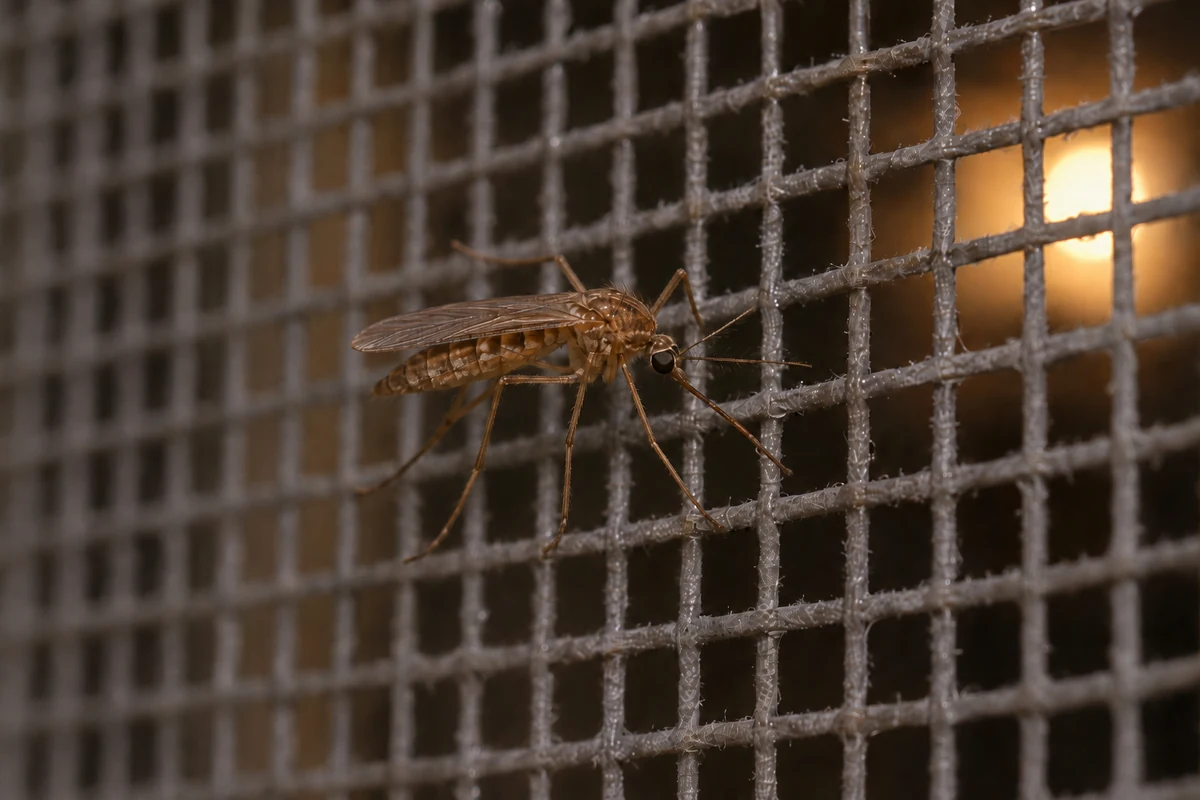

- A female Culex lays her eggs in a floating raft of 100 to 300, the CDC says.
- An egg becomes a biting adult in 7 to 10 days, so water changed every week never finishes the cycle.
- Culex adults are most active from dusk to dawn, which is why they find you in bed.
- The house mosquito gets in through unscreened windows and open doors, Texas A&M AgriLife says.
- Texas DSHS counted 25 mosquito samples in Collin County positive for West Nile virus in 2026, through 10-10-2026.





What is the house mosquito?
The house mosquito is Culex, a medium-sized brown mosquito that bites mostly at night. In Texas the one called the house mosquito is the southern house mosquito, which Texas A&M AgriLife says prefers polluted water, breeds in containers and rarely flies more than a mile from where it grew up.
Our southern house mosquito library page shows how to tell it apart from the other mosquitoes in Collin County yards. The University of Florida describes it as a nighttime-active feeder found across the southern United States. Its favorite hosts are birds, but Texas A&M AgriLife says it often comes indoors and bites people while they sleep.
That 1 mile limit is the useful part. The house mosquito in your bedroom grew up within about a mile of it, so the likeliest sources are your own containers and your neighbors’, which a weekly walk around the yard can find.
West Nile virus and the house mosquito in Collin County
Culex is the reason this mosquito matters more than an itch. The University of California says Culex mosquitoes are the most important carriers of West Nile virus in the United States, and Texas A&M AgriLife calls the house mosquito the most important carrier of West Nile virus and St. Louis encephalitis. The Asian tiger mosquito that bites by day is not thought to carry West Nile virus, Texas A&M says.

The same Texas DSHS report listed 0 human cases in Collin County through that week. Texas DSHS says about 80% of people infected with West Nile virus never get ill, about 1 in 150 develop the severe form that affects the brain and spinal cord, and there is no human vaccine. The CDC says people get infected during mosquito season, typically June through October, with diagnoses peaking in late August to early September.
How do mosquitoes get in the house?
Mosquitoes get in the house through an opening, usually a torn or loose window screen, a door left open at dusk, a gap around a door frame or a garage door left up. Texas A&M AgriLife says the house mosquito often enters through unscreened windows or open doors and bites people while they sleep.
| Way in | Why it works | What closes it |
|---|---|---|
| Torn window screen | The CDC says to repair holes in screens to keep mosquitoes outdoors | Patch or replace the screen and check it sits tight in its frame |
| Door open at dusk | Culex adults are most active from dusk to dawn, the CDC says | Keep doors shut from sunset until morning |
| Gap around a door | A worn sweep or a gap at the latch side stays open all night | Fit a new door sweep and weather stripping |
| Garage door left up | The garage connects to the house through its own entry door | Close it by sunset and check the seal along the bottom edge |
None of these is where the mosquitoes come from. They are only how the ones from the yard get inside.
Inside, check the few places water sits for days: a vase, a pet bowl, a saucer under a houseplant. The CDC says to check for water-holding containers indoors and outdoors once a week, and to use screens on windows and doors.
What causes house mosquitoes in a yard?
Standing water causes them. The CDC says Culex lays eggs on fresh or stagnant water, including buckets, tires, planters, toys, bird baths and flowerpots, and Texas A&M AgriLife says the house mosquito prefers polluted water. A bird bath full of leaves, a clogged gutter or a pot saucer is enough for a new batch.
| Where Culex breeds | What to do about it |
|---|---|
| Bird bath | Change the water at least once a week |
| Pot saucers and buckets | Empty and scrub, turn over, cover or throw out once a week |
| Pet bowls and troughs | Change the water every week |
| Rain gutters and downspouts | Clear the leaves, twigs and seeds that block the water flow |
| Rain barrel | Cover the openings with window screen or seal them, and keep filters clean |
| Overwatered beds and lawn | Water less, so puddles do not stand between waterings |
| Pond or unused pool | Clear extra plants, stock mosquito-eating fish or treat it with a Bti product |
Every row comes from the CDC and University of California mosquito guides.
The one people miss most is the gutter. A downspout that does not drain holds water along a whole run of the roof, out of sight from the ground. The University of California says leaves, twigs and seeds blocking the flow create the standing water mosquitoes grow in.
The house mosquito life cycle, from egg raft to biter
A female Culex lays her eggs one at a time, and they stick together into a raft of 100 to 300 eggs that floats on the water, the CDC says. The University of Florida says the rafts normally hatch 24 to 30 hours after they are laid, and that one female can lay up to 5 rafts in her life.
Warm water speeds it up. The University of California says that in summer the whole cycle from egg to adult can take a week or less, depending on the water temperature, so a skipped week in July is the week a bird bath produces a new batch. Our article on mosquito season in Texas covers when that warm stretch starts and ends.
Why do mosquitoes bite at night?
Mosquitoes that bite at night are usually Culex, which the CDC says is most active from dusk to dawn. Only the female bites, because she needs blood to produce eggs. The University of Florida says the southern house mosquito feeds on mammals and birds throughout the night, which is why it finds you in bed.
The mosquito biting your ankles at 2 in the afternoon is a different kind, such as the Asian tiger mosquito, which Texas A&M says bites readily during the day, especially in shade. For the night biter, the University of Florida recommends long sleeves and insect repellent for time outside after dark, and less time outdoors in those hours.
The CDC’s West Nile advice is the same in 3 parts: use an EPA-registered insect repellent, avoid being outside between dusk and dawn, and use screens on windows and doors or air conditioning to keep mosquitoes outside.
How do you get rid of house mosquitoes?
Get rid of house mosquitoes by taking away their water first. Once a week, empty, scrub, turn over or cover anything holding water, as the CDC advises, clear clogged gutters, and fix torn screens and door sweeps. Then treat the shaded plants where adults rest, and treat water you cannot drain instead of ignoring it.
- Walk the yard every 7 days. Empty every bucket, saucer, toy, tarp fold and wheelbarrow, because the CDC puts a Culex egg 7 to 10 days from biting.
- Change bird baths and pet bowls on the same day each week. The University of Florida says at least once a week for bird baths.
- Clear the gutters and downspouts. A blocked run holds water out of sight for the whole season.
- Fix the screens and the door sweeps. That is the indoor half, and it is a one-time repair.
- Treat the water you cannot drain. The CDC suggests a larvicide for ponds and unused pools that cannot be emptied. Our article on treating standing water you cannot drain explains how that works.
- Get the resting sites treated. The CDC says to contact a licensed professional to treat the areas where adult mosquitoes rest.
If the yard is producing mosquitoes faster than you can empty containers in Allen, Frisco or Plano, our mosquito control service treats the resting sites and handles the water that cannot be drained. Call us for a free estimate.
How often should pest control spray for house mosquitoes?
Pest Me Off’s seasonal mosquito program is scheduled every 3 weeks from April through October, so the treatment on shaded plants where adults rest is renewed before it wears off. The University of California says outdoor sprays only reduce adult mosquitoes for a while, and in summer a mosquito can go from egg to adult in a week or less.
That is why each visit also includes a breeding-site check. Every yard is treated by a licensed Pest Me Off technician, never a subcontractor, who walks the property for the bird baths, saucers and clogged gutters that refill after every storm, and treats the shaded plants, the space under the deck and the fence lines where adults spend the day. For water beyond your fence that nobody can drain, we can place small water stations that draw egg-laying mosquitoes.
Mosquitoes in the bedroom every night? Same-day pest control in McKinney and the surrounding cities when you call before noon.
A licensed Pest Me Off technician finds the water they breed in, treats the shaded plants where they rest, and handles the water you cannot drain.