
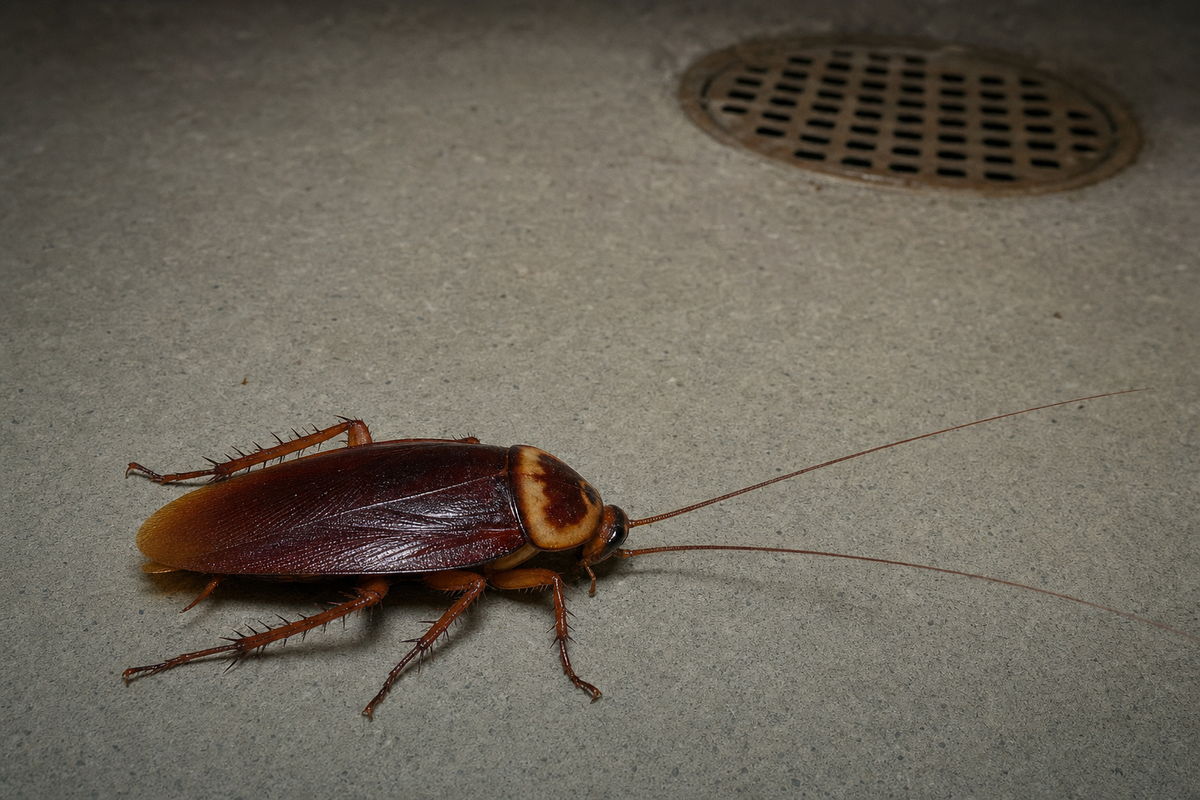
How and Why American Cockroaches Enter Your Home
You see one scurry across the kitchen floor late at night, and the first question is where do cockroaches come from. American cockroaches are the big ones: reddish-brown, two inches long, and fast. Finding one inside does not mean your house is dirty. It means they found a way in, and they had a reason to look.

- Despite the name, the American cockroach originated in Africa and arrived in North America via shipping routes hundreds of years ago.
- They can compress their bodies through gaps as thin as 3mm, about the thickness of two stacked quarters, and do not need an open door.
- Drought pushes them inside: pipes, drains, and crawl spaces hold steady moisture indoors even when the ground outside dries out.
- They show up in Collin County year-round but peak in late summer when outdoor temperatures push into triple digits.
- Roaches run a cost-benefit calculation and go wherever access and resources are easiest, not wherever a home is dirty.





Where Do American Cockroaches Come From?
Despite the name, the American cockroach originated in Africa and arrived in North America via shipping routes hundreds of years ago. They are the largest common cockroach species in the United States: adults reach 1.5 to 2 inches in length and are reddish-brown with a yellow figure-eight pattern behind their head.
They are sometimes called palmetto bugs or waterbugs depending on who you ask. In Collin County, they show up in McKinney, Allen, Frisco, and the surrounding Collin County area year-round, but especially in late summer when outdoor temperatures push into triple digits and they start looking for cooler, moister places to be.
Why Do American Roaches Come Inside?
American cockroaches are outdoor insects by nature, living in storm drains, sewer systems, mulch beds and wood piles. They come inside when something outside stops working for them: summer heat, drought drying the soil and mulch, food smells drawing them through a gap, and seasonal pressure in spring and fall.
| Cause | What is happening |
|---|---|
| Heat | Texas summers push soil and pavement well above what roaches tolerate. Your air-conditioned home runs 40 degrees cooler. |
| Drought | Moisture under mulch and in soil dries up. Pipes, drains and crawl spaces hold steady moisture year-round. |
| Food smells | Grease near a stove vent, open trash, or pet food left out overnight. They follow a scent through a gap you would never notice. |
| Seasonal pressure | In spring, populations built up over winter expand territory. In fall they seek warmth before temperatures drop. |
Where American roaches hide once they are inside: floor drains in laundry rooms and bathrooms, the space under refrigerators and dishwashers, gaps behind base cabinets, false walls around pipes under sinks, and any dark corner where moisture collects. Start there if you are trying to find the source, then call a cockroach control professional if you find activity in more than one spot.
How Do Cockroaches Get In Your House?
American cockroaches can compress their bodies to fit through gaps as thin as 3mm, about the thickness of two stacked quarters. They do not need an open door. The usual ways in are floor drains, pipe penetrations, worn garage door weatherstripping, damaged foundation vent screens and cardboard boxes carried in from outside.
| Entry point | Why it works |
|---|---|
| Floor drains | A drain tied to the sewer is a direct path inside. Utility rooms and garages are the most common in Collin County. |
| Pipe penetrations | Every pipe entering from outside passes through a hole in a wall or floor. Unsealed, that hole is an open corridor. |
| Garage doors | Worn weatherstripping on the door bottom leaves a gap wide enough for a roach to walk through upright. |
| Foundation vents and crawl spaces | Damaged or missing vent screens give access under the home, where pipes and moisture keep conditions ideal. |
| Cardboard boxes and bags | They hitch a ride on boxes stored in garages or brought in from outside. Check anything stored before it comes indoors. |
The University of California page on cockroaches says American cockroaches are common in sewers, water meter boxes and storm drains, and occasionally forage from sewers into the ground floor of buildings, especially where pipes are damaged, screens are missing or the water traps in drains are faulty.
 Source:
 Do American Cockroaches Infest Homes?
Yes, but not the way German cockroaches do, and the difference decides how the problem gets treated. An American cockroach breeds outdoors by preference, in sewers, storm drains and mulch beds, then moves in when conditions outside turn against it.
A house seeing more than one of them usually has a population living outside and a route in, rather than a group raising itself in the kitchen.
That distinction is not academic. A German roach problem is solved inside the building. An American cockroach problem is usually solved at the perimeter: the floor drain, the pipe penetration, the garage door seal. Treat only indoors and the source is untouched, so the traffic simply resumes.
They can and do settle indoors where it stays warm and damp all year, which in a Collin County home means a utility room floor drain, the void around pipes under a sink, or a crawl space. Penn State Extension puts one female at 15 to 90 egg capsules across her life, each holding 14 to 16 eggs, over a lifespan reaching 15 months. That is what turns occasional sightings into steady ones.
What Makes Your Home a Target
Two homes side by side can have completely different roach pressure based on what each household does daily. These habits raise your risk:
- Leaving dishes in the sink overnight
- Keeping pet food bowls full after dark
- Not rinsing recycling before it sits in bins
- Mulch beds or wood piles touching the foundation
- Leaky pipes under sinks or around the water heater
- Gap under the door to an attached garage
None of these make you a bad housekeeper. They just make your home more attractive than the neighbor’s. Roaches are not judging you. They are running a cost-benefit calculation, and they go where access and resources are easiest.
What to Do When You Find One
One American cockroach inside is not always an infestation. It may have come through a door left open, arrived in a box, or wandered in through a floor drain. One roach at 11 PM near a drain is different from three roaches in the pantry at noon.
Look for these signs before assuming the worst: live roaches during the day (a sign of heavy population pressure), egg cases in cabinet corners or behind appliances, or droppings that look like small dark cylinders near baseboards and drains.
If you are finding more than one, or finding them in more than one room, call a cockroach control professional. American cockroach populations in McKinney, Allen, and Frisco respond well to targeted professional treatment. Acting early makes the difference between a single roach and a full infestation.

Ryan has spent more than 16 years in pest control and wildlife management across McKinney and Collin County, from inspecting homes and treating infestations to sealing the entry points pests use to get in. He built Pest Me Off on that field experience, and every technician on the team is trained against it.
More about the Pest Me Off teamRoaches in your home? Same-day pest control in McKinney and the surrounding cities when you call before noon.
We identify the source, treat the infestation, and follow up to confirm the problem is gone.