How and Why Formosan Termites Enter Your Home
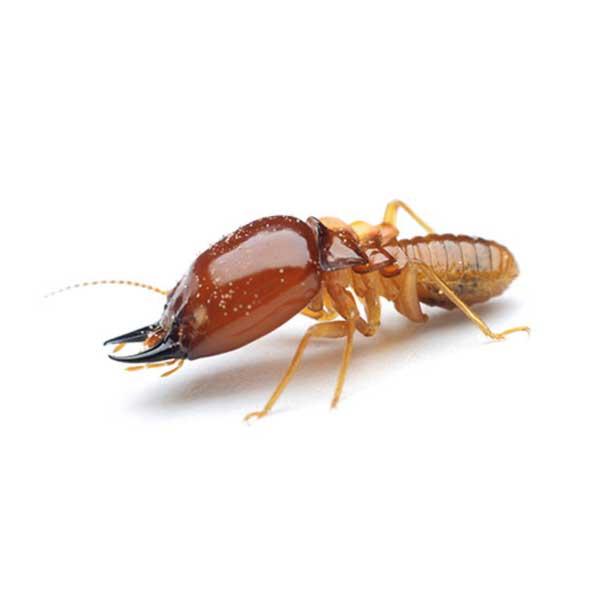
Formosan termites are not just another termite species. They build colonies 10 to 30 times larger than Eastern subterranean termites, consume wood significantly faster, and are capable of causing structural damage that takes years of Eastern subterranean activity to match – in a single season. They are established in North Texas, including Collin County, and their presence in a structure is a serious problem that gets worse quickly without treatment.
What Makes Formosan Termites Different
The Eastern subterranean termite is the most common species in North Texas and causes most of the residential termite damage across McKinney, Allen, and Frisco. Formosan termites are a different species – originally from East Asia, now established across the Gulf Coast states and spreading north.
The key differences:
- Colony size. A mature Eastern subterranean colony contains 60,000 to 300,000 workers. A mature Formosan colony contains 1 to 8 million workers. The foraging capacity is proportionally larger.
- Carton nests. Formosan termites can build carton – a structure made of chewed wood, soil, and saliva – inside wall voids and above-grade locations. This means they can establish a secondary colony above ground without continuous soil contact, making them harder to detect and control than strictly subterranean species.
- Damage speed. A Formosan colony can consume roughly a pound of wood per day. Structural members in an infested home can be compromised within months of a large colony establishing foraging galleries.
How Formosan Termites Enter Structures
Formosan termites are subterranean – their primary colonies live in soil and they forage upward into structures. Entry routes:
- Wood-to-soil contact. Any wood structural member that directly contacts soil – a fence post, deck post, wood step, or sill plate on an unprotected slab – provides a direct bridge from the colony in the soil into the structure. This is the easiest entry point and the first thing any inspection should check.
- Foundation cracks. Formosan workers, like all subterranean termites, travel through cracks as thin as 1/32 of an inch. Expansion cracks, plumbing penetrations, and any gap in the slab or foundation wall are sufficient entry points. Workers construct mud tubes to cross exposed masonry and concrete, so a mud tube on the side of a foundation pier or beam is a direct sign of active foraging.
- Expansion joints and utility penetrations. Where plumbing pipes or conduit pass through the slab, the surrounding gap is a common entry point. In homes built on slab foundations – the majority of construction in McKinney and Collin County – these are among the highest-risk locations for termite entry.
- Moisture-damaged wood. Both Formosan and Eastern subterranean termites are moisture-driven. Wood with existing moisture damage (rot from a roof leak, repeated condensation, a plumbing leak in the wall) is a target because it is already soft and metabolically available. Water-damaged wood near the foundation, in a crawl space, or around a leaking pipe is a high-risk entry zone.
What a Formosan Infestation Looks Like from the Inside
- Mud tubes on walls or in wall voids above the foundation, often found during remodeling or after water damage exposes walls
- Hollow-sounding wood when tapped – structural members consumed from the inside retain their outer shell but have no integrity
- Bubbling or blistering paint on wood surfaces, caused by moisture in active galleries just beneath the paint layer
- Swarmers (alates) in spring. Formosan swarmers are larger than Eastern subterranean swarmers – about 14 to 15mm including wings – and swarm later in the evening, often around light sources. Finding a pile of wings inside near a window or light fixture in April through June is a strong sign of a nearby mature colony
- Carton material in wall voids – if you open a wall during renovation and find a grey-brown, papier-mache-like material inside, that is Formosan carton and indicates an above-ground secondary colony
Formosan termite treatment requires baiting systems, liquid soil treatment, or a combination – and follow-up monitoring to confirm the colony is eliminated. In McKinney and Collin County, any sign of termite activity warrants a professional inspection to determine the species and the extent of the infestation before choosing a treatment approach.
Termite activity in your home? Same-day termite control in Collin County.
We inspect the full structure, identify the species, and deploy the treatment approach that works for your situation.