
How to Get Rid of Fleas in Your House, and When to Call a Professional
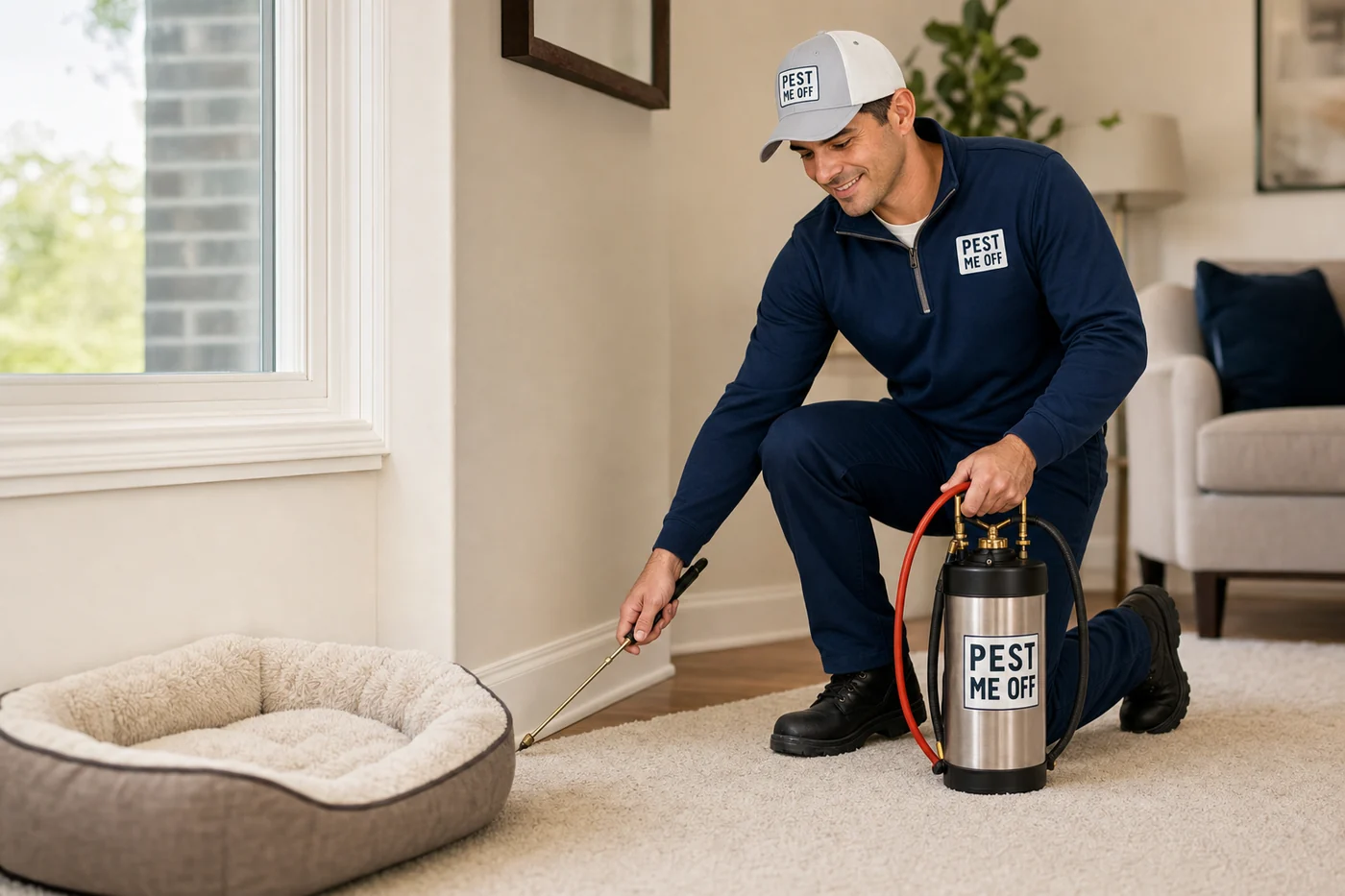
To get rid of fleas in your house, treat every pet through your vet, wash and vacuum everywhere the pets rest, and spray the carpets with a product that stops flea eggs and young fleas from growing up, all at the same time. Then keep vacuuming for about two weeks, because new fleas keep hatching from cocoons that no spray reaches. When Pest Me Off treats a home for fleas in Collin County, the technician works the carpets, furniture and baseboards where the eggs and young fleas live, not just the spots where adults are jumping.

- A female cat flea lays about 20 to 50 eggs a day, and they fall off the pet into carpet and bedding.
- At normal room temperature the whole flea life cycle, egg to adult, can take about 18 days.
- Adult fleas spend most of their time on the dog or cat, which is why the pet must be treated.
- After a carpet spray, new adult fleas keep coming out of their cocoons for about 2 weeks.
- Young fleas need at least 75 percent relative humidity and rarely survive in direct sun.
- Room foggers, or bug bombs, seldom work on fleas because the spray goes up into the air and misses the carpet.






How do you get rid of fleas in your house fast?
The fastest way to get rid of fleas in your house is to treat every pet and the house at the same time, the order the University of California and the University of Kentucky both give. Treat each pet, wash pet bedding, vacuum, then spray carpets with an insect growth regulator.
Give each dog and cat a spot-on or oral flea product your vet recommends, wash pet bedding and throw rugs, vacuum carpets and furniture thoroughly, then spray carpets and pet resting spots with a product that contains an insect growth regulator.
Speed comes from doing all of it at once. The fleas you see are the adults, and the University of Kentucky guide to flea control and prevention says the adults spend most of their time on the pet, while hundreds or thousands of eggs, young fleas and cocoons sit elsewhere in the home or yard. The flea on dogs and cats is usually the cat flea, which Kentucky’s entomologists call the most common flea on both, so every animal in the house gets treated, not just the one scratching.
Washington State University’s Pestsense puts numbers on that split. A typical flea population in a home is 50 percent eggs, 35 percent young fleas, 10 percent cocoons and only 5 percent adult fleas, so the 5 in 100 you can see are the smallest part of the problem.
The step-by-step way to get rid of fleas in the house
- Treat every dog and cat at the same time as the house with a spot-on or oral product from your vet. Never use a carpet or yard spray on a pet, and never put a product containing permethrin or amitraz on a cat.
- Pick up toys, clothes and stored items from the floors, under the beds and in the closets, so every carpeted spot can be reached.
- Wash pet bedding and throw rugs in hot, soapy water, and keep washing the pet bedding at least once a week.
- Vacuum carpets, upholstered furniture, under the cushions, beneath the beds and along the edges of every room. Vacuuming picks up eggs and young fleas and makes the cocoons hatch sooner. Seal the bag and put it in the outdoor trash.
- Spray carpets, rugs, the floor under furniture and every spot a pet sleeps with a flea product whose label lists both an adult flea killer and an insect growth regulator such as methoprene or pyriproxyfen. Hardwood and tile usually only need vacuuming. Keep people and pets off the carpet until it dries, which may take a few hours.
- Keep vacuuming every day or two for the next 2 weeks, and do not spray again for at least 4 weeks. The fleas that show up now are hatching into the treatment, not a sign it failed.
Skip the bug bombs. Kentucky’s entomologists say total release foggers seldom work against fleas, because the spray goes up into the air instead of down to the base of the carpet where young fleas live.
How long does it take to get rid of fleas?
Getting rid of fleas in a house takes 2 weeks or more, not a day, even when every step is done right. UC Pest Notes says new adult fleas keep coming out of their cocoons for about 2 weeks after a carpet spray, and the University of Kentucky says to expect some fleas for a few weeks.
Kentucky adds that treating again may be needed if adults are still showing up beyond 4 weeks.
The clock is set by the flea life cycle. The University of California Pest Notes on fleas put the full cycle from egg to adult at about 18 days at normal room temperature, with eggs hatching in about 2 to 5 days and the young feeding for 8 to 15 days before they spin a cocoon.
Why do fleas keep coming back after you treat?
Fleas keep coming back after you treat because the cocoon stage survives the spray. The University of Kentucky calls the flea cocoon impervious to insecticides, and UC Pest Notes says fully formed fleas can wait inside their cocoons for up to 12 months in cool conditions, then hatch when warmth or footsteps tell them a host is near.
Treating only the pet, or only the adults, leaves that stage untouched.

That is why a house left empty for a while can greet the next people through the door with a wave of fleas. The other common reason is a spray with no insect growth regulator in it. UC Pest Notes says sprays without one often fail against young fleas, because the material never reaches them at the base of the carpet fibers.
Do you need to treat the yard for fleas?
A home rarely needs the whole yard treated for fleas. The University of Kentucky says flea problems usually end by treating the pet and, if needed, the inside of the home, and UC Pest Notes calls treating the entire yard seldom necessary.
A yard treatment belongs where pets rest outdoors, under decks, along fences, beside the foundation and in doghouses, because young fleas rarely survive in full sun.
A simple test tells you whether the yard has fleas at all. Both universities suggest walking the pet’s favorite spots in white socks pulled up to the knee, where any adult fleas show up against the white. Around McKinney homes, start with shaded beds and the cool ground under a deck, because young fleas rarely survive on open lawn in full Texas sun.
Doing it yourself versus a professional flea treatment
Both routes rely on the same pet treatment and the same weeks of vacuuming. The difference is how much of the house the spray reaches and whether anyone looks for what is bringing the fleas in.
| What it covers | Doing it yourself | A Pest Me Off treatment |
|---|---|---|
| Fleas on the pet | Your vet’s spot-on or oral product | The same, a technician never treats the pet, your vet does |
| Carpets and furniture | A store spray, which often fails unless the label lists a growth regulator | An adult flea killer with a growth regulator over every carpet, under furniture and cushions, and along baseboards |
| Room foggers | Often tried first, seldom work on fleas | Never used |
| The yard | A hose-end sprayer, if you know where the pets rest | Shaded resting spots, fence lines, under decks and along the foundation |
| Wildlife under the house | Easy to miss | Checked for during the inspection |
| Follow-up | Vacuuming every day or two for 2 weeks | The same vacuuming, with the technician telling you what to expect |
The pet is treated through your vet either way.
How Pest Me Off handles fleas
Pest Me Off’s flea and tick control starts with an inspection of every room where the pets sleep, to find where the eggs and young fleas are building up. A technician then treats the carpets, rugs, the floor under furniture and cushions, the baseboards and the shaded outdoor spots where pets rest, with an adult flea killer paired with a growth regulator, so the next generation never grows up. We ask that every pet is on a vet’s flea product the same week, and we tell you to keep vacuuming while the last cocoons hatch.
When there are no pets in the house, the fleas are usually coming from wildlife. Kentucky’s guide names raccoons, opossums, skunks and squirrels living in an attic, a chimney or under the home, and our technicians check those spots. Flea bites and the no-pets puzzle have their own article, Flea Bites on Humans, and Why You Can Have Fleas With No Pets. Same-day service is available for McKinney and the surrounding cities when you call before noon, with no-contract options.
Fleas still hatching after you treated the house? Same-day pest control in McKinney and the surrounding cities when you call before noon.
We treat the carpets, furniture, baseboards and shaded outdoor spots where flea eggs and young fleas live, and check for wildlife bringing fleas in. Free estimate. No-contract options.