Are Crickets and Grasshoppers the Same?
Crickets and grasshoppers are related insects in the order Orthoptera, and at a glance they look similar – both jump, both have long hind legs, and both are common across North Texas. But they behave very differently, live in different places, and only one of them regularly invades homes. If you are dealing with a pest problem, the distinction matters.
How to Tell Them Apart
The physical differences are consistent and visible once you know what to look for:
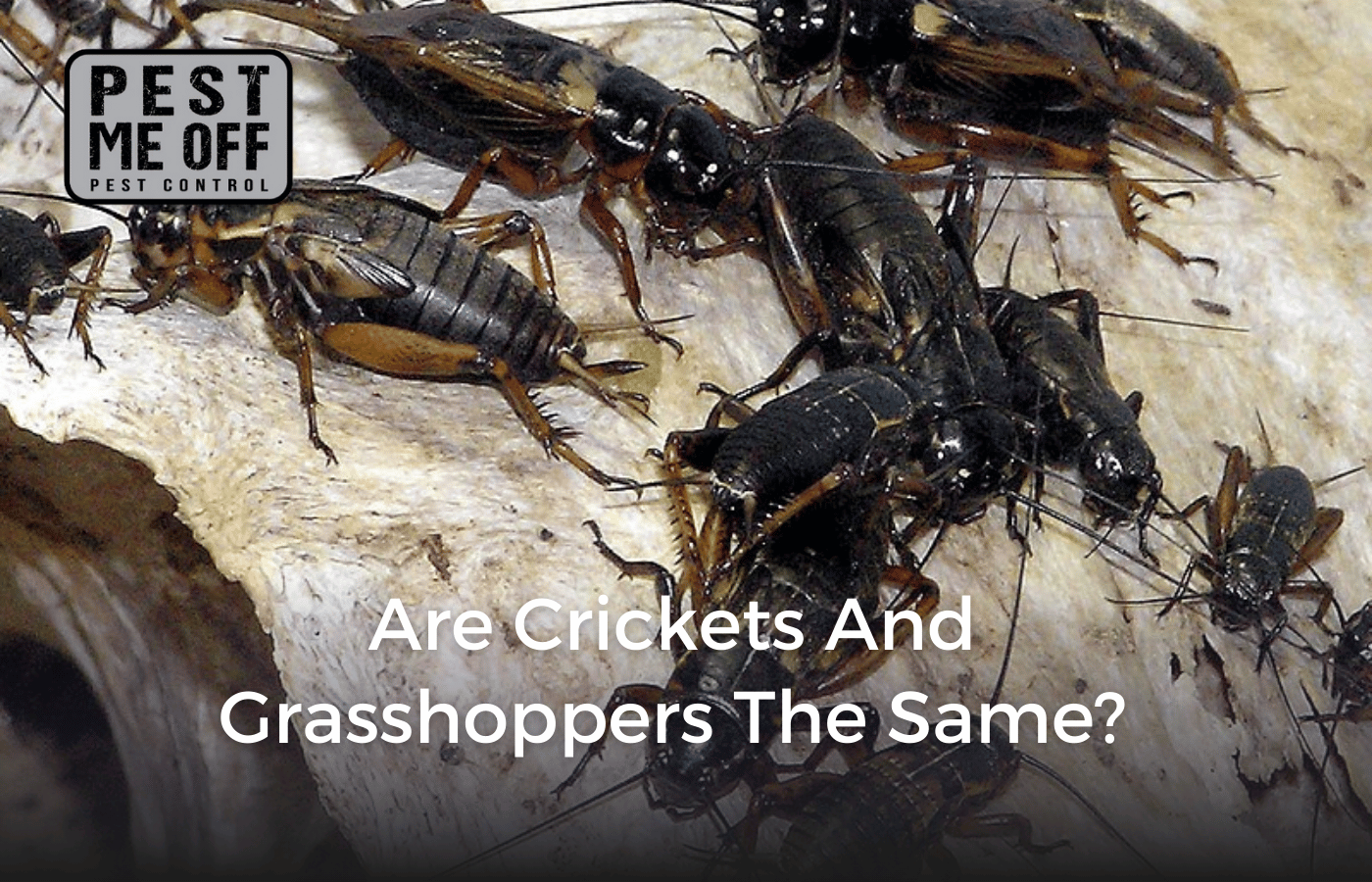
- Antennae length. This is the fastest way to tell them apart. Crickets have antennae that are as long as or longer than their body – often nearly twice the body length. Grasshoppers have short, thick antennae that rarely extend past their head. If the insect has very long, thin antennae, it is a cricket.
- Color. Crickets are dark – typically black or dark brown. Grasshoppers are usually green, tan, or brown to blend into vegetation and open fields. The black crickets common in North Texas (field crickets) are nearly entirely black.
- Body shape. Grasshoppers have longer, more slender bodies designed for open-field camouflage. Crickets have shorter, rounder, more compact bodies with a slightly flattened appearance from above.
- Sound. Only male crickets chirp – they produce sound by rubbing their wings together (stridulation). Grasshoppers produce sound differently and far less consistently. The persistent chirping during late summer nights in North Texas is exclusively crickets.
- Activity time. Crickets are primarily nocturnal. Grasshoppers are active during the day. If you see jumping insects in your yard during the day, grasshoppers are more likely. If they are appearing at night near lights, it is crickets.
Why This Difference Matters for Pest Control
Grasshoppers are outdoor insects. They live in fields, meadows, and open grass areas and rarely enter structures. A grasshopper in the house is an isolated stray. They do not nest in or around homes, do not swarm exterior lights, and are not a home pest problem in any practical sense across McKinney, Allen, or Frisco.
Crickets are a different situation entirely. Field crickets and house crickets in North Texas:
- Swarm exterior lights in large numbers during August and September
- Pile against garage doors, exterior walls, and entry points in late summer
- Push inside through gaps under doors, utility penetrations, and any available entry
- Chirp through the night inside structures, disrupting sleep
- Chew through fabric, leather, stored clothing, and paper when present in large numbers indoors
- Attract spiders, which enter structures following cricket prey populations
North Texas Cricket Season: What Drives It
Late summer cricket pressure in Collin County is driven by two things happening simultaneously:
Cricket populations that started in spring have been growing through the summer. By August, colonies are at their largest. At the same time, crickets are attracted to light – exterior lighting becomes a primary draw as nights cool slightly after peak summer heat. A porch light, garage light, or illuminated doorbell camera left on through August nights pulls crickets from a significant distance.
The surge is also connected to moisture and temperature cycles. Hot, dry summers followed by late summer humidity shifts trigger cricket migration toward structures. Homes in McKinney near open fields or undeveloped lots typically see heavier cricket pressure because the adjacent land supports large populations through the summer.
Reducing exterior lighting during peak cricket season, switching to yellow or sodium vapor bulbs that attract fewer insects, and perimeter treatment applied before August are the most effective ways to reduce how many crickets reach your foundation. Once they are inside, the chirping and fabric damage require active treatment to resolve.
Which One Are You Dealing With?
If jumping insects are concentrated at your garage door, under porch lights, and pushing inside your home in late summer – crickets. If you see large green or tan jumping insects in your yard during daylight hours but they are not approaching the structure – grasshoppers, and no pest intervention is needed.
For cricket pressure around your home or inside it, professional cricket and perimeter treatment is more effective than DIY approaches once the swarm season is underway. The treatment targets the staging population near the foundation before they find their way in.
Cricket swarm at your home? Same-day perimeter treatment in Collin County.
We treat the entry zone and perimeter to stop the migration before it gets inside.