How Are Centipedes and Millipedes Different?
Both have long segmented bodies with legs down their whole length, and both end up inside homes in Collin County. But centipedes and millipedes are completely different animals with different behaviors, different risks, and different explanations for why they are showing up in your house. Knowing which one you are dealing with tells you what to do next.

- Centipedes are fast hunters that chase live insects. Millipedes are slow decomposers that eat dead plant matter.
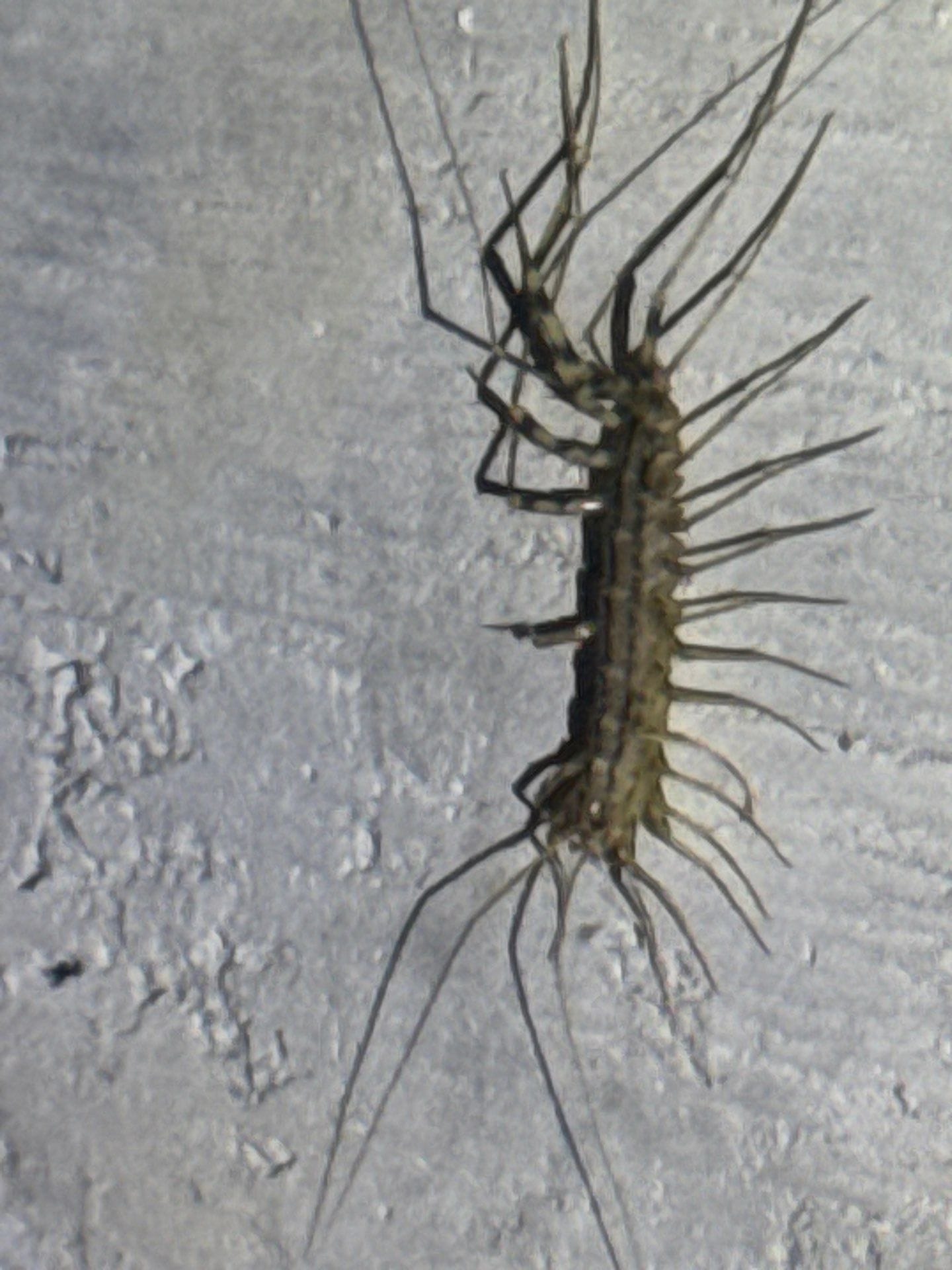
- A centipede has one pair of legs per body segment. A millipede has two pairs per segment and a rounder, slower body.
- Centipedes can deliver a mild, painful bite if handled. Millipedes cannot bite, but may release a mild irritating fluid.
- Both point to excess moisture, but a centipede also means prey is nearby, while a millipede means outdoor moisture has overflowed inside.
- Millipedes cannot breed indoors, so a group inside is a one-time migration. An ongoing centipede presence points to a lasting indoor insect problem.





Centipedes and Millipedes, Told Apart
Movement is the fastest way to tell them apart, but there is more to it than speed.
| Attribute | Centipede | Millipede |
|---|---|---|
| Movement & diet | Fast-moving hunter that chases live insects | Slow decomposer that eats dead plant matter |
| Body & legs | Flat body, one pair of legs per segment | Round body, two pairs of legs per segment |
| Bite risk | Can bite if handled, mild pain like a bee sting | Cannot bite, but may release a mild irritating fluid |
| What it means indoors | Signals moisture and nearby prey to hunt | Signals outdoor moisture that has overflowed inside |
House centipedes, the species most common indoors in Collin County, move so fast they look almost liquid crossing a floor. Millipedes never sprint. They flow in a slow wave and curl into a tight coil the moment they are disturbed.
 Source:
 Can Centipedes or Millipedes Hurt You?
Centipedes can bite if handled, injecting mild venom through pincer-like front legs that causes brief, localized pain similar to a bee sting. Millipedes cannot bite at all. When threatened, they curl into a coil and may release a mild defensive fluid instead.
The centipede bite is not dangerous for most people, though children and anyone with a known sensitivity should avoid handling one. If millipede fluid touches skin, wash it off and keep it away from your eyes. Beyond that momentary irritation, both are otherwise harmless to have around.
What Centipedes and Millipedes Tell You About Your Home
Finding either one inside is a signal, but the signals mean different things.
Centipedes inside your home mean two things: there is a moisture problem somewhere, and there is prey for them to hunt. House centipedes do not wander in by accident. They follow their food supply. If centipedes are appearing regularly in your bathroom, laundry room, or utility room, there are enough insects in that space to sustain a predator. The centipede is not your pest problem. It is the symptom of a pest problem.
Millipedes inside your home are almost always a moisture issue outdoors that has overflowed indoors. They live in mulch, leaf litter, and decaying wood, anywhere organic matter decomposes in a moist environment. Millipede invasions in McKinney and Allen homes typically happen after wet weather, when the outdoor population explodes and nearby soil becomes saturated. They migrate toward dry ground and end up inside through foundation gaps and door sweeps.
Millipede invasions are not infestations. Millipedes cannot reproduce inside your home. They need outdoor decomposing material for that. A group of millipedes inside is a migration event, not an establishment. Seal the entry points, remove the excess mulch against your foundation, and the problem stops. An ongoing centipede presence is different. It suggests a sustained indoor pest population feeding them.
Entomologists at the University of Kentucky, Centipedes and Millipedes in and Around the Home say these gatherings can coincide with heavy rain, though the exact trigger is not known. Millipedes that get inside cannot survive there and are usually found dead in piles. Sweep them up and close the gap they came through.
How to Reduce Centipedes and Millipedes Around Your Home
Both centipedes and millipedes are moisture-driven. Reducing moisture both inside and outside your home is the most effective long-term control approach.
- Fix any leaks under sinks, around water heaters, or in crawl spaces.
- Run a dehumidifier in utility or laundry areas that stay damp.
- Keep mulch, wood piles, and leaf litter at least 6 inches from the foundation.
- Replace weatherstripping on doors and seal gaps around pipes at the foundation.
- Fix crawl space ventilation if that area stays persistently damp.
If centipedes are appearing frequently inside, a pest inspection makes sense, not to treat the centipedes themselves but to find what they are feeding on. Common prey includes silverfish, firebrats, and small roaches living in the same damp areas. Treating the prey population removes the food source, and the centipedes follow. Contact us if you are seeing regular centipede activity in Frisco, Prosper, or anywhere in Collin County.
Does Diatomaceous Earth Work on Centipedes and Millipedes?
It can help when it stays dry and sits where they crawl. The University of Kentucky says dusts such as diatomaceous earth work well for treating cracks, weep holes and similar foundation openings. The National Pesticide Information Center says it dries insects out and only works while kept dry and undisturbed.
Centipedes or millipedes turning up inside? Same-day pest control in McKinney and the surrounding cities when you call before noon.
We find the source, treat the infestation, and help you keep them out long-term.