Yellowjacket Exterminator in McKinney TX
Serving McKinney, Plano, Frisco, Allen and across Collin County.


Why McKinney Homeowners Choose Pest Me Off for Yellowjacket Control
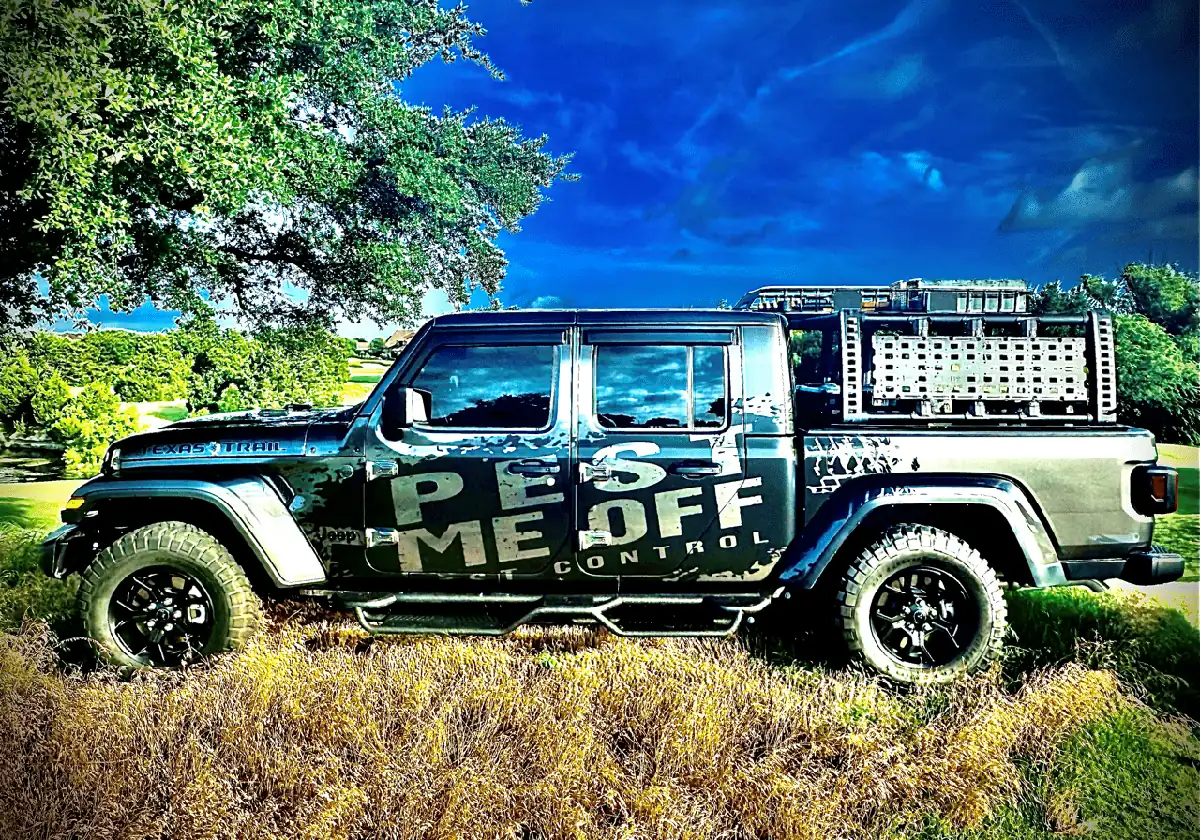
Pest Me Off is a family-owned, Texas-licensed pest control company that has been clearing hidden yellowjacket nests from McKinney, Plano, Frisco and Allen homes since 2014. Yellowjacket control is part of our wider wasp and hornet service.
Every home is treated by a licensed applicator, never a subcontractor. The danger with yellowjackets is that the nest is almost always hidden, a ground burrow by the foundation or a colony inside a wall, and one nest often has several entry holes. A can of spray emptied into one hole leaves thousands of workers alive below. We find the real nest, treat it at the source at the right time of day, and only seal the openings once the colony is confirmed dead.
How our yellowjacket nest removal works
Emptying a can of spray into one hole drops the workers you can see and leaves thousands more alive in the nest below. With yellowjackets the nest is almost always hidden, and one colony often uses several entry holes, so the whole job hinges on finding the real nest first. The RID Method does exactly that: we locate the actual nest, eliminate it at the source at the right time of day, then ring the foundation and treat the entry zones. Remove and Install both happen on the initial visit. That is our one-time Yellowjacket Annihilation service. Defend is the ongoing step, available on a recurring plan, for homes that face the late-summer surge every year and want to stay clear.
Remove the Nest at the Source
The workers buzzing the entry hole are not the problem, the hidden nest is. We Remove it by finding the real colony first: a ground burrow near the foundation, a wall void behind a weep hole, or a structural cavity, often with several entries that all feed one nest. The product goes in at the right time of day, when the full crew is home, and a professional-grade dust gets carried deep into the nest to reach the queen, not just the workers at the door.
- We locate the real nest and every entry, not just the one hole you found
- Treated at the right time of day, when the full colony is in the nest
- Professional dust reaches the queen deep in the nest, so the colony actually dies
- EPA-registered, pet-safe once the treatment settles (1 to 2 hours)
Install Scorched Earth Barrier
Once the colony is treated, we Install the Scorched Earth Barrier around the foundation and treat the entry zones yellowjackets use on a Texas slab home: weep holes, foundation gaps, expansion joints, and utility penetrations. A spot where a nest was this year draws a new queen next spring, so treating those zones matters. We never plug the hole before the colony is dead. Sealing a live nest pushes the workers through the wall and into the house through outlets and light fixtures, so openings are sealed only after we confirm the colony is gone.
- Scorched Earth Barrier ringed around the foundation and nest zones
- Weep holes, foundation gaps, and expansion joints treated, not blindly sealed
- We never seal an entry until the colony is confirmed dead, so they cannot break inside
- Pets and kids back outside in 1 to 2 hours
Defend Year-Round
Remove and Install kill the nest you have today. Defend keeps it that way. Quarterly visits keep the Scorched Earth Barrier live so when colonies hit peak size in late summer, a new queen choosing your foundation or a wall void runs into a treated zone instead of a quiet place to build. The one-time Yellowjacket Annihilation service handles R and I. Defend is the step you add when you want your home held through the August-to-October surge every year.
- Quarterly re-treatment keeps the barrier live through the late-summer peak
- Guaranteed re-service whenever our tech confirms it is warranted
- Contract plans and no-contract options both available
- Quarterly plans start at $40/mo, billed monthly
University of Florida IFAS Extension documents that yellowjacket nests are best treated by applying insecticide into the nest entrance after dark when the workers have returned, and that the entrance should be left open afterward so the colony is eliminated rather than driven elsewhere. That is exactly why we find the real nest, treat it at the right time of day, and never seal the hole until the colony is dead.
Pricing for Yellowjacket Control
Three options, all built around the same job: find the real nest, kill the colony at the source, then barrier the foundation and entry zones. Pricing scales with home size, how the nest is hidden, and how heavy the pressure is. The free inspection confirms your number before anything gets scheduled.
Our one-time knockout for a nest you need handled right now.
No return visits included; recurring plans add re-service.
- Finds the real nest, kills the colony at the source, and barriers the foundation, in one visit
- Pay once, no annual contract
- We seal the openings only after the colony is confirmed dead
The plan most McKinney homeowners choose.
- The full treatment repeated every quarter
- A Scorched Earth Barrier kept active around your foundation year-round
- Holds the line through the late-summer surge when colonies peak
- Guaranteed re-service whenever our tech confirms it is warranted
The flexible middle ground.
- The same full treatment and year-round foundation barrier
- Billed at $50/mo with no annual commitment
- One guaranteed re-service every six months if a covered nest returns
- Cancel any time without penalty
Want pricing detail for other pest services? See the full Pricing page.
Why DIY Yellowjacket Spray Fails in McKinney TX
Every can of wasp spray makes the same promise. Every nest that comes roaring back the next afternoon proves it wrong, and with yellowjackets the wrong move is genuinely dangerous. The problem is not the product. It is that the nest is hidden, the colony has thousands of workers below the hole, and the most common mistake of all, sealing the entry, drives them straight into your living space. Here is what homeowners try, why it does not work, and what our team does differently.
| What homeowners try | Why it fails | What actually works |
|---|---|---|
|
Empty a can of wasp spray into the holeRaid, Spectracide wasp jet class
|
|
Find the real nest and treat it at the source
Professional dust applied into the nest at the right time of day, carried deep to the queen by the workers, by a licensed applicator. |
|
Plug the hole in the wall or groundcaulk, foam, or a rag in the opening
|
|
Kill the colony first, seal the hole last
We leave every opening clear until the colony is confirmed dead, then seal it so a new queen cannot reuse the void. |
|
Mow or trim right over the entry hole
|
|
Mark the spot, stay back, call a pro
|
The Yellowjacket in McKinney, Plano, Frisco & Allen
Yellowjackets are the most dangerous stinging insect a Collin County homeowner runs into. The nest is almost always hidden, a burrow in the lawn, a colony inside a wall, or a void under the slab, and it is usually found by accident while mowing or gardening. Colonies grow all summer and hit peak size and peak aggression from August through October. They look like a bee but are not fuzzy, and they sting again and again. The fix starts with finding the real nest.
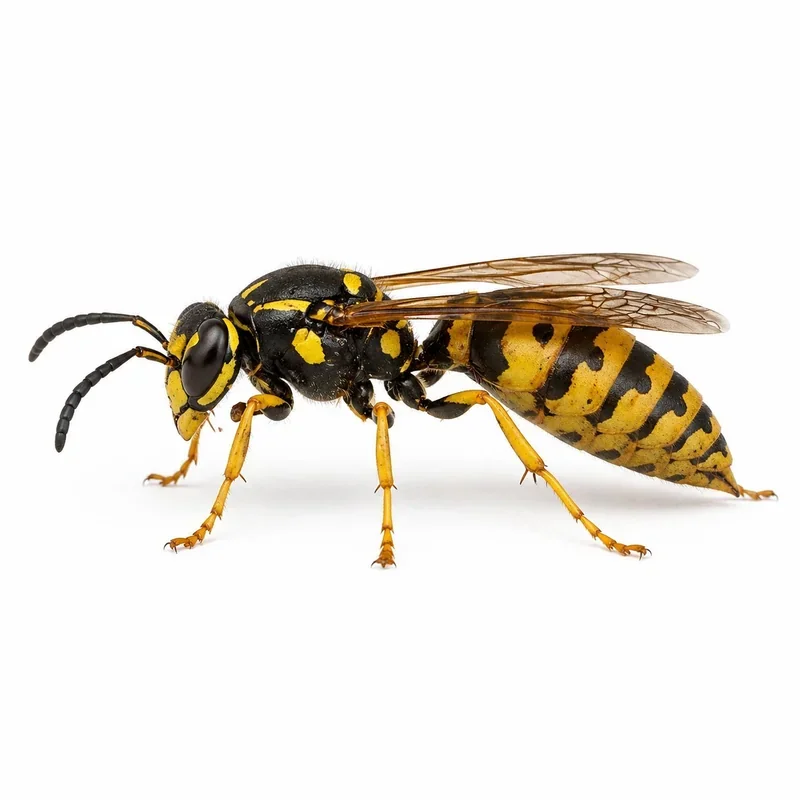 Stinging risk · attacks in numbers when the nest is disturbed
Stocky, hairless, shiny, with bright yellow and black banding and a blocky head. Fast, direct flight with legs tucked in. Looks like a bee but is not fuzzy, a honey bee is fuzzy and golden-brown.
Hidden. A ground burrow by the foundation, a wall void reached through a weep hole, or a structural cavity. One nest often has several entries. The hole is the only visible sign.
Queens start nests in spring; colonies build through summer and peak August through October. That is the most dangerous window, with the most workers and the shortest fuse.
A honey bee swarm is a temporary fuzzy cluster, not a hole in the ground. Killing a misidentified swarm wastes a pollinator, so we confirm it is a yellowjacket before treating.
High near the nest. They sting multiple times and release a chemical that calls in more workers. A nest hit by a mower or trimmer erupts into a mass attack with no warning.
Locate the real nest and every entry first, treat it at the source at the right time of day, Install the Scorched Earth Barrier, and seal the openings only once the colony is dead.
Yellowjacket Prevention in McKinney TX Homes
Yellowjackets are a yearly Texas reality, not a one-time problem. Our one-visit treatment kills the nest you have today. Keeping the next one out takes treated entry zones, a foundation barrier kept live, and catching a new nest while it is small in spring instead of huge in fall.
A nest you can barely find in spring becomes a colony of thousands by fall. Yellowjackets peak August through October, the same window they are most aggressive and most often hit by a mower. Catching a nest early in the season is far safer and easier than facing it at full size, which is why a barrier kept live through the year matters.
Weep holes and foundation gaps are the doors to a wall nest. On a Texas slab home the brick weep holes, foundation gaps, expansion joints, and gaps around HVAC and utility lines are all sized for a yellowjacket to slip inside and build in the void. Across McKinney, Plano, Frisco, and Allen, the wall-void calls almost always trace back to one of these openings left untreated from the year before.
Walk the yard before you mow, and catch a nest while it is small. Through summer, watch for a steady stream of wasps going in and out of one hole in the lawn, a flower bed, or a wall. If you see it, mark the spot, keep people and pets back, and do not mow or run a trimmer near it. A nest spotted in June is a far safer, smaller job than the same nest in September.
The honest math: a single Yellowjacket Annihilation visit kills the nest you have today. A quarterly plan does that and keeps the barrier live so a new queen choosing your foundation next spring runs into a treated zone. For homes that get a nest most years, recurring is the model that actually holds the line.
Ongoing service keeps the barrier live through the late-summer peak. Quarterly plans start at $40/mo with guaranteed re-service when our tech confirms it is warranted. No-contract options are available too.
See plan optionsYellowjacket Control in McKinney, Allen, Frisco, and Plano
Yellowjacket pressure runs hardest where there is open lawn, irrigated beds, and disturbed soil for ground nests, exactly the layout of Collin County’s slab-home subdivisions. We dispatch daily across all 14 service cities.

Allen, TX
High pressureThe mature, heavily landscaped yards through Twin Creeks and Cypress Meadows give ground-nesting yellowjackets exactly what they want: open turf, irrigated beds, and irrigation valve boxes to nest under. Around Watters Creek, patio dining and trash points draw workers in late summer. We find the real nest first, then barrier the foundation and entry zones.
Allen pest control
Frisco, TX
High pressureMaster-planned neighborhoods like Stonebriar and Phillips Creek Ranch pair fresh construction soil with heavily irrigated beds, ideal for ground-nesting yellowjackets to dig in along a foundation edge. Hollyhock backyards with playscapes and pet areas are where families find a nest the hard way, mid-mow, in late summer.
Frisco pest control
McKinney, TX
High pressureEstablished neighborhoods across Stonebridge Ranch and Craig Ranch have mature turf and settled landscaping where ground nests turn up year after year along foundation beds. Painted Tree new builds have fresh weep holes and foundation gaps a queen can claim for a wall void. We locate the nest and treat at the source instead of chasing one entry hole.
McKinney pest control
Plano, TX
High pressurePlano packs dense established subdivisions and busy outdoor dining, so yellowjacket pressure runs high every late summer. Mature yards through Gleneagles and Willow Bend have the settled turf and irrigation boxes ground nests favor. Homes near Spring Creek back onto grassy corridors and greenbelts where colonies build before pushing toward the houses alongside them.
Plano pest controlGet a free yellowjacket nest removal estimate · response in 1 hour during business hours
Tell us where you are seeing the wasps going in and out, a hole in the lawn, a wall, or a weep hole. We confirm your free same-day visit within 1 hour during business hours (Mon-Fri 8am-5:30pm).
- We find the real nest, not just one entry hole
- Never plug the hole until the colony is confirmed dead
- Pet-safe products, family back outside in 1-2 hours
- Same-day service when you call before noon
- Guaranteed re-service on recurring plans, when we confirm it is warranted
Thanks! We got your request.
A Pest Me Off team member will confirm within 1 hour during business hours.
For immediate same-day help: (972) 866-4720
Yellowjacket Control FAQ
Why can’t I just plug the hole where they are coming in?+
Are yellowjackets more aggressive in the fall?+
Is it a yellowjacket or a honey bee?+
Are your yellowjacket treatments safe for my dog and kids?+
What should I expect in the day or two after treatment?+
Why doesn’t a can of wasp spray kill the nest?+
There’s a hole in my lawn with wasps going in and out. What do I do right now?+
Will yellowjackets come back to the same spot next year?+
Ready to get rid of the nest in McKinney?
Found a hole with wasps streaming in and out? Our team has cleared hidden yellowjacket nests across McKinney, Plano, Frisco, and Allen since 2014. 260+ five-star reviews. Best Pest Control McKinney 2025 and 2026. Same-day service when you call before noon. Texas TPCL #0937184. Open Mon-Fri 8am-5:30pm.