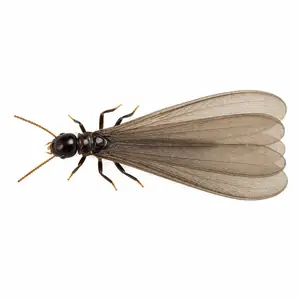
Formosan Subterranean Termite in Collin County, TX | Identification and Control
The Formosan Subterranean Termite (Coptotermes formosanus), also called the super termite or Formosan termite, is the most destructive termite species established in the United States. Colonies can exceed several million workers, cause structural damage faster than any native termite, and uniquely build aboveground carton nests inside wall voids and attic spaces that soil-only treatment cannot reach. Collin County is confirmed in the Formosan termite quarantine zone under Texas Plant Protection Regulations.
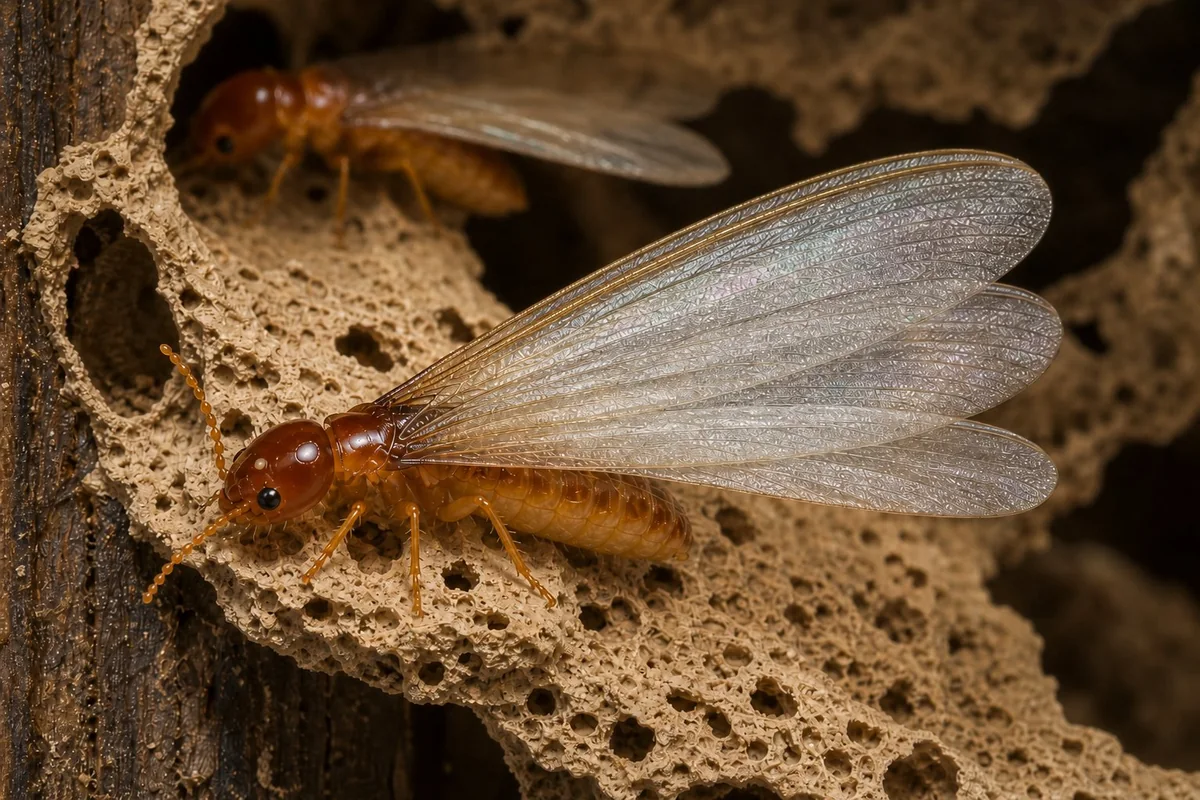
The most destructive termite in the United States. Unlike Eastern Subterranean Termite, Formosan builds aboveground carton nests inside moist wall voids, meaning an aerial colony can survive with zero soil contact as long as structural moisture is present. A mature colony at full size can consume roughly 13 ounces of wood per day.
Formosan colonies feed year-round under heated structures, but the diagnostic swarm window is late spring through summer at night. A dusk swarm in May or June is a Formosan event until proven otherwise. Eastern Subterranean Termites swarm in spring daytime; that timing difference is your fastest field tell.
Pattern from TAMU Urban Entomology Program termite monitoring data and Pest Me Off service call records across Collin County, 2023 to 2026. Underground feeding continues year-round regardless of surface activity level.
What Formosan Subterranean Termites Look Like
Three castes, with diagnostic tells that separate Formosan from every other termite
USDA ARS research on Formosan subterranean termites confirms the same three-caste structure as all termite species: workers, soldiers, and alates (swarmers). The workers look nearly identical to Eastern Subterranean Termite workers and cannot be reliably field-identified without a microscope. The soldiers and alates are where Formosan has clear visual tells.
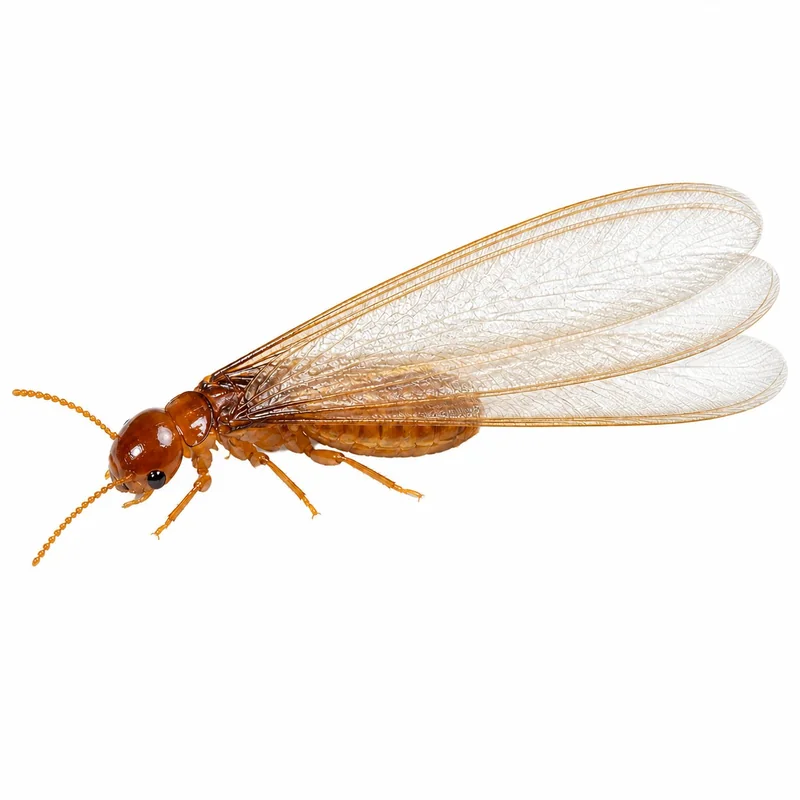
Soldiers are the diagnostic caste. The LSU AgCenter termite identification guide describes the Formosan soldier head as rounded, oval, or teardrop-shaped, in contrast to the rectangular head of an Eastern soldier. Formosan soldiers also have a fontanelle, a small pore on the front of the head that secretes a milky white fluid when the soldier is disturbed. If you break open a damaged board and see a soldier with a tiny white droplet forming on its head, that is a Formosan soldier. Alates are 12 to 15 mm including wings, larger than Eastern alates, with a yellowish-brown tint and noticeably hairy (setose) wings visible under a magnifying glass. They swarm at dusk and are strongly attracted to lights, unlike Eastern alates which swarm in spring daylight.
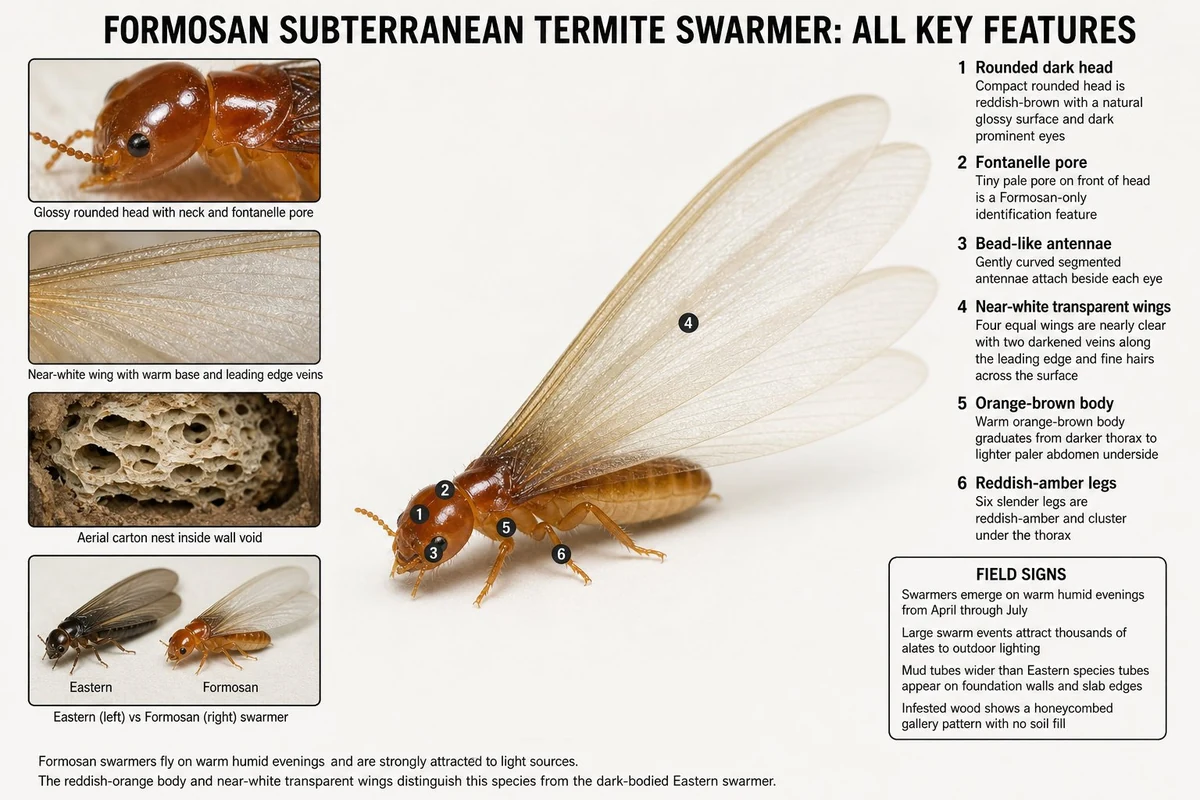
Formosan soldier (left) showing rounded teardrop head with fontanelle; Eastern soldier (right) showing rectangular amber head. Soldier head shape is the fastest field diagnostic between the two species.
- Dusk-to-night swarm in late spring or summer; alates strongly attracted to porch and exterior lights
- Alate wings noticeably hairy (setose) under magnification; Eastern alate wings are bare and smooth
- Soldier head is rounded or teardrop-shaped, not the rectangular amber head of Eastern soldiers
- Milky white droplet on a soldier’s head when disturbed (fontanelle secretion); Eastern soldiers produce no fluid
- Carton material inside a wall void: crumbly soil-and-wood mix packed inside a cut-open wall or attic cavity
- Swarm of thousands of insects around lights on a calm humid May or June evening
Also Known As: Super Termite
Super termite is the informal name that reflects what separates Coptotermes formosanus from every other subterranean termite in the US: colony size and damage rate. Where an Eastern colony might hold a few hundred thousand workers, a mature Formosan colony can hold several million, all foraging simultaneously. In Collin County, most active termite infestations are still Eastern. But when Formosan establishes at a structure, the damage accumulates on a very different timeline.
Formosan Subterranean Termite vs. What It Gets Confused With
Formosan alates swarm in summer at night, which overlaps with flying ant activity. Formosan soldiers look similar to Eastern soldiers at a glance. The table below separates Formosan from its most common look-alikes in Collin County without requiring a lab or microscope.
AKA: Super Termite · Coptotermes formosanus
| Species | Head Shape and Wings | Body and Antennae | Swarm Timing and Habitat |
|---|---|---|---|
|
Formosan Subterranean Termite
This species
AKA: Super Termite, Formosan Termite
Coptotermes formosanus
|
Soldier head rounded, teardrop-shaped with fontanelle that secretes milky white defensive fluid. Alate wings hairy (setose), yellowish tint, all four wings equal length. | Straight beaded antennae; thick waist (no pinch between midsection and abdomen). Alate body 12 to 15 mm. Workers visually identical to Eastern workers; soldier and alate ID required for species confirmation. | April through July, dusk to night, attracted to lights. Builds aboveground carton nests in moist wall voids and attics. Collin County confirmed in Formosan quarantine zone. |

Eastern Subterranean Termite
AKA: Wood Termite, Subterranean Termite
Reticulitermes flavipes
|
Soldier head rectangular, yellowish-brown to amber, no fontanelle and no milky white secretion. Alate wings bare (no setose hair), two dark veins along front edge. Wings all equal length. | Straight beaded antennae; thick waist. Alate body 10 to 12 mm, slightly smaller than Formosan. Dark brown to black overall, darker than Formosan’s yellowish-brown alates. | February through April, daytime. Does NOT build above-grade carton nests. Colony lives entirely in soil; enters structure via mud tubes or direct soil contact. Dominant termite species in Collin County. |
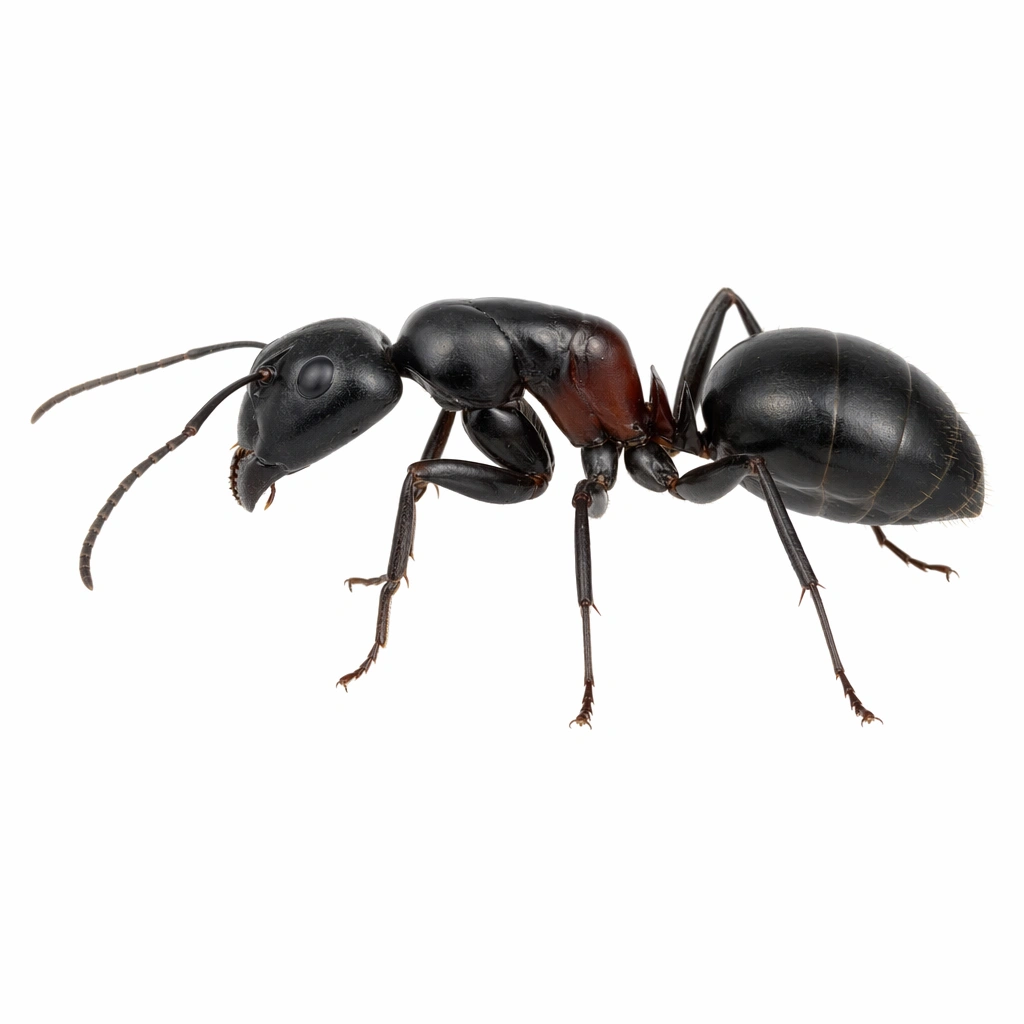
Carpenter Ant
AKA: Big Black Ant, Large Black Ant
Camponotus pennsylvanicus
|
Ant head with compound eyes; no fontanelle. Alate forewings visibly larger than hindwings, the opposite of termites where all four wings are equal. Wing size difference is the fastest single tell between a carpenter ant alate and a termite alate. | Elbowed antennae that bend at a distinct joint, unlike the straight beaded antennae of termites. Pinched, narrow waist between midsection and abdomen. Body 12 to 25 mm, all black or red-and-black. Excavates wood for nesting but does not eat it. | Late spring, often at night or dawn. Sawdust-like wood shavings mixed with dead insect parts near door frames or soffits indicate carpenter ant activity. No mud tubes and no carton nest material. Galleries are clean and smooth-walled, not packed with mud and wood debris. |
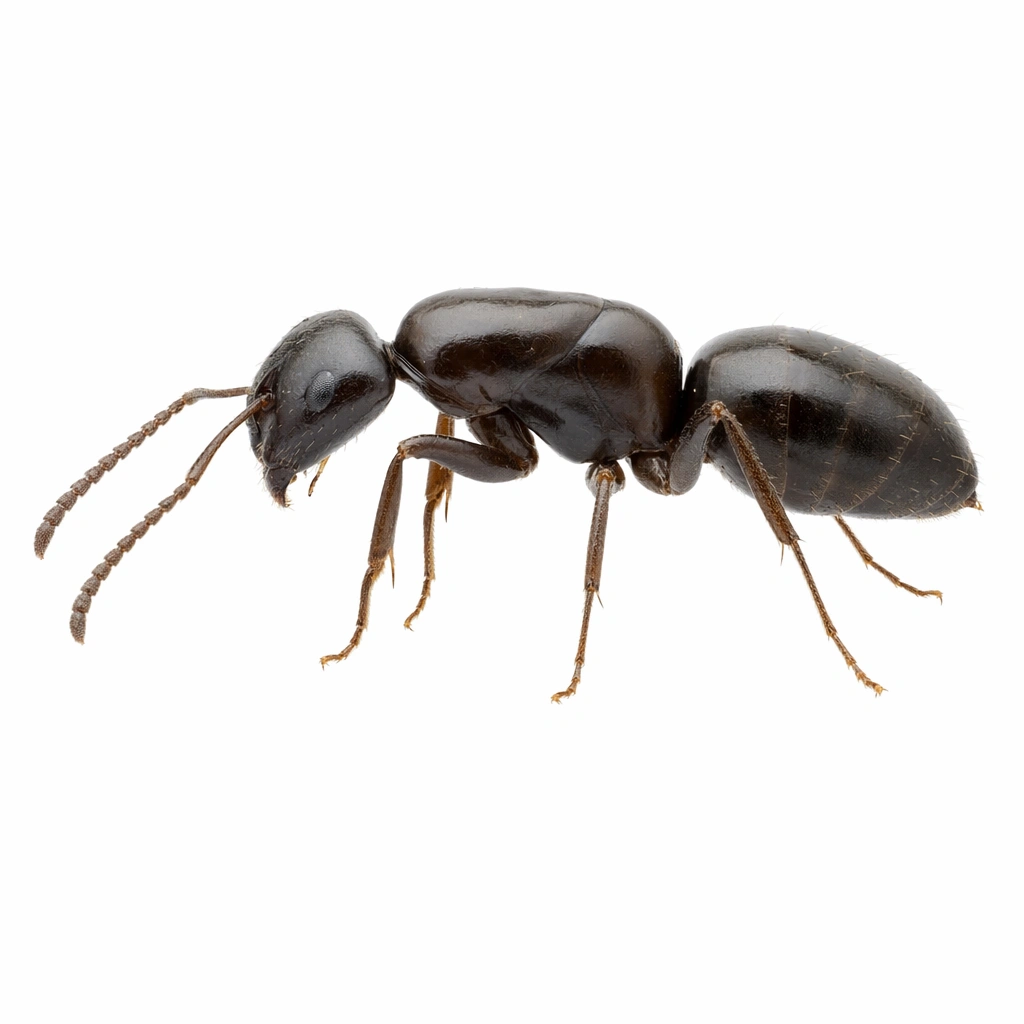
Odorous House Ant (alate)
AKA: Sugar Ant, Stink Ant
Tapinoma sessile
|
Forewings larger than hindwings like all ants. Alates shed wings quickly after landing, leaving wing piles near windowsills that look similar to termite wing drop patterns; the wing size difference separates them. | Elbowed antennae. Pinched waist. Body 2.4 to 3.3 mm, much smaller than a Formosan alate. Crushed workers or alates produce a strong rotten coconut odor. No odor from crushed termites. | Spring and summer, small swarms often indoors from wall voids. Night attraction to lights can overlap with Formosan swarm timing; confirm with wing size ratio and waist check before requesting a termite inspection. |
Both termites are established in Collin County and both cause serious structural damage. The fastest field separation comes down to three things. First, swarm timing: Eastern alates swarm in daylight in February through April; Formosan alates swarm at dusk and through the night from April through July, swarming toward porch lights and exterior fixtures. A swarm after dark in May or June is Formosan until proven otherwise. Second, soldier head shape: an Eastern soldier has a rectangular amber head with no pore and no fluid; a Formosan soldier has a rounded teardrop head with a small pore that produces a milky white droplet when the colony is disturbed. Third, above-grade nesting: Formosan builds carton nests inside moist wall voids and attic spaces where Eastern does not. If a wall is opened during renovation and contains a crumbly soil-and-wood mass packed inside, that is Formosan. Eastern infestations stay at soil level. Both species respond to the same bait station and liquid perimeter program; Formosan jobs add foam void treatment when an aerial colony is confirmed.
What Formosan Subterranean Termites Actually Do to People
Nothing, directly. Soldiers have functional mandibles and will pinch a finger if handled, but the bite produces no venom, no rash, and no lasting irritation. No documented allergic reaction profile exists for Formosan contact. Swarmers that end up inside a home during a summer night swarm event do not sting, do not bite, and die within hours without a soil moisture source.
Formosan damage accumulates faster than Eastern because a colony of several million workers commits far more foraging effort per day than a typical Eastern colony. Nothing about the termite itself harms the people inside the home. The hazard is entirely structural: what the colony leaves behind.
Where Formosan Subterranean Termites Feed Inside Your Home
Formosan workers travel from the central underground nest through the same pathways as Eastern: direct soil-to-wood contact at slab edges and foundation penetrations, mud tubes up foundation walls and piers, and cracks in the slab or expansion joints. Once inside, they feed on sill plates, rim joists, subflooring near plumbing penetrations, and wall framing behind stucco or brick. TSU Invasives species profile for Formosan termites documents that Formosan workers also chew through non-cellulose materials including thin lead, copper sheeting, and asphalt in foraging pursuit, which Eastern termites do not commonly do.
The additional habitat unique to Formosan is aboveground. With persistent structural moisture from a roof leak, plumbing leak, or chronically wet wall void, Formosan workers build a carton nest inside the cavity using chewed wood, soil particles, and saliva. A carton nest sustains a foraging population that has lost ground contact, which is why a Formosan infestation discovered in a second-floor wall cavity or attic space is harder to eliminate than an Eastern infestation that depends entirely on soil moisture. Soil-based perimeter treatment alone does not reach an aerial Formosan colony.
Formosan Termite Pressure Across Collin County
Formosan Subterranean Termites are confirmed established in Collin County. The TAMU Urban Entomology Program Formosan distribution data documents Formosan presence in 31 Texas counties including Collin, with the county also listed in the Texas Plant Protection Regulations Formosan quarantine zone as of October 2025. Formosan was first documented in Texas around the Houston Ship Channel in 1956 and has spread progressively northward over the following decades.
Most Pest Me Off termite calls in Collin County are still Eastern Subterranean Termite. Formosan is established but has not reached the saturation level of Eastern. Pressure is higher in older McKinney and Plano neighborhoods with mature landscaping and any documented history of Houston-area mulch or recycled railroad tie use. Pest Me Off treats all subterranean termite jobs as Eastern by default and confirms Formosan when soldiers or alates are recovered for identification.
Cost of Doing Nothing
Formosan damage accumulates faster than Eastern, which means the delay penalty is higher. A Formosan colony active for one year in a structure with an aerial carton nest in a moist wall void can cause damage to both first-floor framing and upper-floor structure simultaneously. Repair for a single-floor Eastern infestation caught at one to two years typically runs $3,000 to $8,000. Formosan infestations with aerial nest involvement and multi-floor damage commonly run $15,000 to $40,000 by the time they are discovered. Homeowner insurance does not cover termite damage in the vast majority of policies. The only effective cost control for Formosan is early detection through annual monitoring and immediate inspection when any summer-night swarm event is observed.
Termite Damage and Your Home’s Structure
If termite damage is found in any load-bearing member including floor joists, sill plates, wall studs, beams, or posts, a structural engineer should assess the damage before repair begins. Pest Me Off handles the termite elimination. Structural assessment is a separate step that protects you from a repair contractor who patches cosmetically without confirming the member is structurally sound. Formosan infestations with aerial nest involvement are more likely to reach upper-floor framing and load-bearing studs, which is why the structural question comes up more often on Formosan jobs than Eastern jobs. Most homeowner insurance policies exclude termite damage, so you pay for both the treatment and the repair out of pocket.
How Formosan Subterranean Termite Colonies Grow and Spread
Formosan spread in Texas has historically tracked along major mulch and timber supply chains from the Houston Ship Channel area northward. Collin County properties with landscaping that incorporates reused railroad ties, recycled dock timbers, or bulk mulch sourced from coastal Texas suppliers are at elevated Formosan risk compared to properties using locally-sourced materials.
How Pest Me Off Treats Formosan Subterranean Termites
Termite Takedown for Formosan is the same integrated program used for Eastern, with one additional leg when the inspection confirms aerial colony or carton nest activity. Trelona product data on Formosan termite control confirms that the same bait station programs effective against Eastern are effective against Formosan; the difference is timeline and scope. Larger colonies take longer to show visible decline because more individuals must be exposed before colony-wide collapse begins. Pest Me Off communicates this directly with every Formosan customer: visible improvement is measured in months, not weeks.
Paid Inspection with In-Wall Detection
A licensed technician inspects the full structure including accessible crawl space, attic, garage, and all exterior foundation surfaces. For confirmed or suspected Formosan jobs, the inspection scope expands to include upper-floor walls with moisture history, attic framing, soffit areas, HVAC condensate lines, and behind shower and tub access panels. Termatrac T3i in-wall detection technology locates termite foraging activity through finished walls using acoustic, radar, and thermal sensing. All active mud tubes, carton nest locations, and entry points are mapped and documented.
In-Ground Bait Station Installation
Trelona ATBS Annual Bait Stations are installed in the soil at 10-foot intervals around the full structure perimeter. Workers foraging from the primary underground nest find the cellulose bait cartridges and begin feeding. The active ingredient transfers back through the colony via trophallaxis, the mouth-to-mouth food sharing workers use to feed all colony members including the queen. The non-repellent nature of the product (meaning workers travel through the treated zone without detecting it and carry it back to the colony) is what makes colony-level exposure possible. Trelona ATBS is specifically labeled and tested for Formosan Subterranean Termite.
Liquid Perimeter Treatment (Active Infestations)
When inspection confirms active feeding inside the structure, a continuous treated zone is established along the exterior foundation using a non-repellent fipronil termiticide (Termidor SC, Termidor HE, or Agenda SC depending on site conditions and access). Non-repellent means workers do not detect the treated soil and continue traveling through it on every foraging run, transferring the active ingredient back to the colony via the same food-sharing pathways used by the bait. This step addresses confirmed active infestations where the bait station network alone would take too long to reach colony collapse.
Foam Void Treatment + Annual Monitoring
When inspection confirms an active aerial colony or carton nest in a wall void, attic space, or structural cavity, Pest Me Off adds Termidor Foam direct void treatment to the perimeter program. Termidor Foam is injected through small drilled access points into the void, where its 30:1 expansion ratio fills the cavity and contacts the colony directly. Moisture source correction is coordinated simultaneously; without addressing the structural leak sustaining the aerial colony, the foam treatment clears the current population but the void re-establishes. Twelve months after initial treatment, a technician returns to inspect every bait station, evaluate each cartridge, and re-inspect all previously active void locations. For Formosan jobs with prior aerial colony involvement, the annual visit specifically reassesses the treated void area and confirms moisture correction held. Annual monitoring catches new foraging from neighboring properties before it reaches the walls.
& Other Companies
Other companies: A perimeter liquid treatment without in-wall detection misses aerial carton nests entirely. A company that treats the ground perimeter and closes the job has addressed only the soil-based component of a Formosan infestation that may have an active aerial colony three floors up. No annual monitoring means no early-warning system for new foraging from neighboring properties. The next call comes when a renovation contractor opens the wall.
DIY Formosan Termite Prevention for Your Home
You cannot eliminate an established Formosan subterranean termite colony, and particularly an aerial colony, without professional treatment. But there are concrete DIY steps that reduce the moisture conditions, material sources, and access pathways that make your property attractive to Formosan.
Why DIY Formosan Treatment Does Not Work
Formosan subterranean termite treatment faces all the same DIY failure modes as Eastern treatment, plus additional failure modes specific to the larger colony size and aerial nest capability. Every common DIY approach leaves the colony intact.
Repellent Spray Around the Foundation
Formosan colonies are large enough to commit foraging workers to finding alternative entry points simultaneously while others probe the treated zone for gaps. The colony detects the repellent barrier and reroutes within 24 to 48 hours. Because the foraging population is so much larger than Eastern, the gap-finding process is faster and more thorough.
Foundation-Only Treatment When Carton Nest Is Present
A ground-level perimeter spray or bait station installation treats the soil-based portion of the colony. If an aerial carton nest is established in a second-floor wall void or attic space, the aerial colony has no contact with the treated zone and continues feeding independently. The homeowner believes the job is done. The aerial colony rebuilds its foraging population and continues.
Removing Visible Mud Tubes or Carton Material
Removing a mud tube confirms active construction and temporarily disrupts that specific route; workers rebuild within 24 to 48 hours via an adjacent path. Disturbing a carton nest without treating it disperses foraging workers into adjacent wall cavities and can spread the infestation rather than contain it. Never open a carton nest without a treatment plan in place.
Treating the Termites Without Fixing the Moisture Source
An aerial Formosan colony exists because structural moisture created viable habitat inside a wall void or attic. If you treat the colony without correcting the leak, the void remains wet and habitable. New foragers from the primary ground nest or from a neighboring colony re-establish in the same cavity within one to two seasons. Moisture correction is not optional on Formosan jobs; it is part of the treatment.
Purchasing Professional Termiticides Without a License
Professional liquid termiticides including the non-repellent fipronil products used in perimeter trench treatment require a licensed applicator for purchase and legal use in Texas. Products sold online as professional-grade are commonly counterfeit or adulterated. An improper application produces a broken barrier with gaps that workers bypass immediately, giving the appearance of treatment with none of the efficacy.
Treating Without In-Wall Detection for a Formosan Job
Treating without confirming whether an aerial carton nest is present is the most costly mistake specific to Formosan. An Eastern infestation is reliably addressed with ground-level treatment. A Formosan infestation with an undetected second-floor carton nest receives ground-level treatment, the homeowner gets a bill, and the aerial colony continues feeding. The Termatrac in-wall scan is not optional on a confirmed or suspected Formosan job.
Common Formosan Subterranean Termite Questions
Termites Are Inside Your Walls. We Find Them and Stop Them.
We inspect with in-wall detection technology, install bait stations around your perimeter, and add foam treatment if we find a carton nest above grade. Serving McKinney, Allen, Frisco, Plano, and all of Collin County.