Home Pest Library Spiders Brown Recluse
Brown Recluse Spider (Violin Spider, Fiddleback Spider)

Brown Recluse Spiders in Collin County, TX | Identification and Control

Last updated 2026

The Brown Recluse (Loxosceles reclusa), also called the violin spider or fiddleback, is the most medically significant spider in Collin County. Its bite starts as a small wound and can progress to tissue death over days to weeks. Most bites happen when people reach into stored shoes, clothing, or boxes without checking first.
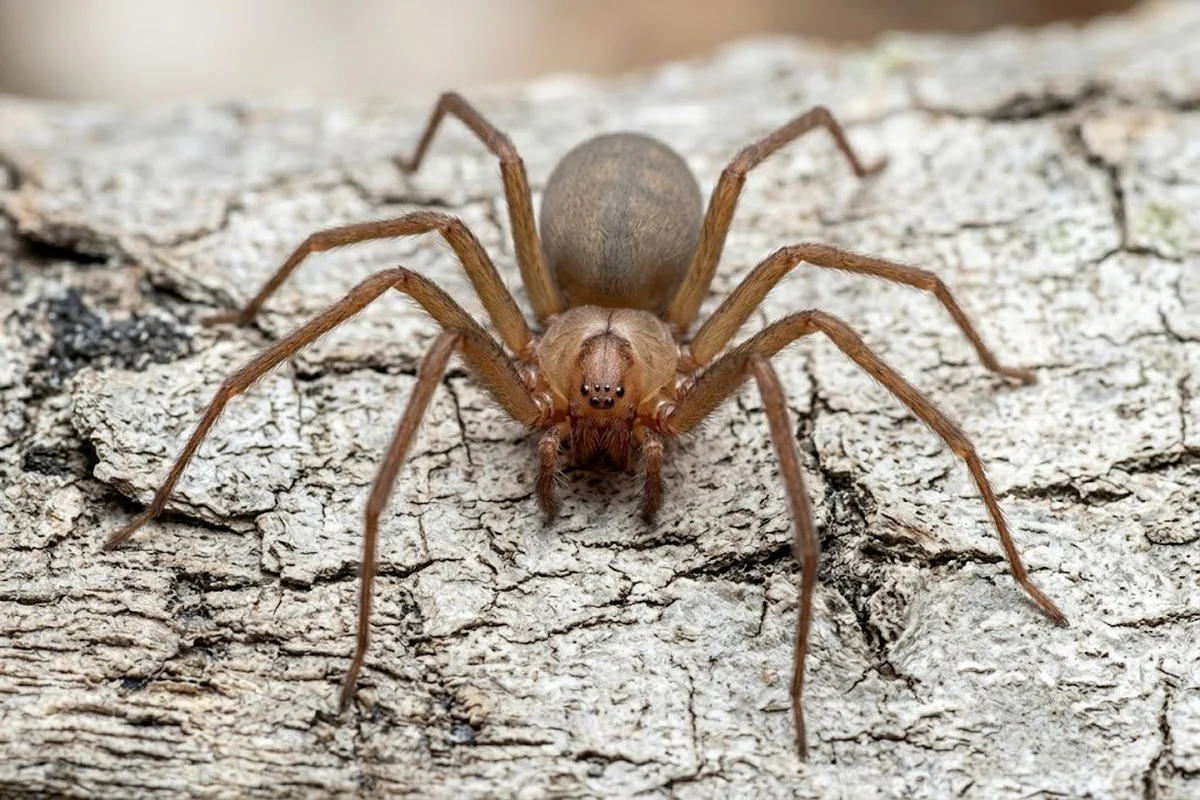
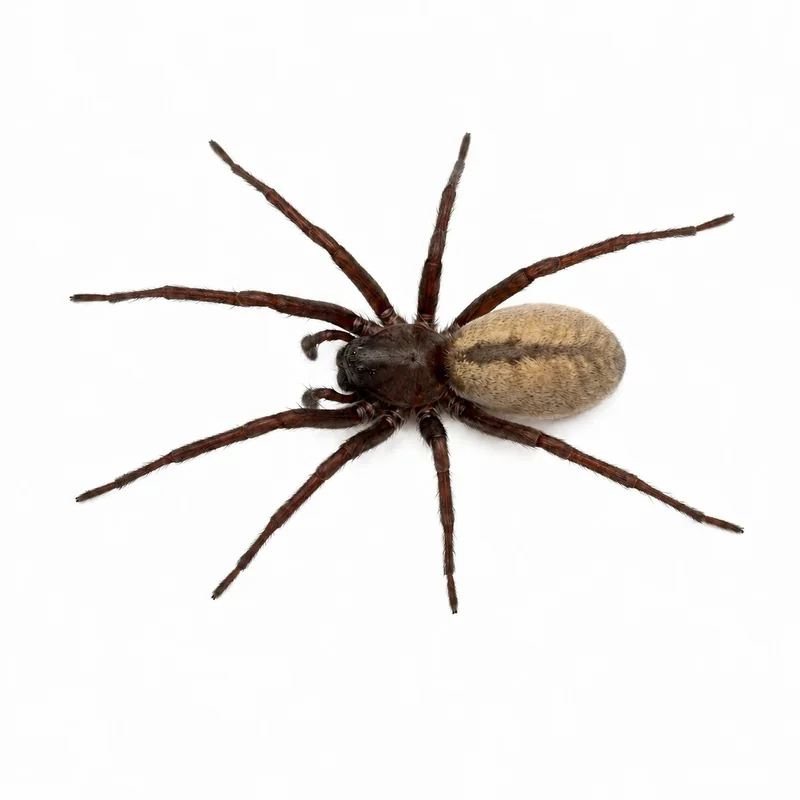
Brown recluse spider on a rough surface showing violin marking on cephalothorax
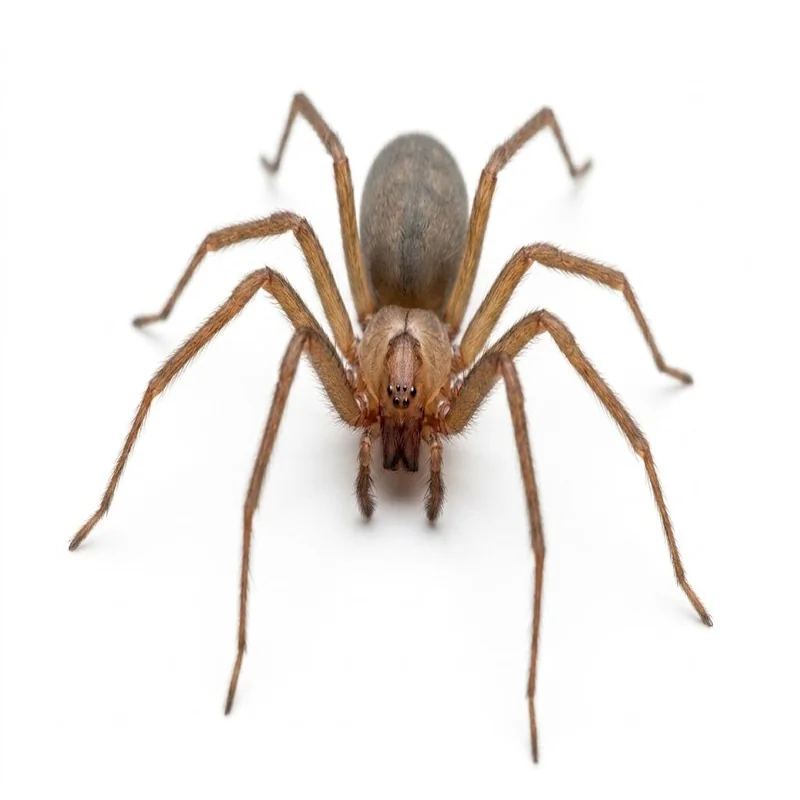
Brown recluse spider specimen showing six eyes and plain tan body
Brown Recluse Spider
Loxosceles reclusa
AKA Violin Spider · Fiddleback Spider · Brown Fiddler
Body length0.25 to 0.5 in (6 to 13 mm)
Leg span1 to 1.5 in (25 to 38 mm)
Adult lifespanMales ~543 days; females ~628 days (up to 4-5 years)
Eggs per sac31 to 300; 1 to 2 sacs per year
Active seasonMay through October; year-round indoors
HabitatDark storage voids, garages, closets, cardboard stacks
Eye arrangement6 eyes in 3 pairs (diagnostic; most spiders have 8)
Threat levelMEDICALLY SIGNIFICANT

A reclusive tan spider with a violin-shaped mark on its back and six eyes in three pairs. Its cytotoxic bite can cause tissue death over days to weeks, though most bites heal without severe outcome when identified and managed early.

PEST ME OFF | PEST LIBRARY | BROWN RECLUSE pestmeoff.com
North Texas Pest Calendar
Brown Recluse Activity in Collin County by Month

Encounter rates peak in late spring through early fall as adults wander to feed and mate. Year-round indoor sightings occur in heavily cluttered garages and storage areas regardless of season.

Jan
Low
Feb
Low
Mar
Emerge
Apr
Active
May
Peak
Jun
Peak
Jul
Peak
Aug
Peak
Sep
Peak
Oct
Active
Nov
Low
Dec
Low
Dormant / Low
Emerging
Active
Peak

Pattern from Texas A&M entomology records and Pest Me Off service call data across Collin County, 2023 to 2026. Indoor sightings occur year-round in homes with significant clutter or undisturbed storage.

Identification

What a Brown Recluse Looks Like

Six eyes and a violin mark that most people never see clearly enough to confirm

Adult brown recluse range from 0.25 to 0.5 inches in body length, with a plain tan to dark brown color and fine hair. The body has no bold striping or contrasting markings other than the violin-shaped mark on the cephalothorax (the front half of the spider). That violin mark is the feature everyone has heard of, but it is also one of the least reliable for field identification because several other spider species have similar markings and the pattern fades with age.

The diagnostic trait is the eye arrangement: 6 eyes in 3 pairs, arranged in a semicircle. Every other common North Texas house spider has 8 eyes. This is a phone-camera-zoom trait, not a naked-eye trait, but it definitively separates recluse from wolf spiders, cellar spiders, and southern house spiders. Legs are uniformly colored without banding, and the body is low and spread at rest, not upright and forward-leaning like a wolf spider.
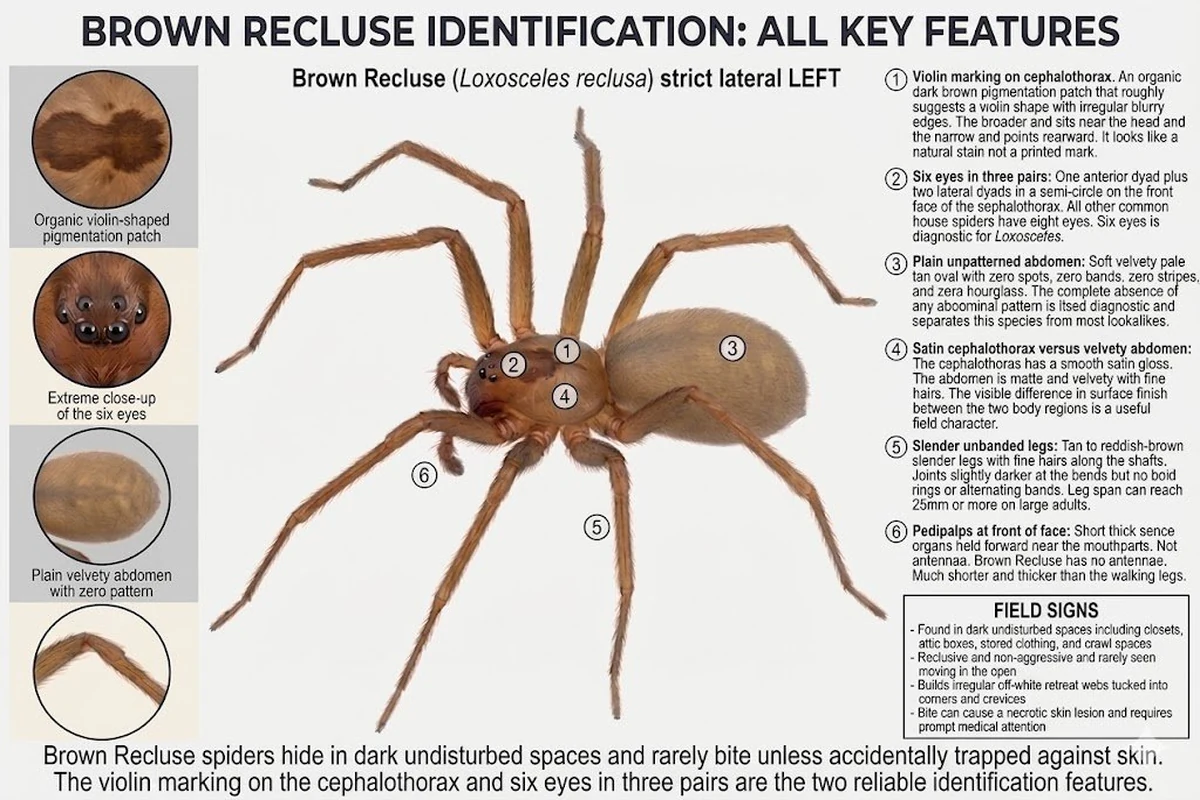
Brown recluse spider identification diagram with anatomical callouts

Brown recluse identification diagram with anatomical callouts

Dead GiveawaysFastest visual cues without a microscope
  • 6 eyes in 3 pairs arranged in a semicircle (all other common house spiders have 8)
  • Plain tan-to-brown body with no bold striping or banding on legs
  • Violin-shaped mark on cephalothorax (suggestive but not definitive alone)
  • Low, spread posture at rest; not upright or forward-leaning
  • Found in dark, secluded clutter: stored boxes, shoes, clothing, garage shelves
  • Irregular, loosely woven gray or white retreat web used for shelter, not prey capture
  • Off-white egg sacs in sheltered storage voids and closet corners
The Name

Why It Has Three Names

Brown recluse is the standard common name used by pest professionals and medical literature. Violin spider and fiddleback spider both come from the violin-shaped mark on the cephalothorax, with the neck of the violin pointing toward the abdomen. These names are common across the South and used interchangeably. In Collin County service calls, homeowners use all three; any of them refers to the same species.

The “recluse” in the name describes the spider’s actual behavior. It avoids open spaces, retreats immediately when exposed, and lives in the lowest-traffic zones of a structure. A spider that is clearly visible and moving actively in an open area during daylight is not behaving like a recluse; that behavior points to wolf spider or cellar spider first.

Look-Alikes

How to Tell Brown Recluse from Other Collin County Spiders

Brown recluse is the most over-identified spider in North Texas. Most spiders that homeowners call a recluse are wolf spiders, southern house spider males, or cellar spiders. Eye count under phone-camera zoom is the one field test that separates them without sending a specimen to a lab.

Species Size Key Feature Where Found
Brown Recluse
Brown Recluse AKA: Violin Spider, Fiddleback Loxosceles reclusa This species
0.25 to 0.5 in body. Plain tan-to-brown, no leg banding, no bold stripes. Legs uniformly colored and slender. 6 eyes in 3 pairs (semicircle). Violin mark on front half. Low spread posture. Retreat web only, not a prey-capture web. Nocturnal. Found in clutter, not open surfaces. Dark undisturbed storage: closet floors, cardboard boxes, stored clothing, shoes left untouched, garage shelves, attic bins. Bites in living areas almost always trace back to a stored-goods area, not a bedroom resident spider.
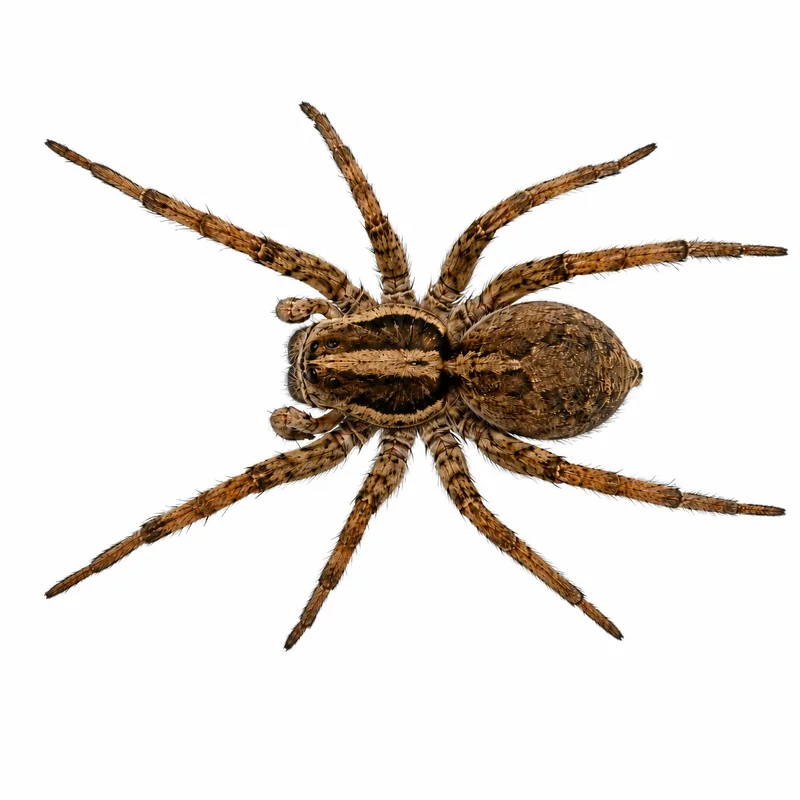
Wolf Spider
Wolf Spider AKA: Hairy Spider, Ground Spider Hogna carolinensis, Rabidosa spp.
0.5 to 1.5 in body. Significantly larger and bulkier. Heavy body hair. Distinct longitudinal stripes on cephalothorax. 8 eyes in 3 rows; large middle pair produces eye-shine under flashlight at night. Stripes on cephalothorax (not violin). Fast, open runner, not a hider. No web. Open garage floors, under doors, entering from outside during rain. Visible and fast-moving, not hidden in storage.
Southern House Spider
Southern House Spider AKA: Crevice Weaver, Woolly Web Spider Kukulcania hibernalis
Female 0.5 to 0.75 in, bulky, charcoal gray. Male 0.35 to 0.5 in, khaki-tan. Males are the #1 recluse lookalike in Texas. 8 eyes clustered tightly on a raised bump (not 6 in pairs). Male has extremely long pedipalps projecting forward like an extra set of legs. Woolly flat web radiates from a crevice. Crevices in windowsills, door frames, garage walls, exterior brick weep holes. Flat woolly web with a retreat hole in a crack.
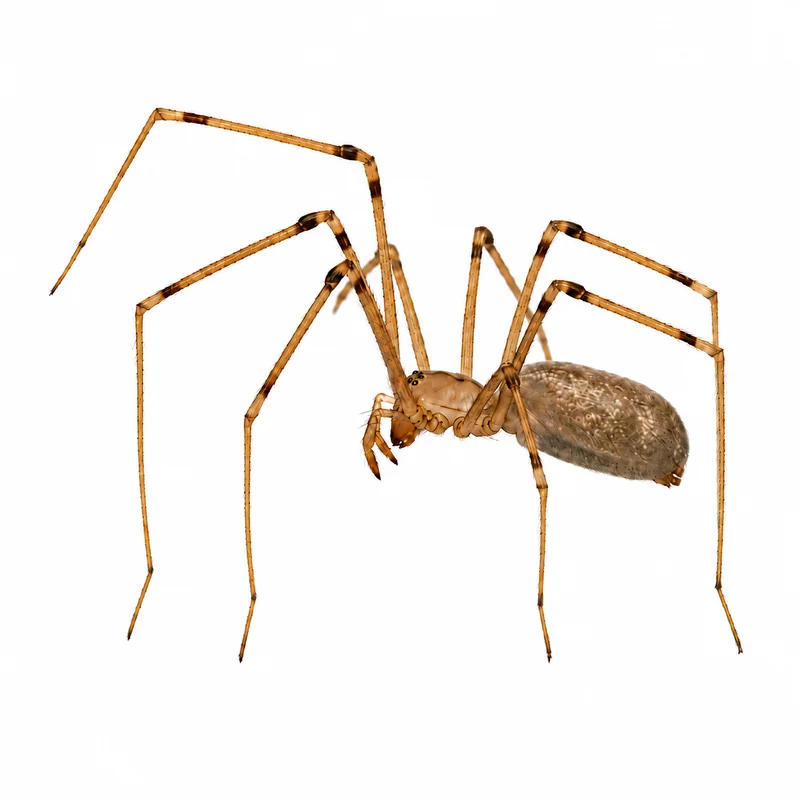
Cellar Spider
Cellar Spider AKA: Daddy Long Legs, Vibrating Spider Pholcus phalangioides
0.25 in body; leg span up to 2 in. Extremely thin, long legs; tiny pale body. Almost translucent. 8 eyes. Hangs upside down in loose ceiling cobwebs; vibrates rapidly when disturbed. Body far too small and legs far too long to be confused with recluse on close inspection. Upper corners of rooms, garage ceilings, bathrooms, under stairways. Hangs in ceiling cobwebs, not hiding in boxes.
The fastest field test: use your phone camera to zoom on the eye arrangement. Brown recluse has 6 eyes in 3 pairs. Wolf spiders, southern house spiders, and cellar spiders all have 8 eyes in distinct patterns that are visible under zoom. If you count 8 eyes, it is not a recluse regardless of color or markings.
A note on the violin mark. The violin-shaped marking on the cephalothorax is the most publicized recluse identification feature, but it is also one of the least reliable. Several other spider species have cephalothorax patterns that homeowners interpret as a violin. The mark also fades with age. Use eye count as your primary confirmation tool, not the violin mark alone.
Why Brown Recluse Scores 3 of 3 on People Risk

People Risk for Brown Recluse

Brown recluse venom is cytotoxic, meaning it destroys tissue at the bite site and can spread to surrounding skin over days to weeks. Most bites produce a limited local wound. A subset progress to necrotic ulcers requiring weeks of wound care. Severe systemic illness is rare but documented, with children at highest risk. There is no FDA-approved antivenom in the United States.

People Risk
3/ 3
High
Medical Risk

Brown Recluse Bites and When to Seek Medical Care

A brown recluse bite is often initially painless or mildly stinging, which is why many people do not realize they were bitten until symptoms develop hours later. The venom contains phospholipase D (also called sphingomyelinase D), an enzyme that destroys cell membranes and triggers both local tissue destruction and, in severe cases, red blood cell lysis. Locally, the bite site develops redness and blistering within the first 24 hours. By 72 hours, some bites develop a characteristic red-white-blue zone (central pallor surrounded by redness). A necrotic core may develop around day 7, and the wound can continue to break down for weeks. Clinical management of brown recluse envenomation covers current treatment standards and wound care protocols.

US poison center data recorded 566 brown recluse bite cases in 2021 with 1 death. Severe systemic illness (loxoscelism) has a documented 3.5% mortality rate when it occurs, with most fatalities in children. There is no FDA-approved antivenom in the United States as of 2026; treatment is wound care, pain control, and management of any systemic complications. Harvard Health spider bite guidance summarizes when self-care is appropriate and when emergency care is needed.

Seek Care
When to Get Medical Attention for a Suspected Recluse Bite

Seek emergency care immediately if you see rapidly expanding redness or swelling, a blistering wound that grows over 24 hours, fever, chills, nausea, vomiting, joint pain, weakness, dark-colored urine, or widespread rash. These are signs of systemic loxoscelism. Any suspected bite involving a child, elderly individual, or person with kidney disease or immune compromise warrants medical evaluation even without systemic symptoms, because those populations face the highest risk of severe outcome.

For bites without systemic signs: clean with soap and water, apply ice (cold slows phospholipase D activity), elevate if on a limb, and monitor the wound closely for 72 hours. Do not apply heat. Do not cut or scrape the wound. Photograph the wound daily to track progression. If the wound enlarges, develops a dark center, or shows signs of infection after day 3, see a provider.

Severity Signals

How Bad Is Your Brown Recluse Situation

Seeing one recluse is different from having an established indoor population. These are the signals that tell a technician whether your home has an isolated entry or an active shelter problem. Texas A&M recluse spider identification and biology covers population dynamics in Texas homes.

High

Multiple Indoor Sightings Over Several Weeks

A single sighting can be a stray visitor. Multiple sightings across different rooms over several weeks indicates an established indoor population using a shelter source, typically a cluttered garage, storage area, or undisturbed attic space.

High

Confirmed Bite Event

A confirmed or strongly suspected bite, especially involving a child, elevates the priority to urgent. A bite is not just a medical event; it confirms an active population in occupied living spaces rather than only storage areas.

High

Egg Sacs Found in Storage Areas

Off-white, round to slightly flattened egg sacs found inside boxes, shoe corners, or behind stored items indicate an established breeding population. Each sac can contain 31 to 300 eggs. Finding egg sacs before they hatch is the most reliable early indicator.

Moderate

Heavily Cluttered Garage or Storage Space

Undisturbed boxes, stacked cardboard, seasonal bins, and long-unused sports gear create ideal recluse shelter. A heavily cluttered garage in an older McKinney or Allen neighborhood with established trees is a high-risk environment even without confirmed sightings.

Moderate

Shed Skins Found in Storage Zones

Molted skins look like translucent paper spiders with legs. Homeowners frequently mistake them for trash or dead insects. Finding shed skins in multiple storage areas confirms long-term indoor residence, not just an occasional visitor.

Moderate

Retreat Webbing in Multiple Shelter Zones

Irregular gray or white retreat webbing (not a patterned prey-capture web) found in closet corners, behind boxes, or along garage baseboards indicates active shelter use. Multiple web sites across the structure means population is distributed, not isolated.

Why Brown Recluse Scores 1 of 3 on Property Risk

Property Risk for Brown Recluse

Brown recluse does not damage structural wood, chew through wiring, contaminate stored food, or create visible destruction. The threat is entirely biological: bites cause harm to people, not to the building. Property risk is rated low because the spider does nothing to the structure; only the medical risk to occupants drives the treatment decision.

Property Risk
1/ 3
Low
Habitat

Where Brown Recluse Build Up in Collin County Homes

Brown recluse are indoor shelter spiders first. The profile of a problem home is almost always the same: a garage or storage space that has not been fully organized in years, with cardboard boxes stacked against walls, stored clothing, old furniture, sporting equipment, and seasonal bins that accumulate in corners. They do not seek out living rooms or bedrooms actively; they follow the clutter. Bites in bedrooms and bathrooms typically happen when a spider that wandered from the garage gets accidentally transported in clothing, shoes, or boxes.

In Collin County slab homes, shelter pressure concentrates in the garage. Pier-and-beam homes add crawl spaces to that list. Attic storage is the secondary shelter zone. Closets with seasonal items and long-untouched storage complete the picture. The key pattern in every high-pressure situation is low-traffic storage that has not been physically moved and inspected in months or years. Brown recluse range and confirmed Texas sightings show how common they are in Collin County structures.

Local Pressure

Brown Recluse Pressure Across Collin County

Brown recluse are confirmed across Collin County. Adjacent confirmed counties include Dallas, Denton, Grayson, Cooke, Tarrant, and Wise, making Collin County well within the established Texas range of the species. Texas DSHS confirms brown recluse and widow spiders are found throughout Texas.

Pressure is highest in older neighborhoods with mature landscaping and less-organized garage and attic storage. Historic downtown McKinney, El Dorado, and older Allen and Plano sections see higher call volumes than new construction neighborhoods in Prosper, Celina, and north Frisco. New construction areas do see pressure in the first two years after move-in when boxes accumulate and storage builds up before it is sorted. Princeton and Anna show lower historical density but increasing calls as those cities fill in.

The Math

Cost of Doing Nothing

Cost of Doing Nothing

A brown recluse population grows quietly for years. Adults live up to 4 to 5 years indoors. Each female produces 1 to 2 egg sacs per year with up to 300 eggs each. In a cluttered garage, an unaddressed population can reach dozens to hundreds of individuals over several seasons with no visible sign until a bite event or incidental discovery. ER visits for necrotic wounds routinely run $2,000 to $8,000 before insurance. Wound care for severe bites can extend weeks to months. The garage organization and shelter reduction that prevents bites costs a fraction of one medical event.

Why Brown Recluse Scores 2 of 3 on Persistence Risk

How Brown Recluse Populations Persist

Brown recluse do not spread as aggressively as social insects, but they persist for years in cluttered structures because adults live 4 to 5 years, egg sacs survive in dark voids untouched, and they have very limited need for open resources. A population in a garage will remain stable and self-sustaining as long as the shelter and prey supply remain undisturbed. Brown recluse biology and persistence in indoor structures documents how long established populations sustain themselves without intervention.

Persistence Risk
2/ 3
Moderate
Behavior and Biology

Why Brown Recluse Populations Are Hard to Eliminate

Lifespan Males ~543 days; females ~628 days (up to 4 to 5 years) An untreated adult in a garage closet is not going away on its own. Females that reach full size can live through 4 to 5 Texas summer-to-winter cycles, continuing to produce egg sacs each season. This is why a recluse problem can feel like it has always been there; it often has, since the last storage cleanout.
Egg Production 1 to 2 sacs per year; 31 to 300 eggs per sac Egg sacs are placed in sheltered storage voids where they are nearly invisible. A single sac with 300 eggs, placed behind a box in April, produces new adults by fall. Vacuuming visible spiders without pulling stored items away from walls leaves sacs in place for the next generation.
Nocturnal Behavior Hunts live insects only at night; retreats to shelter during daylight Daytime surface sprays miss recluse in their retreats. Spiders come out of shelter after dark, move across garage floors, forage for crickets and cockroaches, and retreat before morning. Unless treatment reaches the retreat web directly, surface application has limited effect.
Prey Dependency Crickets, cockroaches, small arthropods Brown recluse follow prey. A garage with cricket pressure or cockroach activity has all the food supply a recluse population needs. Reducing cricket and cockroach populations removes the food source that sustains a recluse shelter year to year.
Entry Routes Garage slab gaps, utility penetrations, stored goods brought in from outside Recluse most commonly enter on furniture, boxes, and stored goods transported from infested locations. Garage door sweeps, slab cracks, and utility penetrations are secondary entry routes. Sealing entry gaps without addressing interior shelter only delays reinfestation.
Chemical Resistance Spiders do not groom; they absorb very little insecticide through leg contact Unlike beetles and roaches, spiders do not groom themselves across treated surfaces in a way that delivers lethal doses. Most of their body contact with treated areas is through a small number of leg tarsal pads. Direct body contact is far more effective than broad surface residual application.
Pest Me Off Translation
Cytotoxic venom A bite that destroys skin and tissue over days to weeks, not overnight.
Loxoscelism The medical term for the illness caused by a recluse bite; local (skin/tissue damage) or systemic (body-wide illness).
Sphingomyelinase D The enzyme in recluse venom that destroys cell membranes; cold slows its activity, which is why ice on a bite site helps.
Reality Check

Things You Should Know About Brown Recluse

Biology facts that change how you manage them

1
Brown recluse do not chase or attack. Every documented bite involves accidental contact: the spider was inside a shoe, glove, clothing item, or bedding, and the person put it on or pressed against it.Why this matters. Shake out shoes, gloves, sports gear, and seasonal clothing before putting them on, especially items stored in the garage. This one habit prevents the overwhelming majority of indoor bites.
2
Most “recluse bites” are not recluse bites. Dermatology and emergency medicine literature documents consistent overdiagnosis of recluse bites, particularly in regions of the country where the species does not even occur. Common misdiagnoses include MRSA, diabetic wounds, vascular ulcers, and pyoderma gangrenosum.Why this matters. If you have a wound you cannot explain, recluse bite should be on the differential, but your provider needs to rule out MRSA and other bacterial causes before treating as a bite. An unconfirmed “spider bite” that fails to improve with standard wound care should be evaluated for MRSA cultures.
3
There is no FDA-approved antivenom in the United States. Treatment is entirely supportive: wound care, pain control, ice, elevation, monitoring for systemic symptoms.Why this matters. There is no shot a doctor can give you that reverses recluse venom. This makes prevention more valuable than treatment. Keeping spiders out of occupied spaces is the only reliable protection.
4
A female brown recluse can survive months without food or water. Removing prey sources from a garage helps but does not eliminate an existing population. Adults live off fat reserves through extended dry periods.Why this matters. Treating only for crickets and cockroaches does not eliminate an established recluse population. Direct shelter treatment and physical removal (vacuuming, decluttering) is required to reduce existing adults.
5
The violin mark is not a reliable field identifier. Multiple spider species have cephalothorax markings that look like a violin to the naked eye. Eye count under zoom is the only reliable homeowner-level test.Why this matters. Do not make a treatment decision based on the violin mark alone. If you cannot zoom in and count 6 eyes in 3 pairs, you do not have a confirmed recluse identification.
Why Brown Recluse Scores 3 of 3 on Difficulty to Treat

Treating Brown Recluse

Surface sprays miss spiders hidden in retreats. Broadcast spray products do not penetrate the deep clutter and wall voids where they live. Spiders absorb very little insecticide through leg contact compared to grooming insects. Effective treatment requires finding and addressing the actual shelter, not just treating the open surfaces where wandering individuals are occasionally seen.

Difficulty to Treat
3/ 3
High
SPIDER CONTROL
Treatment

How Pest Me Off Treats Brown Recluse

Brown recluse control is a shelter problem, not a surface spray problem. The spider lives in the dark, undisturbed zones of your home, not on open baseboards. A technician who sprays the visible surfaces and leaves has not addressed the source. Brown recluse control research consistently shows that shelter reduction combined with targeted product application outperforms broadcast spraying alone. Texas AgriLife brown recluse management recommendations confirm this shelter-first treatment approach for Texas homes.

Step 1

Shelter Inspection

Walk the full interior with the homeowner. Identify every low-traffic storage zone: garage walls, closet floors, attic bins, stored clothing, piles of boxes, furniture pushed against walls. Count evidence zones (retreat webbing, shed skins, egg sacs) to determine population distribution and severity level.

Why this step: You cannot treat what you cannot find. The evidence found during inspection determines whether this is a single-zone problem or a distributed population. Skipping inspection and going straight to spray is why the same home gets treated again the following year with the same result.
Step 2

Shelter Reduction

Vacuum all visible spiders, webs, egg sacs, and shed skins from identified shelter zones. Physical removal of egg sacs is critical: sprayed sacs may not be fully neutralized because silk protects eggs from surface contact. Pull stored items away from walls to expose shelter behind them. This step cannot be delegated to chemical application alone.

Why this step: Egg sacs that survive chemical application hatch into a new generation within weeks. Vacuuming is the single most effective homeowner tool and the most commonly skipped step in DIY attempts. Every egg sac physically removed is hundreds of potential spiders that never enter the structure.
Step 3

Targeted Crevice and Gap Treatment

Apply residual insecticide directly into confirmed shelter zones: cracks-and-crevices application along garage slab edges, behind stored items, into closet floor voids, and along baseboards in storage areas. Dust formulations work well in wall voids and attic edges where spiders move but liquid products cannot penetrate. Direct body contact treatment kills individuals; residual application in retreat areas catches wandering spiders.

Why this step: Surface broadcast application misses recluse that are hidden in retreats and wall voids during daylight hours. Targeted crevice application puts product where spiders actually travel rather than where they might occasionally be seen.
Step 4

Exclusion and Entry Point Sealing

Seal garage door sweeps, slab cracks, utility penetrations, and any gap where stored goods are brought in from outside. Recluse most commonly enter on furniture, moving boxes, and stored items transported from other locations. Preventing reinfestation after shelter is cleared requires closing the physical routes back in.

Why this step: Clearing shelter without exclusion leaves the home re-enterable. Garages in particular accumulate new boxes and stored goods over time; if entry points are not sealed and shelter is not kept clear, the population rebuilds within a season or two.
Pest Me Off
Inspect and map every shelter zone before any product goes down. Vacuum all visible spiders, webs, and egg sacs from storage areas. Apply cracks and crevices treatment directly into retreat zones and wall voids. Seal entry points. Follow up in 30 days to confirm no new activity. If sightings continue, re-inspect for missed shelter rather than increasing spray frequency.
Store Products
& Other Companies
Spray accessible baseboards and visible areas, leave a residual, and schedule the next quarterly visit. The spiders in the garage closet behind the boxes never encounter the product. Egg sacs behind stored items hatch untouched. New adults appear in the following season and the customer calls again. Nothing changed inside the actual shelter.
Do It Yourself
Brown Recluse: What You Can Do and Where DIY Falls Short
Prevention steps that actually work, and the DIY approaches that scatter spiders instead of eliminating them
DIY Prevention

DIY Brown Recluse Prevention for Your Home

The most effective recluse prevention does not require a single drop of pesticide. It requires reducing the undisturbed clutter that recluse need to build a population.

1
Swap cardboard for sealed plastic bins. Cardboard is the single best recluse habitat in a typical garage. Sealed plastic totes eliminate one of the most common shelter sources and make inspection possible on every container.
2
Pull storage off the floor and away from walls. Recluse use the gaps between stored items and the wall as retreat space. A 6-inch gap between stored goods and the wall eliminates shelter and allows inspection without moving everything.
3
Shake out shoes, gloves, and stored clothing before use. This is the single most effective bite prevention step. Seasonal items, rarely worn shoes, and garage gloves are where most accidental bites happen. One shake takes 2 seconds.
4
Reduce cricket and cockroach populations. Recluse follow prey. A garage with active cricket or roach pressure gives recluse a year-round food supply. Eliminating that prey source removes the reason recluse establish in large numbers.
DIY Pitfalls

Why DIY Fails for Brown Recluse

Wrong Product

Bug Bombs and Foggers

Foggers do not penetrate the clutter and wall voids where recluse live. The aerosol disperses into open air and settles on surfaces that recluse rarely contact. Homeowners fog and believe the problem is solved; the population in the stored boxes is untouched.

Surface Only

Perimeter Sprays Without Shelter Reduction

Spraying visible surfaces while leaving cardboard stacks and stored items in place treats only the 10% of the space recluse occasionally cross. The 90% where they actually live remains untreated.

Disturbance Risk

Moving Stored Items Without Inspection

Pulling long-unmoved boxes off a shelf without inspecting first is the most common way homeowners get bitten during a cleanout. Use a broom handle to push boxes before reaching with hands. Wear gloves during any serious storage disturb.

Incomplete

Vacuuming Visible Spiders Only

Vacuuming the spider you can see without pulling stored items away from the wall misses the retreat web, the egg sac, and the rest of the population sharing the same shelter zone.

No Evidence

Ultrasonic Repellents

There is no peer-reviewed evidence that ultrasonic devices affect spider behavior. Spiders do not detect ultrasound the way mice do; recluse in a wall void are unaffected by a plugin device in the outlet next to it.

Missed Sacs

Spraying Without Removing Egg Sacs

Egg sacs wrapped in silk often survive surface chemical application. Spraying a sac in place is less reliable than physically removing and disposing of it. Every sac left behind is the next generation of the problem.

Operational Questions

Common Brown Recluse Questions

The most reliable field test is eye count under phone-camera zoom: brown recluse have 6 eyes in 3 pairs arranged in a semicircle. Every other common North Texas house spider has 8 eyes. The violin-shaped mark on the front half of the body is the most widely known feature but is not definitive alone because several other spiders have similar markings. Look for a plain tan-to-brown body with no bold stripes or leg banding, found in dark, secluded storage areas rather than on open walls or ceilings.
Wolf spiders are the most common recluse lookalike in Collin County. Three things separate them by eye alone: wolf spiders are significantly larger and bulkier than recluse, they have distinct longitudinal stripes on their cephalothorax (not a violin), and their 8 eyes include a large middle pair that produces bright eye-shine under a flashlight beam at night. Brown recluse have 6 eyes, no stripes, no eye-shine, and are found in dark storage areas rather than on open floors. A wolf spider on your garage floor in October is almost certainly a wolf spider.
Yes. Brown recluse are confirmed throughout Texas by the Texas Department of State Health Services, and Collin County is well within their established range. Adjacent confirmed counties include Dallas, Denton, Grayson, Cooke, Tarrant, and Wise. They are not evenly distributed across all homes; pressure concentrates in older neighborhoods with heavy garage storage, mature trees, and less-organized storage areas. New construction homes see pressure as storage accumulates over the first two years post-move-in.
The bite is often not felt at the time it occurs; many people do not know they were bitten until symptoms develop hours later. Within the first 24 hours, the site typically develops redness and sometimes a blister. By 72 hours, some bites develop a characteristic three-zone appearance: a white or pale center, surrounded by a red ring, surrounded by a larger pale zone. A necrotic (dead tissue) center may develop around day 7 and can continue to expand over the following weeks. Not all bites progress to this stage; many resolve as a minor red lesion without tissue death. Photograph the wound daily and seek medical evaluation if it grows, darkens, or you develop fever, chills, or systemic symptoms.
Most brown recluse bites produce a limited local wound that heals within weeks with basic wound care. A subset progress to necrotic ulcers requiring extended management. Severe systemic illness (loxoscelism, affecting the whole body) is rare but documented, with a 3.5% mortality rate when it occurs; most severe cases involve children. US poison control data recorded 566 confirmed bites and 1 death in 2021. There is no FDA-approved antivenom in the United States; treatment is wound care, pain management, and monitoring for systemic complications.
Go immediately if you or the person bitten develops fever, chills, nausea, vomiting, joint pain, weakness, dark-colored urine, widespread rash, or hives. These are signs of systemic envenomation. For children, elderly individuals, or people with kidney disease or immune conditions, seek medical evaluation promptly even without systemic symptoms. For adults without systemic signs, clean the wound, apply ice, elevate the affected limb, and monitor closely. If the wound enlarges rapidly, develops a dark center, or shows signs of secondary bacterial infection after day 3, contact your provider.
Brown recluse concentrate in the lowest-traffic storage zones of a structure. In Collin County slab homes, the garage is the primary shelter location: cardboard boxes stacked against walls, stored clothing, unused sports equipment, seasonal bins, and furniture stored in corners. Secondary zones include closets with seldom-used items, attic edges around stored bins, and utility rooms. They build small retreat webs (not prey-capture webs) in these sheltered dark spaces. Bites in bedrooms and bathrooms almost always trace back to an established garage population, not a bedroom resident spider.
Peak activity is May through September, with the highest encounter and bite rates in June through August. Adults wander most actively at night during warm months to hunt and mate. Year-round indoor sightings occur in heavily cluttered structures because adults live 4 to 5 years and remain active at indoor temperatures regardless of outdoor cold. Winter does reduce overall activity but does not eliminate an established indoor population.
No, bug bombs (foggers) are not effective against brown recluse. Foggers disperse aerosol into open air, and the product settles on surfaces that recluse rarely contact. Recluse live in deep clutter, wall voids, and retreat webs that fogger aerosol does not penetrate. Homeowners commonly fog their garage, believe the problem is handled, and then continue finding recluse because the population in the stored boxes and wall voids was never reached. Effective control requires direct shelter treatment, not fogger broadcast.
Males average around 543 days in documented indoor studies; females average around 628 days but frequently live 4 to 5 years in undisturbed indoor conditions. This is one of the key facts that explains why recluse problems in heavily cluttered structures feel permanent. An adult in a garage that was never disturbed by cleanout or treatment is not a problem that resolves on its own timeline. It will produce egg sacs every year for multiple years.
Yes, and it is the single most effective intervention you can make. Brown recluse shelter in Collin County homes is almost always anchored by undisturbed storage. Moving boxes off the floor, switching cardboard to sealed plastic containers, and creating a gap between stored items and the wall removes the shelter that sustains the population. Professional chemical treatment without this shelter reduction is dramatically less effective than the combination of both. A well-organized garage with regular inspection can prevent recluse from establishing in sufficient numbers to pose a bite risk.
No. Brown recluse do not build visible prey-capture webs in open ceiling corners or room edges. The webs they build are small, irregular retreat webs tucked into dark, sheltered spaces for shelter, not for catching prey. They hunt actively at night rather than sitting in a web. If you see a large, organized web in a ceiling corner or room edge, you are looking at a cellar spider (the “daddy long legs” spider) or a similar web-building species, not a brown recluse.
What's Bugging You?

Brown Recluse in Your Garage. We Get Rid of Them.

We inspect every shelter zone, vacuum spiders and egg sacs directly, treat cracks and crevices where they actually live, and seal the entry points across McKinney, Allen, Frisco, Plano, and all of Collin County.
12Stops Per Day
Other companies run 20+ stops a day. We cap at 12. That extra time is what it takes to inspect your storage areas properly, vacuum shelter zones instead of just spraying, and treat the crevices where recluse actually live rather than just the visible surfaces.