

Flea & Tick Control in McKinney, Allen & Frisco
Cat fleas in Stonebridge Ranch carpets. Lone Star ticks on Cottonwood Creek trails. Chiggers in Melissa’s 41-mile trail system. We identify the parasite before we treat. Same-day service throughout Collin County.
Call (972) 866-4720

Flea & Tick Exterminator in McKinney, Allen, Frisco & Collin County
The most important thing our flea and tick exterminators do before treating is identify exactly what you are dealing with. A flea infestation is 95% eggs and larvae hidden throughout your home, not the adults you see on your pet. Treating only the pet leaves those hidden eggs untouched, and within three weeks the cycle restarts from scratch. Ticks require a completely different approach. Yard treatment focused on shaded grass edges and leaf litter zones where they wait for hosts, not interior sprays. Starting with the right strategy saves time, money, and a second reinfestation.
Flea and tick pressure is intense across McKinney, Allen, Frisco, and Collin County from March through November. Stonebridge Ranch and Craig Ranch trail systems are active Lone Star tick zones through the full warm season. Cottonwood Creek in Allen and the Heard Natural Science Museum trails in McKinney see heavy tick activity on dog walkers every spring and summer. Melissa’s 41-mile trail network is the highest-concentration flea and tick environment in the service area, with Lake Lavon shoreline properties in Princeton adding chigger exposure on top of tick pressure. Collin County’s mix of established neighborhoods and new construction means flea populations can move from disturbed soil into new homes quickly.
- Your Pets Are the Transport Vehicle.
- Fleas and ticks do not spawn inside your home. They arrive on dogs and cats that have been outside. Vet-prescribed preventive medication on every pet in the household is part of any effective control program, not an optional extra. A treated yard combined with unprotected pets means continuous reinfestation. The two sides of the program have to run together.
- The Yard Is the Source, Not the House.
- Treating carpets and furniture without treating the yard is an incomplete job. Fleas and ticks concentrate in shaded, moist areas of your lawn: along fence lines, under shrubs, in leaf litter, and at the base of landscaped beds. Granule applications in these zones break the outdoor cycle that keeps reseeding the interior. Interior treatment without yard treatment almost always leads to reinfestation within two to four weeks.
Flea & Tick Species in McKinney TX & Collin County
Five distinct species. Each one requires a different treatment approach. Identifying what you have is the first step in getting rid of it for good.
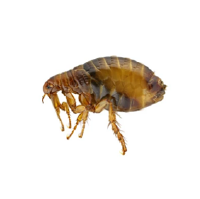
Cat Flea
AKA: House flea
The most common flea in Collin County. Found on cats, dogs, and wildlife alike.
Pet bedding, carpets, upholstered furniture, floor gaps, and yard grass. Adult fleas represent less than 5% of the total infestation. The rest are eggs, larvae, and dormant pupae distributed throughout the environment.
Stonebridge Ranch, Craig Ranch, Twin Creeks in Allen, Cottonwood Creek corridor. Any neighborhood with high pet density and trail access sees elevated cat flea pressure from March through November.
Pet treatment, interior spray covering carpets and baseboards, and yard granules applied simultaneously. All three components are required. Treating only one or two eliminates adults but leaves the cycle in place.
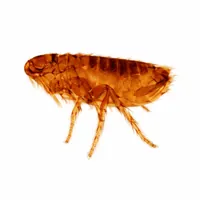
Dog Flea
AKA: Cat flea lookalike
A distinct species from the cat flea, though nearly identical to the eye. Present in North Texas but far less common.
Dogs, cats, rodents, and wildlife. Dog fleas share the same habitat as cat fleas. Pet bedding, carpets, and yard perimeters are their primary zones. They are present in North Texas but significantly less common than cat fleas, which account for the vast majority of infestations on dogs.
Found throughout the service area wherever dogs have outdoor access. More commonly confirmed in households with multiple pets or in properties adjacent to wildlife corridors, where dogs encounter a wider variety of potential hosts.
Identical treatment approach to the cat flea. Pet treatment, interior spray, and yard granules all run simultaneously. Accurate identification matters because both species require the same protocol, and misidentifying one for the other does not change the treatment plan.
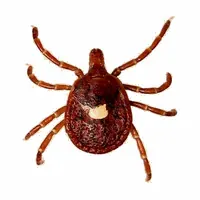
Lone Star Tick
AKA: White-dot tick
The most aggressive tick in North Texas. Identified by the white spot on the female’s back.
Tall grass, trail edges, wooded perimeters, leaf piles, and areas with deer movement. Lone Star ticks actively move toward hosts rather than waiting, covering several feet of ground within minutes of detecting breath or body heat.
Heard Natural Science Museum trails, Erwin Park, Melissa trail system, Lake Lavon shoreline in Princeton, Farmersville rural properties, Fairview estate lots with wooded creek beds.
Yard spray along the grass-to-landscape border, fence lines, and shaded edges. Granule applications in leaf litter zones where Lone Star ticks concentrate between feedings. Treatment frequency increases during spring peak (March through June).
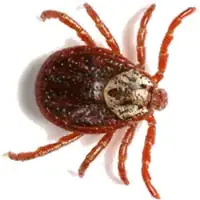
American Dog Tick
AKA: Wood tick
Common on dogs from March through August. Brown with distinctive white or yellowish-gray markings.
Grassy areas along roadsides, trail margins, dog parks, and residential yards. American dog ticks are path-edge specialists, climbing low vegetation and extending their front legs to latch onto passing dogs, people, or wildlife.
Craig Ranch trails, Erwin Park, Cottonwood Creek corridor in Allen, Prosper and Celina community parks. Dog parks with high foot traffic see the heaviest activity from April through June.
Yard treatment targeting grass-to-landscape transitions and dog run areas. Interior treatment if ticks have been brought inside and found on furniture or flooring. Full yard application typically needed once confirmed.
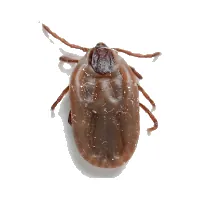
Brown Dog Tick
AKA: Kennel tick
The only tick in North Texas that can complete its life cycle indoors. A tick problem on your dog can become a household infestation.
On dogs indoors and outdoors. Unlike other tick species, brown dog ticks thrive inside homes, kennels, and dog runs. They hide in wall gaps, baseboards, behind furniture, and in the folds of dog bedding while waiting to re-attach to a host.
Found throughout the service area wherever dogs are kept. More common in households where dogs sleep indoors, in kennels and boarding facilities, and in homes where a tick presence went unnoticed for several weeks, allowing the indoor population to establish.
Interior treatment is required in addition to yard treatment. Unlike other tick species, eliminating the yard alone does not solve a brown dog tick problem once they are established indoors. Both the home and the dog must be treated simultaneously.
Chiggers in Collin County TX
Chiggers are not ticks or fleas. They are the larvae of a specific group of mites, and they are the reason many Collin County residents come home from a trail walk with intensely itchy red welts clustered around their ankles, waistband, and behind the knees. Adult chigger mites are harmless. It is the larvae that bite, injecting a digestive enzyme that breaks down skin tissue before they feed. The result is a raised welt that itches far out of proportion to the size of the bite and can persist for one to two weeks.
Chigger season in Collin County peaks from June through August, when soil temperatures are consistently warm and tall grass along trails and creek corridors is at its densest. The Melissa trail network, Heard Museum prairie trails, Lake Lavon shoreline, and Erwin Park are confirmed high-activity zones every summer. Chiggers concentrate in the transition zone between mowed lawn and taller vegetation, which is exactly the edge where families and dogs travel most.
The Scorched Earth Barrier application we use for ticks and fleas covers chigger habitat simultaneously. All three parasites occupy the same shaded grass edges and leaf litter zones at the perimeter of your property. A single yard treatment addresses the full complex at once, not just the pest a homeowner noticed first.
Chigger bites cluster at waistbands, sock lines, and underarms where clothing is tight against skin. Flea bites appear in small groups around the ankles and lower legs, sometimes with a halo ring. Tick bites are typically a single attachment point, often with the tick still present. All three can cause serious reactions and require the same outdoor treatment program to eliminate.
Peak chigger activity runs June through August, with the heaviest concentration in Melissa, Princeton, and properties bordering Erwin Park and Lake Lavon. If your family has been coming home from outdoor activity with intense itching that is not explained by obvious flea or tick bites, chiggers in the yard perimeter are the most likely cause. The yard treatment that eliminates your tick problem eliminates chiggers at the same time.
Why One Flea Treatment Is Not Enough
Adult fleas represent less than 5% of a typical infestation. The remaining 95% is eggs, larvae, and dormant pupae distributed throughout your home in carpets, pet bedding, floorboard gaps, and upholstered furniture. Flea eggs have no external surface that pesticide products can penetrate. Larvae are protected inside carpet fibers. Dormant pupae inside a protective cocoon can survive for months waiting for a vibration signal that a host is nearby. The initial treatment eliminates every adult on contact. The hidden population is unaffected and begins emerging within weeks.
A fully treated yard does not stay that way. Deer, raccoons, opossums, and neighborhood pets that use your property as a travel corridor can re-seed the yard within 24 hours of treatment. A single deer walking through the back yard can drop dozens of ticks along the fence line. Fleas from a neighbor’s yard that shares grass contact with yours can repopulate your perimeter in days. This is not a treatment failure. It is the normal pressure pattern in Collin County from March through November, and it is exactly what the recurring service program is designed to address.
A single service removes every adult flea and tick present at treatment time, including the yard perimeter. It does not protect against new ticks carried in by wildlife or pets using the property after treatment. In most Collin County neighborhoods, that pressure resumes within days.
Quarterly treatment maintains the Scorched Earth Barrier through the full flea and tick season. The 30-day follow-up visit targets flea eggs that hatched after the initial treatment, closing the cycle before the next generation reaches adulthood and begins laying.
How Our Flea & Tick Exterminator Service Works: The RID Method
Every initial flea and tick service follows all three steps. Ongoing recurring subscribers get the full RID system on every visit, including the Defend step that keeps the Scorched Earth Barrier active year-round.
Remove
We remove fleas and ticks by flushing out the active population with a targeted interior treatment covering carpets, pet resting areas, baseboards, and under furniture. For ticks, we treat along fence lines and the first six feet of grass bordering landscaped beds, where ticks wait for hosts to pass.
- Full property inspection to confirm species and source zones
- Interior spray targeting adult fleas in carpets and pet bedding
- Tick treatment at all perimeter entry points and fence lines
- Yard assessment to locate highest-concentration zones before applying
Install
We install our Scorched Earth Barrier across the full yard perimeter, shaded grass zones, leaf litter beds, and mulch areas where fleas, ticks, and chiggers concentrate between feeding. Granule applications target the soil layer where flea pupae are protected from surface sprays.
- Yard spray along grass-to-landscape transition zones
- Granule application in leaf litter, mulch beds, and shaded perimeters
- Pet-safe formulations used throughout treatment
- All three parasites addressed in a single application
Defend
The Defend step is included with every recurring service visit, not one-time treatments. This is what keeps the barrier active during the spring and summer peak of flea and tick season in Collin County, when new tick activity from wildlife and off-leash pets can re-seed a treated yard within days of the initial service.
- Quarterly visits renew the Scorched Earth Barrier through peak season
- 30-day follow-up targets flea eggs that hatched after initial treatment
- Ongoing monitoring for new tick entry points as wildlife patterns shift
- Free re-service if covered parasites return between scheduled visits
Every Review, 5.0 Stars on Google
All Pest Control Services in McKinney & Collin County
 Ant Control
 Bed Bug Exterminator
 Cockroach Control
 Commercial Pest Control
 Cricket & Centipede Control
 Flea & Tick Control
 Mosquito Control
 Pantry Moth & Beetle Control
 Rodent Control
 Scorpion Control
 Spider Control
 Termite Control
 Wasp & Stinging Insect Control
Schedule a Flea & Tick Treatment
Same-Day Still Available.
A single adult flea lays up to 50 eggs per day inside your home. Ticks carried in by wildlife can re-seed a treated yard within 24 hours of the initial service.
Flea & Tick Exterminator Near Me
Pest Me Off treats fleas, ticks, and chiggers in 14 cities throughout Collin County and surrounding areas. Each city has its own pest pressure pattern, and our treatments are adjusted for your specific neighborhood and yard.
Stonebridge Ranch’s trail system and HOA ponds create prime Lone Star tick habitat throughout the development. Craig Ranch park corridors and Erwin Park’s wooded edges see consistent tick activity from March through October, and flea pressure in established neighborhoods tracks closely with trail use and pet density.
Allen TXCottonwood Creek trail runs through Twin Creeks, StarCreek, and Watters Creek communities, creating sustained flea and tick pressure in one of the most pet-dense cities in the service area. Trail-adjacent homes in Cypress Meadows report tick activity from April through October, and flea season in Allen extends well into November most years.
Frisco TXFrisco Commons Park and the Cottonwood Creek trail system serve thousands of dog walkers weekly, creating ongoing tick exposure for Frisco households. The Star development’s grass event areas attract Lone Star tick activity during warm months, and Phillips Creek Ranch properties near creek corridors see elevated flea pressure through spring and summer.
Plano TXArbor Hills Nature Preserve and the Spring Creek corridor are active flea and tick zones, particularly for dog walkers on the trail network through east Plano. Pet-dense neighborhoods near Spring Creek report the highest flea call volume in the city, with tick activity along the creek corridor running from spring through late fall.
Prosper TXWindsong Ranch and Star Trail trail systems border undeveloped land with active deer movement, which is the primary tick transport vector in Prosper. Rapid construction in Christie Farms and surrounding areas is disturbing established flea populations in soil, pushing them toward new homes at the edges of active developments.
Celina TXLight Farms and Mustang Lakes community trail systems cross into undeveloped Blackland Prairie, where Lone Star tick populations are dense through the full warm season. Construction activity at the edges of both communities keeps pushing flea populations from disturbed soil toward new and recently completed homes.
Anna TXLiberty Hills and Sherley Farms acreage lots border open fields, making flea pressure from wildlife nearly constant through the growing season. Rural soil and ongoing construction across both communities create year-round flea egg reservoirs in disturbed ground adjacent to new homes.
Melissa TXWith 41 miles of trails and the Z-Plex sports complex, Melissa has the highest flea and tick exposure of any city in the service area. North Creek and Liberty neighborhood homes adjacent to the trail network report tick activity well into November, and chigger complaints from the trail system peak every June through August.
Princeton TXLake Lavon shoreline areas are confirmed chigger and tick habitat throughout summer, with Lavon Shores Estates and Culleoka properties seeing the heaviest activity. Rural lots near Lowry Crossing border open pasture, extending flea season through fall harvest months when field animals move toward residential areas.
Little Elm TXThe Union Park trail system and Eagles Landing community green spaces run adjacent to Lake Lewisville, where tick habitat is dense in the shoreline vegetation. Paloma Creek South’s creek corridor reports consistent Lone Star tick activity from March through October, with flea pressure amplified by high pet density in the trail-adjacent communities.
The Colony TXStewart Creek Park and the creek corridor running through Castle Hills and Waterstone communities support Lone Star tick populations through the full warm season. Pet-dense households near the park system report the highest flea call volume in The Colony, with tick activity along the creek running from spring through late fall.
Fairview TXHeritage Ranch’s maintained fairways and large private lots with native plantings and wooded creek beds create premium flea and tick habitat close to living spaces. Estate-size lots with deer corridors are the highest-risk properties for tick activity, and chigger exposure in unmaintained lawn edges is a consistent summer complaint throughout the development.
Carrollton TXIndian Creek Trail and the creek corridor running through McCoy Estates and Castle Hills support Lone Star tick populations through the full warm season. Pet-dense neighborhoods near the trail network see flea pressure amplified by high foot traffic through shared green space, and tick activity along the creek corridor is active from April through October.
Farmersville TXRural properties near agricultural operations bring year-round flea pressure from field animals, and Blackland Prairie soil supports dense tick populations across acreage lots and pasture-adjacent homes. Properties bordering wooded creek beds and working farmland are the highest-risk addresses for both species in the service area.