

Pantry Moth & Beetle Control in McKinney, Allen & Frisco
Indian meal moths in your cereal. Grain beetles in your rice. Weevils in your flour. Pantry pests arrive inside the grocery bag before you ever open it. Pest Me Off identifies every species, removes every infested source, and seals entry points so your food stays clean.
Call (972) 866-4720

Pantry Moth & Beetle Exterminator in McKinney, Allen, Frisco & Collin County
The reason pantry pest treatments fail is almost always the same. The wrong product aimed at the wrong pest at the wrong stage of its life cycle. Indian meal moths flying around your kitchen are adults that no longer eat or reproduce. Spraying them misses the larvae already buried inside cereal bags, pet food containers, and dried goods you have not opened yet. Grain beetles discovered in your flour bag have likely spread to three other containers before you find the first one. Pest Me Off identifies the species first, locates every active food source, and removes the infestation before it spreads across the rest of your pantry.
What draws each pantry pest into your home is different for every species, and that is part of why generic treatments miss. Indian meal moths arrive most often inside the food itself, entering as eggs or larvae concealed in packaged cereal, grain, birdseed, and pet food from the grocery store. A single contaminated bag is enough to start an infestation that spreads to every open container within reach within weeks. Grain beetles and weevils follow the same route, entering through compromised packaging at the warehouse or the store, then chewing through cardboard and thin plastic to access adjacent containers once inside. House flies and fruit flies arrive for different reasons entirely, following food odors and organic waste rather than stored dry goods, which is why they require a different identification and treatment approach.
- Transfer All Dry Goods to Airtight Containers Immediately After Purchase.
- Indian meal moths and grain beetles enter your pantry inside the original packaging. Transferring cereal, flour, rice, oats, birdseed, and pet food into sealed glass or hard plastic containers at the time of purchase stops them before they can spread to adjacent items. Paper bags and cardboard boxes are not a barrier. If the infestation arrived in the packaging, it is already looking for the next container.
- Inspect Every New Bag Before It Goes on the Shelf.
- Hold bulk grain bags and birdseed bags up to the light and look for small holes, webbing at corners, or fine powder around the seam. A bag that shows any of these signs should go directly outside before it enters the house. Indian meal moth larvae chew through cardboard and thin plastic in hours once they are inside a warm pantry.
- Discard the Entire Infested Item. Do Not Salvage It.
- If you find webbing, live larvae, or beetles inside a dry goods container, discard the entire contents immediately in an outdoor trash bin. Attempting to sift out the adults and reuse the product leaves eggs behind that hatch within one to two weeks. Bag the item before carrying it through the kitchen to limit spread to other food storage areas.
- Clean Shelf Surfaces Before Restocking After Treatment.
- Pantry pest eggs are small enough to be invisible on shelf surfaces and in shelf liner creases. After treatment, wipe down all pantry and cabinet shelves with a damp cloth, remove and shake out any shelf liner, and allow the area to dry before restocking. This removes any eggs that survived the service and prevents a restart from the same location.
Pantry Pest Species in McKinney TX & Collin County
Six pantry pest species are regularly found in Collin County homes. Each one enters differently and requires a different treatment approach. The high-search species are listed first.

Indian Meal Moth
AKA: pantry moth, flour moth, grain moth
The most common pantry moth in North America. The adult flying at night is harmless. The larvae inside your food are the problem, and they were often there before the bag came home.
Dry goods throughout the pantry. Cereal, pasta, flour, pet food, birdseed, nuts, dried fruit, spices, and chocolate are all targets. Adults fly at night and are spotted in kitchens, living rooms, and hallways far from the original food source. The larvae remain inside the food itself, often before the package shows any visible damage.
Indian meal moth calls come from across all 14 service cities year-round. Homes near US-75 and Hwy 380 with large pet food or birdseed storage in garages see concentrated cases. Stonebridge Ranch, Craig Ranch, and Fairview properties with bulk dry goods storage report the most persistent returns.
Thorough inspection to locate every contaminated food source, including sealed bags showing no external damage. All infested materials removed before treatment begins. Interior treatment targets larval populations on pantry surfaces, shelf crevices, and wall edges where moths drop to pupate. Scorched Earth Barrier at exterior entry points.
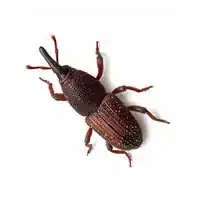
Rice Weevil
AKA: grain weevil, rice bug
The pantry pest that develops completely inside sealed grain kernels. By the time you see one, the food it came from has been compromised for weeks.
Whole grains, rice, corn, wheat, dried beans, and birdseed. The female drills into a grain kernel, lays a single egg inside, and seals it. Development happens entirely inside the kernel where no spray can reach. First signs are adult weevils crawling across pantry shelves or countertops, often long after the source has spread.
Rice weevil calls are most common in McKinney, Plano, and Allen homes with large bulk grain storage. Warehouse grocery purchases of rice, oats, and grains are a frequent entry point. The longer bulk items sit in pantry storage, the higher the risk of an established population spreading to adjacent containers.
Complete inspection of all bulk grain storage. All infested materials disposed of before treatment begins. Interior treatment of storage areas, shelf crevices, and floor edges where adults have spread. Scorched Earth Barrier at entry points. Airtight container recommendations for all remaining dry goods.
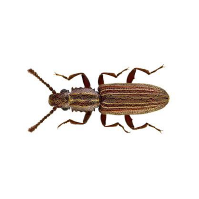
Merchant Grain Beetle
AKA: grain beetle, cereal beetle, sawtoothed beetle
Flat enough to crawl through the smallest packaging gaps. This beetle infests cereals, pasta, nuts, and dried fruit regardless of how tightly the package appears sealed.
Cereals, pasta, flour, nuts, dried fruit, crackers, cake mixes, and chocolate. They chew through cardboard boxes and thin plastic bags. First noticed as small, flat, dark brown beetles crawling in or near food packages. Packages that appear visually intact may already be infested.
Merchant grain beetle pressure is reported year-round across all Collin County service cities. Craig Ranch and Stonebridge Ranch pantries with large cereal and dry goods supplies report the most persistent cases. Commercial kitchen calls in Frisco and Allen include grain beetle identification alongside Indian meal moths.
Full pantry audit including all sealed packages. Infested materials disposed of before treatment. Targeted interior treatment of pantry shelves, storage areas, and cabinet edges. Scorched Earth Barrier at entry points. Transition of dry goods to airtight hard-sided containers recommended before the next scheduled service.
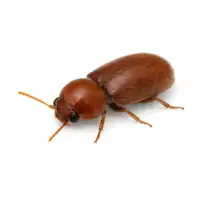
Cigarette Beetle
AKA: drugstore beetle, tobacco beetle
The pantry pest that targets spices and herbs more than grains. Found in the spots most homeowners never think to check first.
Dried herbs and spices, paprika, dried pepper, pet food, flour, cereals, and dried flowers. Adults fly well and relocate from a garage spice rack or pet food bag to kitchen pantry shelves without detection. They remain active at temperatures where most pantry beetles slow down, making them a year-round problem in Collin County homes.
Cigarette beetle calls are most common in McKinney, Prosper, and Frisco homes with extensive spice storage or pet food kept in garages or utility rooms. Properties with dog or cat food stored away from the main kitchen pantry are a common source of undetected populations that have already spread indoors before they are noticed.
Complete inspection of spice racks, pet food areas, and all pantry and garage storage. Infested materials disposed of before treatment. Interior treatment of affected shelving, storage zones, and adjacent areas. Scorched Earth Barrier at all exterior entry points to reduce incoming population volume.
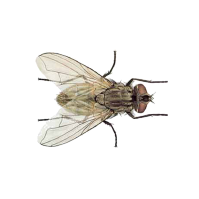
House Fly
AKA: common fly, housefly
A year-round kitchen nuisance. House flies are present because something inside or adjacent to the structure is providing a food and breeding source that needs to be identified and removed.
Kitchens, pantry areas, trash receptacles, drains, countertops near uncovered food, and any area with accessible organic waste. House flies feed by landing on food surfaces and immediately contaminating whatever they touch. They breed in rotting organic material, trash, and drain buildup near kitchens.
House fly pressure is consistent year-round across all 14 service cities, peaking from May through September. Homes near open fields in Farmersville and Princeton and commercial properties along US-380 see the heaviest volume. Commercial kitchens in Allen and Frisco report year-round pressure regardless of season.
Scorched Earth Barrier exterior service reduces fly populations around the structure perimeter. Interior inspection to identify and address food sources, trash areas, and entry points. Targeted treatment of active interior areas. Entry point sealing recommendations to reduce incoming fly volume from outdoor fly sources.
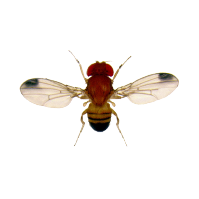
Fruit Fly
AKA: vinegar fly, pomace fly
The tiny fly that appears from nowhere over your counter. Fruit flies breed in drain film and organic debris, which is why they persist even after visible food sources are removed.
Overripe or damaged fruit, open wine and juice containers, kitchen drains, garbage disposals, damp mops, and any moist organic residue near pantry or kitchen areas. They establish a breeding population in drain film in as little as 72 hours and maintain it indefinitely if the drain is not treated directly.
Fruit fly calls peak in summer and fall across all 14 service cities as produce ripens faster and kitchen drains accumulate organic material. Older Allen and McKinney neighborhoods with pier-and-beam construction and drain access points under kitchens report the most persistent, long-running infestations.
Identification of the active fly source is the first and most critical step. Interior inspection of drains, disposal units, and all produce storage areas. Targeted treatment of active larval locations. Scorched Earth Barrier at exterior entry points to reduce incoming fly population volume.
Indian Meal Moth: The Most Searched Pantry Pest in Collin County
The Indian meal moth is the most recognizable pantry pest in North America and the one most Collin County homeowners find flying around their kitchen long after throwing out obviously contaminated food. The adult moth flying at night does not eat. It has no functioning mouthparts for feeding. The destruction is done entirely by larvae that hatched inside grain bags, cereal boxes, pet food, and dried fruit before or shortly after the product arrived in your home.
By the time adults are visible, the larvae they came from have already spun silk webbing through the food supply and begun dropping from shelves to pupate in wall corners, under shelf paper, and behind baseboards. Store-bought pantry moth traps catch adult males. They work as monitors but they do not address larvae already inside your food. The population you cannot see is why standard surface treatments produce little lasting result.
Pest Me Off locates every contaminated food source including sealed bags that show no external damage, removes all infested material, and treats the pantry surfaces, wall edges, and adjacent storage areas where larvae have dropped to pupate. The Scorched Earth Barrier is applied at exterior entry points while the interior population is being eliminated. Same-day service is available across all 14 Collin County service cities.
The adult Indian meal moth flying around your kitchen lives for about 10 days and cannot eat. Every adult you see hatched from larvae already inside your food. The adults are the announcement. The infestation is in the bag.
Adult moths scatter eggs on food surfaces and container rims near the original infested source. Each female lays 200 to 400 eggs. At warm temperatures, the complete cycle from egg to flying adult takes as little as 6 weeks. A single infested bag of birdseed in a garage can produce the first adults 6 weeks after you brought it home, by which time larvae have already spread to everything within reach.
Indian meal moth complaints come from homes across all 14 Pest Me Off service cities every month of the year. Stonebridge Ranch, Craig Ranch, and Adriatica Village in McKinney generate the highest call volume, driven by large pantries and bulk grocery purchasing patterns. Prosper and Celina neighborhoods near warehouse grocery options along Hwy 380 report a consistent arrival pattern from infested products. Pet and birdseed storage in garages is one of the most common undetected sources across the entire service area.
Why One Pantry Pest Treatment Is Not Enough
Most pantry pest treatments eliminate the adults and larvae you can find. The next wave is already developing in spots no spray ever reaches. Indian meal moths, grain beetles, and weevils all lay eggs or hide young inside food packaging, inside grain kernels, and in shelf crevices that standard treatment never penetrates. The adults die. The next generation does not. Four to eight weeks later the cycle repeats in the same areas because the source was never fully addressed.
Cigarette beetle larvae develop inside spices and packaged herbs where surface treatments never penetrate. Fruit fly larvae in drain film and organic debris are protected from anything applied to visible surfaces. Every pantry pest on this page produces the next generation in a location that a single spray application cannot effectively address.
Even when existing pantry pests are fully eliminated, the same conditions that allowed the original infestation are still present in your kitchen and pantry. The most consistent re-entry point is the grocery store. Indian meal moths, grain beetles, and weevils arrive already inside commercially packaged dry goods, birdseed, and pet food on a routine basis. A single infested bag from any grocery chain, warehouse store, or pet supply retailer is enough to restart an infestation in a previously treated pantry.
Recurring service catches new arrivals at the follow-up visit before larvae have had time to spread beyond the original bag. Finding a contaminated bag at a follow-up is a contained problem. Finding one three months later, after eggs have cycled twice, is a pantry-wide reinfestation.
Eliminates the current population and removes all identified infested food sources. Does not address the next contaminated bag you bring home or new arrivals after treatment. Best for confirmed single-source situations where food storage habits are also being changed.
The problem with pantry pests is that the grocery store sends them back. A single infested bag of rice, birdseed, or cereal is enough to restart an infestation in a treated pantry. Recurring service catches new arrivals at the follow-up visit before larvae spread beyond the original bag. For homes that do bulk purchasing or store pet food and birdseed long-term, this is the only approach that actually holds.
How Our Pantry Pest Exterminator Service Works: The RID Method
Every initial pantry pest service follows all three steps. Ongoing recurring subscribers get the full RID system on every visit, including the Defend step that keeps new arrivals from establishing between treatments.
Remove
Every pantry pest service starts with a thorough inspection before any product is applied.
- Identify the species present and every active food source, including sealed packages showing no external damage
- Remove all infested materials before treatment begins so larvae cannot continue the cycle inside your home
- Document every confirmed species and affected area so the service is targeted, not generic
- Check garage and utility storage for pet food and birdseed, the most commonly overlooked source
Install
Treatment applied to the areas that matter, not just the surfaces you can see.
- Interior treatment to pantry shelves, cabinet edges, wall perimeters, and surfaces where larvae drop to pupate
- Scorched Earth Barrier applied to the structure exterior to close entry points and reduce incoming pressure
- Drain treatment where fruit fly or house fly breeding sources are identified in kitchen or utility areas
- Products selected specifically for pantry pest use around food-area surfaces and children and pets
Defend
Pantry pests arrive in new purchases. Quarterly service catches the next arrival before it becomes a reinfestation.
- Quarterly visits include a pantry pest check so new arrivals are identified at the source before spreading
- Scorched Earth Barrier renewed at exterior entry points before each high-risk period
- Free re-service if pantry pests return between scheduled treatments
- No-contract options available on every plan
Every Review, 5.0 Stars on Google
All Pest Control Services in McKinney & Collin County
 Ant Control
 Bed Bug Exterminator
 Cockroach Control
 Commercial Pest Control
 Cricket & Centipede Control
 Flea & Tick Control
 Mosquito Control
 Pantry Moth & Beetle Control
 Rodent Control
 Scorpion Control
 Spider Control
 Termite Control
 Wasp & Stinging Insect Control
Schedule a Pantry Moth & Beetle Inspection
Same-Day Still Available
Indian meal moths and grain beetles operate year-round in McKinney, Allen, and Frisco pantries. A single contaminated bag is enough to spread an infestation across every container on your shelves. Every week without treatment is another generation completing its cycle inside your food supply.
Pantry Pest Exterminator Near Me
Same-day pantry moth and beetle control throughout every city below. Each card links to that city’s pest control page.
Allen pantry pest calls include Indian meal moths from bulk grocery purchases along US-75 and grain beetles in commercial kitchen storage on Exchange Pkwy. The active retail corridor creates consistent food handling traffic that elevates pantry pest activity for businesses and adjacent residential properties.
Anna TXAnna’s rural character and active Hwy 5 corridor growth bring consistent Indian meal moth pressure from birdseed and pet food stored in garages. Grain beetle calls are common in older Anna homes with long-term dry goods storage in kitchen pantries and utility rooms.
Carrollton TXCarrollton’s older neighborhoods near Rosemeade Park and Hebron Pkwy include homes with decades of accumulated dry goods storage. Indian meal moth and grain beetle pressure is year-round and elevated in homes with pet food or birdseed stored in laundry areas or attached garages.
Celina TXCelina’s rapid growth along Hwy 380 means consistent new construction with attached garages, a common location for pet food and birdseed that introduces Indian meal moths. New Light Farms and Mustang Lakes homes report pantry pest finds within the first year of occupancy.
Fairview TXHeritage Ranch homes with extensive pantry storage and large pet supply purchases are a consistent Indian meal moth source. Pet food stored in garages or utility rooms accounts for most Fairview calls. Large-lot properties with garage storage see the highest repeat call volume.
Farmersville TXFarmersville properties with nearby agricultural storage, chicken feed, wildlife seed, and bulk grain create elevated pantry pest risk. Indian meal moth pressure in rural Farmersville homes is among the highest in the service area for grain and seed storage locations year-round.
Frisco TXFrisco’s active retail strip along the Dallas North Tollway includes warehouse grocery options that are common pantry pest entry points. Indian meal moth and grain beetle calls are distributed across Frisco neighborhoods from Starwood to The Trails throughout the year.
Little Elm TXLittle Elm pantry pest activity is highest near The Shores and other lakeside neighborhoods where seasonal food storage for outdoor recreation creates extended dry goods conditions. Indian meal moth in birdseed and pet food are the species identified most often in Little Elm calls.
McKinney TXMcKinney is the primary call volume city for pantry pests across the service area. Stonebridge Ranch, Craig Ranch, and Adriatica Village homes with large pantries and bulk grocery purchasing generate the most Indian meal moth and grain beetle complaints. Same-day service is available from our McKinney office.
Melissa TXMelissa’s growing residential development along Hwy 121 includes new homes with attached garages, a common Indian meal moth entry point via birdseed and pet food. Older Melissa neighborhoods on the south side of town report grain beetle pressure in long-established pantries.
Plano TXWest Plano and East Plano pantry pest calls include Indian meal moth in homes with extensive grain and bulk grocery storage. Willow Bend and Legacy Drive neighborhoods with large kitchen pantries generate the highest pantry pest call volume in Plano throughout the year.
Princeton TXPrinceton properties near Lake Lavon often store bulk grains, feed, and birdseed that serve as Indian meal moth entry points. Grain beetle and weevil pressure is higher in Princeton than in more suburban service cities due to agricultural adjacent storage patterns on rural properties.
Prosper TXProsper pantry pest activity is highest in newer neighborhoods along Preston Rd. and Hwy 380 where bulk grocery purchases from warehouse stores in Frisco and McKinney introduce Indian meal moths and grain beetles. Large attached garages with pet food and birdseed storage are the most common source.
The Colony TXThe Colony homes near SH-121 and the Grandscape area have consistent pantry pest activity driven by warehouse grocery access. Indian meal moth and fruit fly calls are most common in new construction areas along Paige Rd. where large-format grocery traffic is high.