Pavement Ants in Collin County, TX | Identification and Control
The Pavement Ant (Tetramorium immigrans), most commonly called the sugar ant by Collin County homeowners, builds its colony in the soil beneath driveways, sidewalk slabs, and foundation edges. Workers enter kitchens through expansion joints and foundation gaps, trailing directly to sweet and greasy foods. The sting is real but too weak to feel on most people. The sandy mound at your driveway crack is displaced soil, not concrete damage. One queen, no budding, and one non-repellent service visit during active season is typically the end of it.
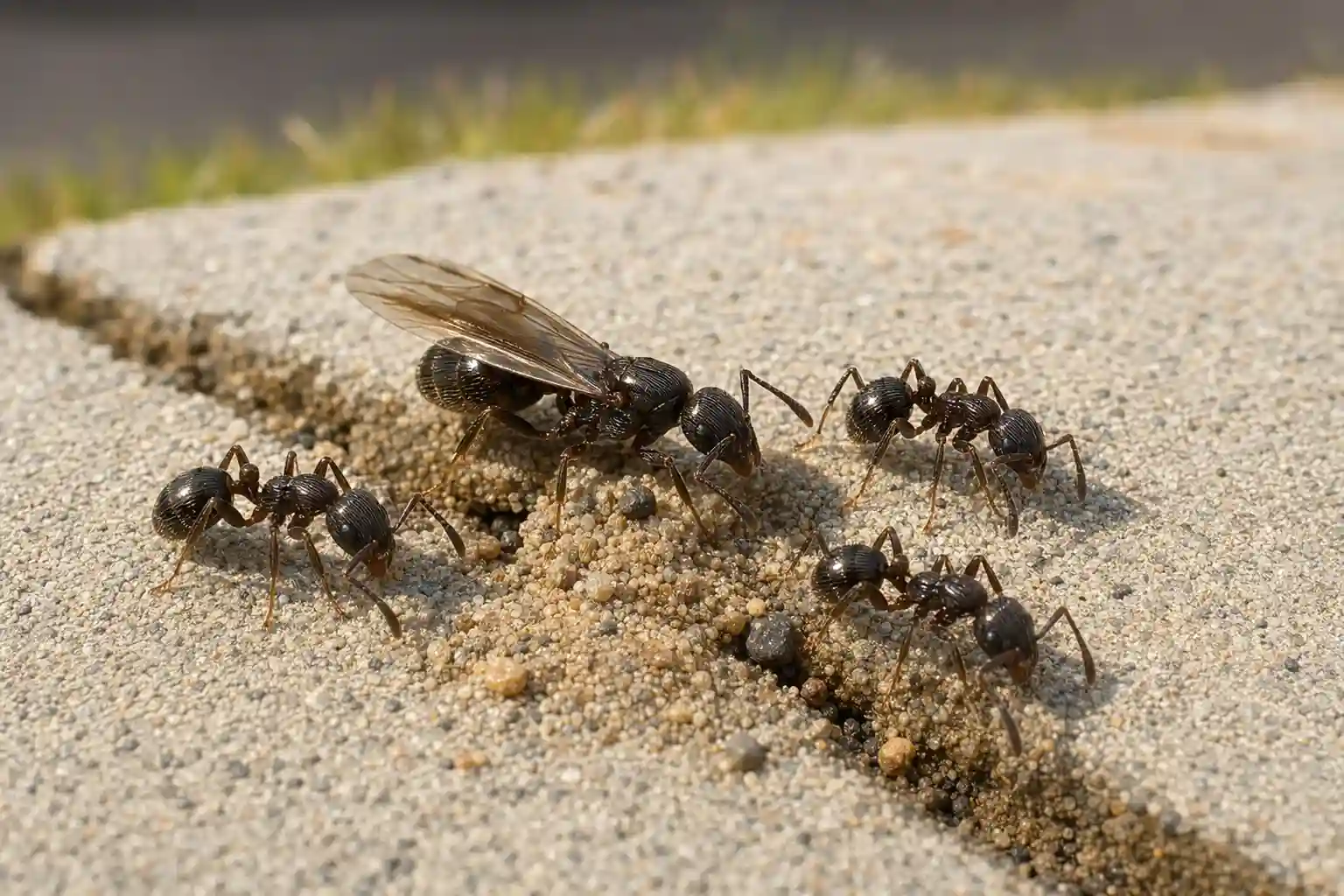
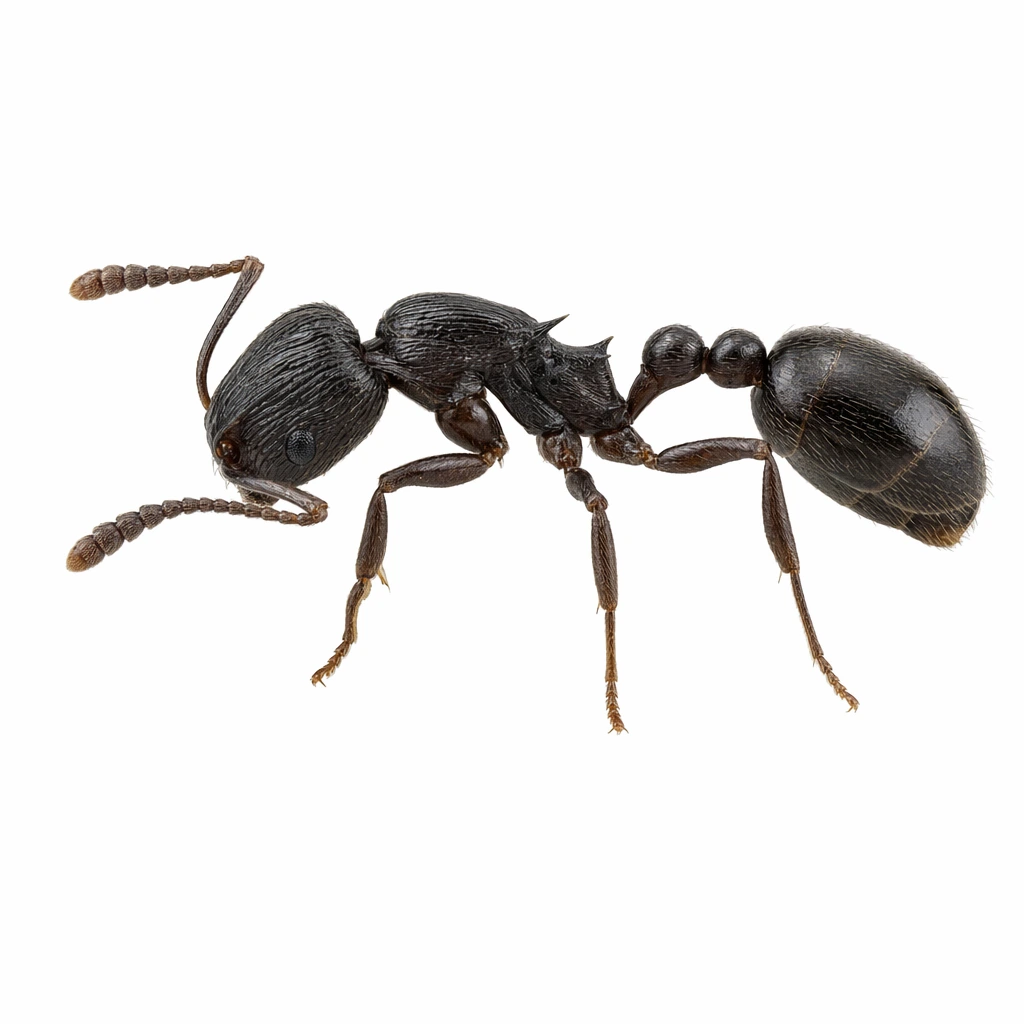
A low-risk sub-slab ant most commonly encountered as a kitchen trail. The sandy mound at your driveway crack is the colony entrance, not structural damage. One non-repellent service visit during active season is typically sufficient.
Activity builds from spring emergence through peak summer foraging. Kitchen trails occur most often in May and June when workers range farthest from the sub-slab nest. Pressure slows in winter but true dormancy is uncommon in North Texas.
Pattern from Pest Me Off service call records across Collin County, 2023 to 2026.
What Pavement Ants Look Like
The parallel grooves that separate them from every other ant in Collin County
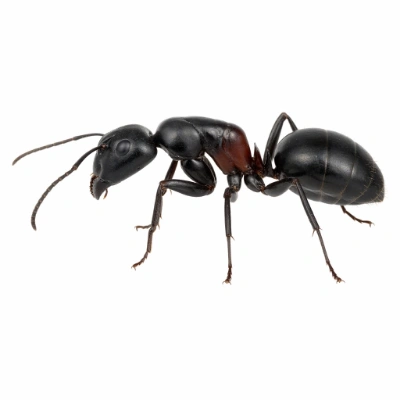
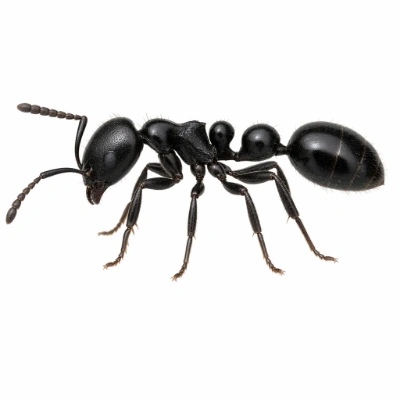
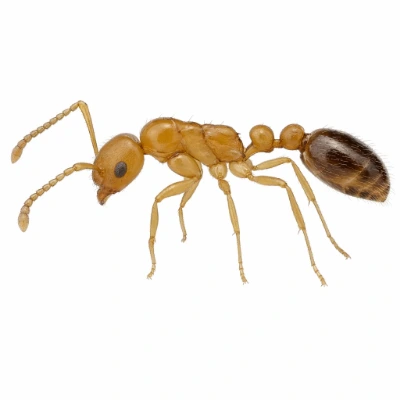
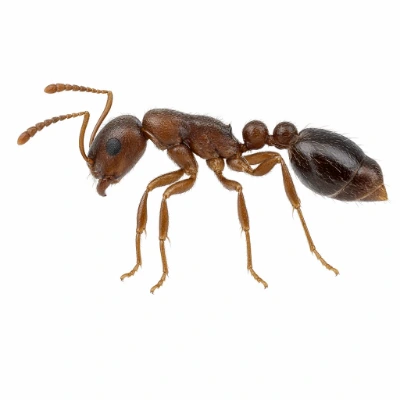
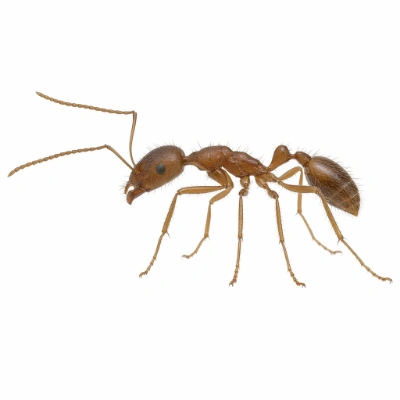
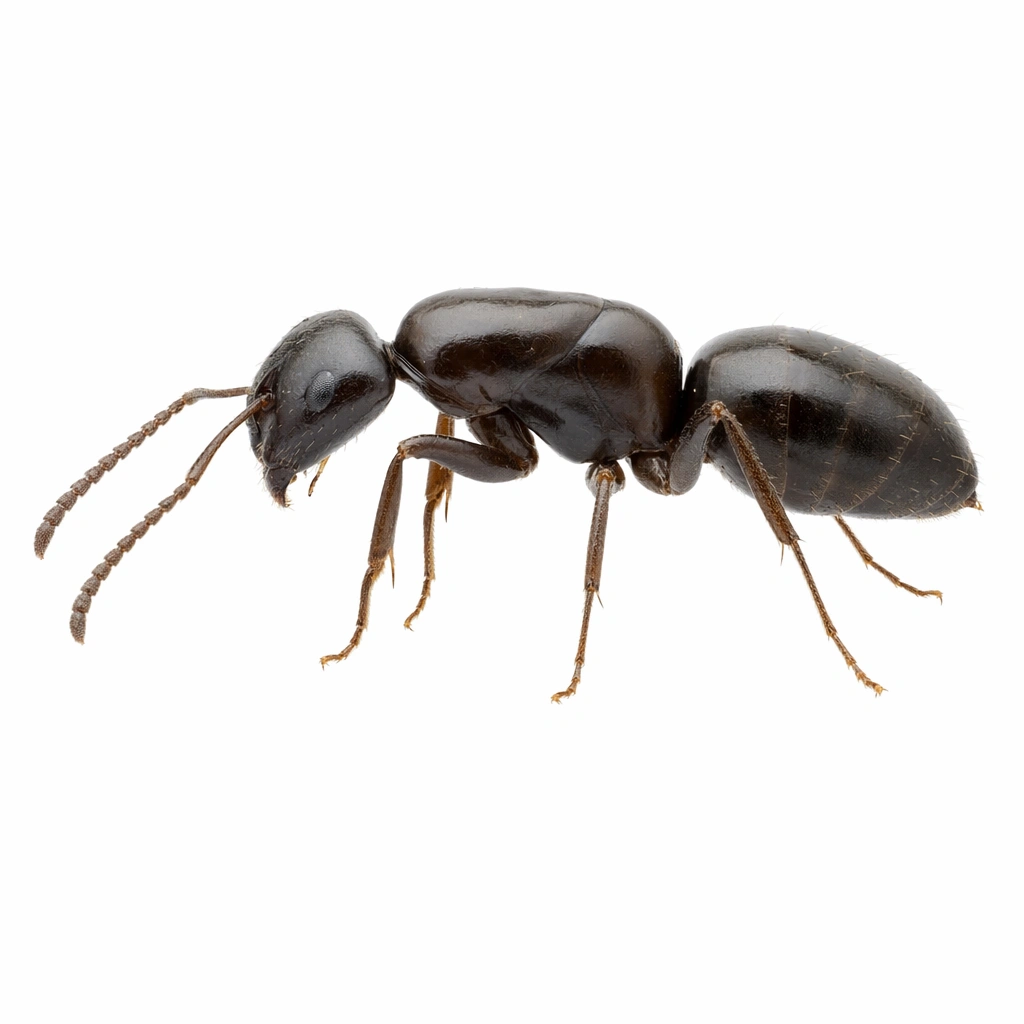
Pavement ant workers are 2.5 to 3 mm and uniformly dark brown to black. The colony is monomorphic, meaning all workers are the same size. That uniform size is the opposite of fire ants and the first thing to check at a glance. The defining diagnostic feature is a pair of parallel grooves (striae) running along both the head and the midsection. No other ant commonly encountered in Collin County shows this groove pattern on both segments. Pavement ant identification guides consistently list the head and midsection striations as the fastest confirmation. The waist has two distinct nodes (bumps). A small pair of spines sits at the rear of the midsection. Antennae have 12 segments with a 3-segment club at the tip.
Movement is slow and deliberate. Workers trail along edges: baseboards, grout lines, expansion joints, and foundation seams rather than spreading randomly across open surfaces. The most reliable outdoor field sign is a small sandy cone pushed through a driveway crack or sidewalk seam. That cone is displaced soil from nest excavation beneath the slab, not structural damage to the concrete above it. pavement ant nesting and foraging behavior research confirms sub-slab colonies beneath slabs and concrete paving as the primary nesting pattern.
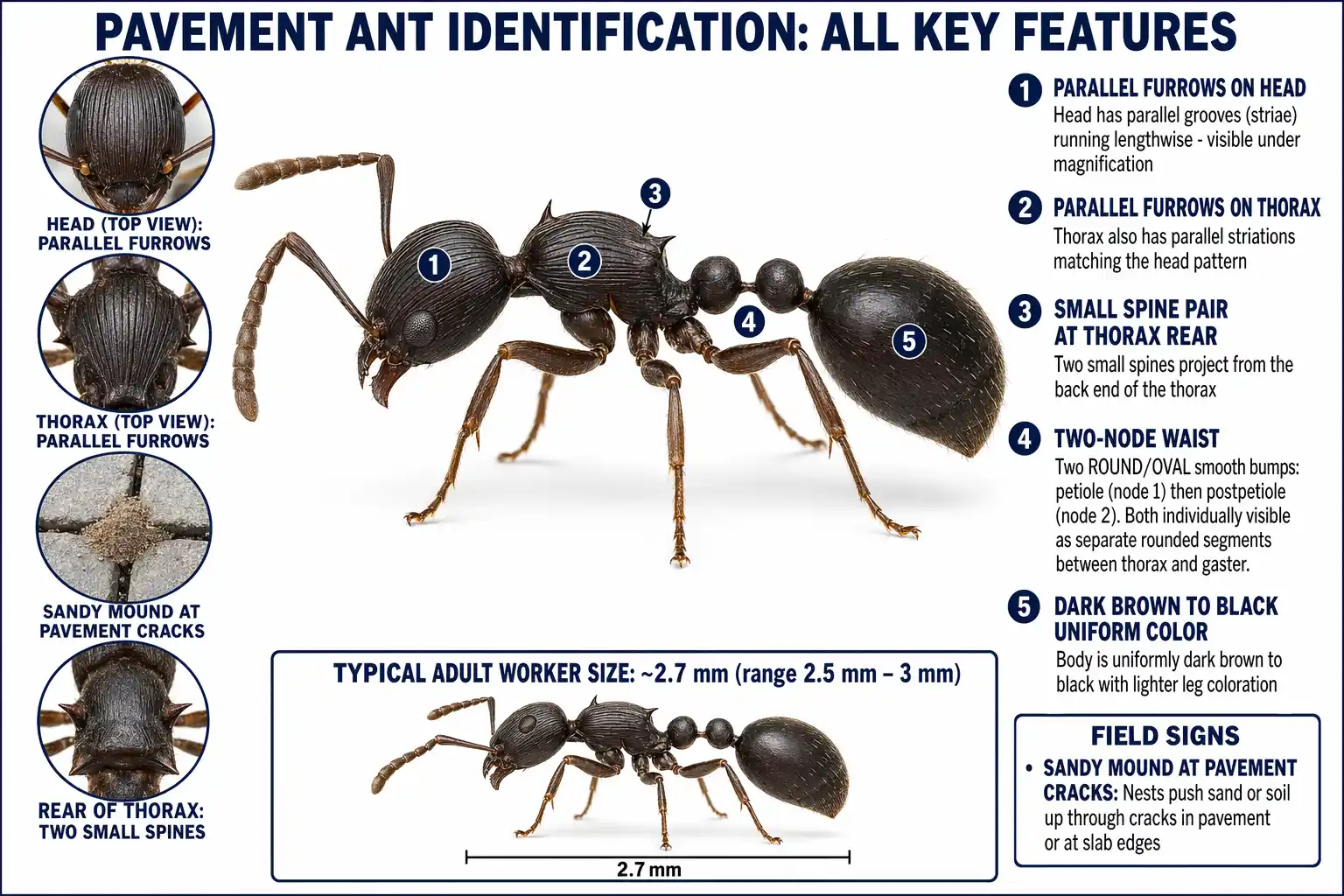
Pavement ant identification diagram with anatomical callouts
- Commonly called the sugar ant or sweet ant; the name comes from the sweet-food trails workers form when foraging indoors
- Uniform dark brown to black, all workers the same small size (2.5 to 3 mm)
- Parallel grooves on both the head AND midsection (unique diagnostic; no other local ant has this combination)
- Two-node waist with a small spine pair at the rear of the midsection
- Slow, deliberate trailing behavior along edges and seams, not open-surface scatter
- Small sandy cone at a driveway or sidewalk crack (nest entrance from sub-slab colony; not structural damage)
- No odor when crushed (unlike the odorous house ant, which smells strongly of blue cheese)
Why Collin County Homeowners Call Them Sugar Ants
The name “sugar ant” sticks because the most visible behavior is a precise trail of small dark ants running directly to something sweet in the kitchen. Workers follow chemical scent trails with reliable accuracy, and the trail to the sugar bowl, honey jar, or spilled juice is what homeowners see first and remember. The behavior earns the name every time.
The official common name “pavement ant” comes from the nesting habit rather than the behavior. Colonies excavate soil beneath pavement: driveways, sidewalk slabs, foundation edges, and concrete patio seams. The small sandy cone pushed through a crack is the surface evidence of that sub-slab excavation. The concrete above it is untouched.
Two species share the sugar ant nickname in Collin County, and this is worth clarifying. The Odorous House Ant (Tapinoma sessile) is also commonly called a sugar ant, and it forages indoors for sweets using the same kind of trail behavior. The fast separation: crush one worker. Odorous house ants release a strong blue cheese odor. Pavement ants have no odor at all. If there is no smell, check the waist: two nodes confirms pavement ant. One node points to odorous house ant. Both are called sugar ants on the same Collin County block, but the treatment approach differs enough that a correct ID matters.
How to Tell Pavement Ants from Other Ants in Collin County
Three ants are regularly mistaken for pavement ants or share the sugar ant nickname. Size, waist node count, and crushing odor separate them without a microscope.
| Species | Size | Key Feature | Nesting Habit |
|---|---|---|---|
|
Pavement Ant
AKA: Sugar Ant, Sweet Ant
Tetramorium immigrans
This species
|
2.5 to 3 mm, uniformly dark brown to black. All workers are the same size; no size variation within the colony the way fire ants show. | Parallel grooves (striae) run lengthwise on the head AND midsection, visible under magnification. Two-node waist. No odor when workers are crushed. | Nests in soil beneath slabs, sidewalks, and driveways. Workers push sandy soil up through cracks, forming small cone-shaped piles at the surface opening directly above the nest cavity. |
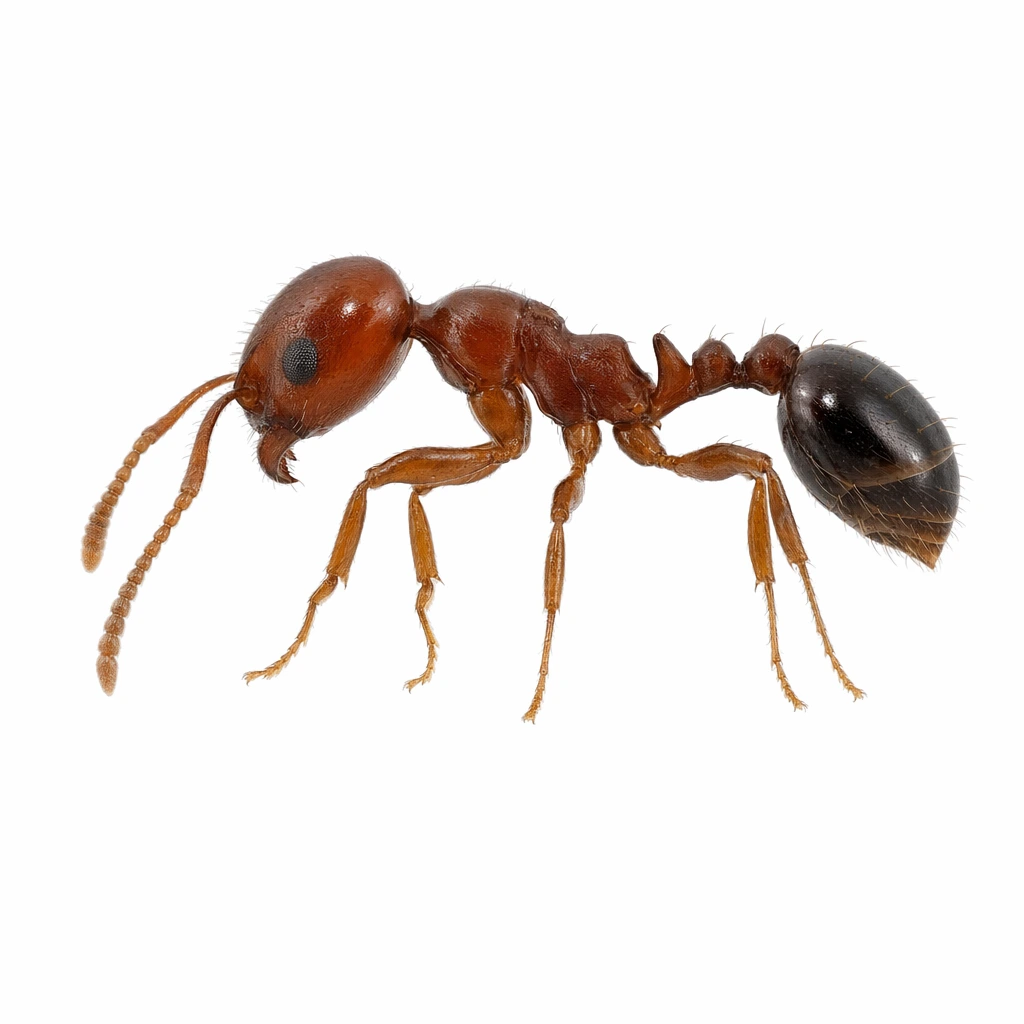
Fire Ant
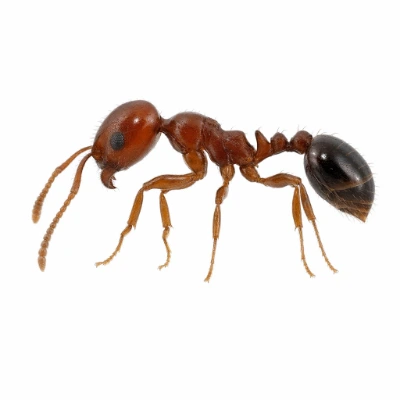
AKA: Red Ant, Mound Ant
Solenopsis invicta
|
1.6 to 6 mm, reddish-brown body with a darker rear section. Workers come in clearly mixed sizes within the same colony, which is the fastest visual contrast with the uniform pavement ant. | Reddish-brown coloring on head and midsection. Aggressive swarming sting response within seconds of mound disturbance. Two-node waist, but no midsection striations. | Dome mound with no central opening at the surface; workers enter through side tunnels. Mounds appear in lawns, foundation edges, and irrigation zones, not beneath concrete slabs. |
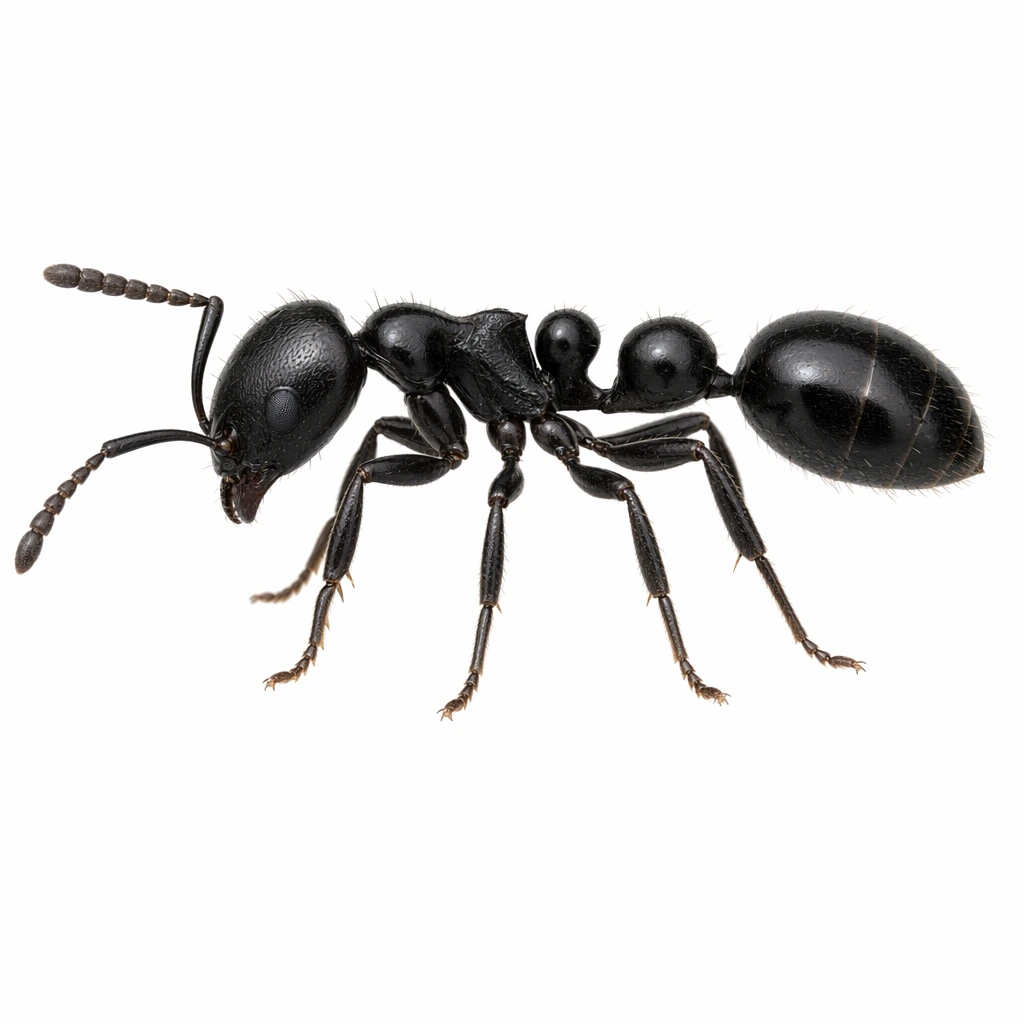
Little Black Ant
AKA: Black Ant, Tiny Black Ant
Monomorium minimum
|
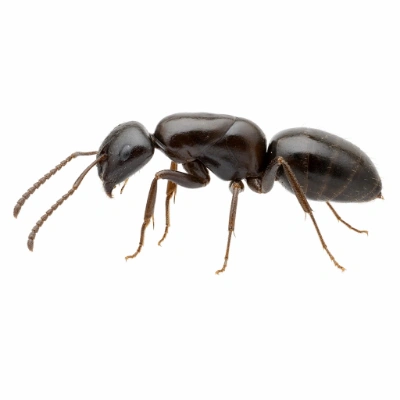
1.5 to 2 mm, jet black and visibly smaller than a pavement ant worker. Uniform across the colony. The small size is the fastest visual cue separating it from pavement ant at a glance. | Jet black body with a smooth surface and no grooves on head or midsection. Two-node waist, same as pavement ant. The absence of midsection striations is the key separator under magnification. | Nests in soil, rotting wood, and wall voids rather than directly beneath concrete slabs. No sandy cone at a driveway crack; outdoor entry soil mounds are smaller and less regular than pavement ant piles. |
Odorous House Ant
AKA: Sugar Ant, Stink Ant
Tapinoma sessile
|
2.4 to 3.3 mm, dark brown to black and uniform across workers. Nearly identical in size to a pavement ant, making size alone an unreliable separator for these two species. | One-node waist, not two. Strong blue cheese odor released when workers are crushed. Expands indoors by satellite budding rather than swarm flight; repellent products make the infestation worse. | Nests in wall voids, under insulation, and beneath flooring indoors. Outdoors in mulch and debris. No sub-slab colony beneath driveways; indoor trails originate from inside the wall, not from an exterior crack. |
Pavement Ants and Human Health
Pavement ants have a functional stinger but lack the venom pressure to penetrate typical human skin. Bare-foot encounters on concrete occasionally produce a faint sensation, but documented sting events with meaningful pain are rare and no medical follow-up is needed. There is no anaphylaxis risk, no cross-reactivity with other venom types, and no disease association for this species. If a trail has crossed food-prep surfaces or entered an open container, discard the affected food, clean the surface with soap and water, and address the entry point at the expansion joint or foundation crack. No medical consultation is needed for a standard pavement ant encounter.
What Pavement Ants Actually Do to Your Property
The visible sandy mound at a driveway crack or sidewalk seam is soil workers have moved out of the nest cavity below the concrete. The slab above it is undamaged. Pavement ants do not attack structural wood, do not nest in wall voids, and do not damage electrical wiring or outdoor equipment the way fire ants do. Food contamination is the only property concern worth addressing: workers foraging indoors will cross food-prep surfaces and enter unsealed containers. Ant foraging behavior and indoor trail management guidance consistently classifies the pavement ant as a food-contamination nuisance pest with no structural damage potential. Discard anything a trail has reached, seal the entry gap at the expansion joint or foundation crack, and treat the trail. There is no structural repair concern with this species.
Pavement Ant Colony Behavior and Spread
Each pavement ant colony has one queen and does not split. Expansion happens only through reproductive swarm flights after warm spring rains, typically April and May in Collin County. A newly mated queen that lands near a driveway crack can establish a sub-slab colony over 60 to 90 days. Because there is no budding, a non-repellent bait treatment that reaches the queen is a clean result: you eliminate the colony without creating satellite mounds. This is meaningfully different from treating odorous house ants, where repellent products can split one colony into several. Pavement ant biology and seasonal pressure research confirms this single-queen, swarm-flight expansion pattern. Pressure is also seasonal: workers slow significantly in Collin County winters, so the active treatment window runs roughly March through October.
How Pest Me Off Treats Pavement Ant Colonies
Ant-nihilation is our proprietary ant protocol that combines queen-targeted bait placement with a foundation barrier system called the Scorched Earth Barrier. The protocol is built around a simple rule: if the queen survives, the trail comes back. For pavement ants, non-repellent bait (a product workers carry back to the colony without detecting it as a threat) placed along active sugar ant foraging trails reaches the sub-slab colony through the workers. Unlike fire ants, there is no yard-wide broadcast required because the trail system leads directly to the sub-slab nest. The Scorched Earth Barrier applied along the full foundation perimeter and expansion joints intercepts workers from any adjacent colonies before a new indoor trail forms.
Inspect and Map Active Trails
Walk the kitchen and perimeter to locate all active foraging trails, the expansion joint or foundation crack they enter through, and the sandy cone at the outdoor nest entrance. Map each trail from the indoor food source back to the entry point before any product is placed.
Trail-Targeted Non-Repellent Bait
Non-repellent bait is placed along each active trail at the indoor pickup point and at the expansion joint or foundation crack where workers are entering. Workers carry the bait through the crack and down to the sub-slab colony. Colony activity typically collapses within 7 to 14 days. No yard-wide broadcasting is required for this species.
Scorched Earth Barrier at Foundation and Joints
The Scorched Earth Barrier is applied along the full foundation perimeter, expansion joints, and concrete seams where pavement ant trails enter. This intercepts workers from any adjacent swarm-established colonies and closes the entry points that let new indoor trails form between service visits.
Seasonal Follow-Up and Swarm Interception
Quarterly Scorched Earth Barrier maintenance is timed to the spring swarm season (April and May in Collin County) to intercept newly mated queens before they can locate and enter foundation cracks. A post-treatment check at 14 days confirms trail activity has stopped and identifies any secondary entry points the initial inspection missed.
& Other Companies
DIY Pavement Ant Prevention
What Collin County homeowners can do between service visits
Why DIY Pavement Ant Control Keeps Falling Short
Pavement ants are one of the easier ant species to treat professionally. DIY results are inconsistent for predictable reasons, almost all of which come down to product choice and placement.
Spraying the Trail With Repellent
Consumer ant sprays kill workers on contact but leave the sub-slab colony and queen untouched. Workers reroute around the treated surface and re-enter through the next available crack within hours. The spray creates a chemical barrier the ants walk around, not a path back to the queen. Each time you spray the trail, the trail moves. The problem does not go away until a product reaches the colony itself.
Placing Bait in the Kitchen Instead of at the Entry Point
Consumer bait stations placed near the food source in the kitchen are positioned at the wrong end of the trail. Workers need to pick up bait and carry it back to the sub-slab colony. Placing bait at the entry crack where workers are coming in, not at the food they are heading toward, is what puts the product in their path on the way home. Bait placed at the food end of a trail is often ignored while foraging continues.
Treating Only the Interior
Pavement ants nest under slabs, sidewalks, and driveways. The kitchen trail is a foraging extension of that colony, not a colony living inside the structure. Caulking interior entry points, spraying baseboards, and trapping inside all address the visible trail without touching the source. The sub-slab colony continues producing foragers regardless of what happens indoors. A perimeter treatment that reaches the colony through the exterior foundation is what produces lasting results.
Spraying the Driveway or Sidewalk Directly
Spraying the crack or seam where workers are entering from outside kills surface workers and may reduce visible activity for several days. The queen and the colony structure beneath the concrete remain completely untouched. Worker population rebounds from the colony within a week. Spraying the concrete surface is a visual fix that does nothing to the colony depth below. The job needs to reach several inches down through the colony’s foraging channels, which requires a product workers carry home rather than one sprayed at them from above.
Disturbing the Bait Placement Before It Works
Correct bait placement takes 7 to 14 days to work through a pavement ant colony. The trail stays active during that window while workers are carrying bait home. Wiping up the bait, moving the station, or spraying the trail while waiting disrupts the transfer and resets the process. Most homeowner failures with consumer bait happen because the bait gets removed or contaminated before it completes the cycle. Set it, leave it completely undisturbed, and do not clean the trail path near it for the full two weeks.
Common Pavement Ant Questions
Sugar Ant Trails Coming Through Your Driveway Crack. We Find the Colony and Bait It at the Source.
We place non-repellent bait along active sugar ant trails, seal the sub-slab entry points, and run the Scorched Earth Barrier along the full foundation perimeter and expansion joints across McKinney, Allen, Frisco, Plano, and the rest of Collin County.