Smoky Brown Cockroach in Collin County, TX | Identification and Control
Smoky Brown cockroaches (Periplaneta fuliginosa), known to most McKinney and Allen homeowners as tree roaches, flying cockroaches, or mahogany roaches, are the large dark roach you see flying toward your porch light on summer nights. They are not coming up through your drains. They are coming down from your trees and through your attic vents, which is why treating the kitchen and calling it done does nothing for this species. Smoky Brown cockroach biology and control makes the attic entry route and moisture dependence clear, and both drive the treatment protocol we use across Collin County.
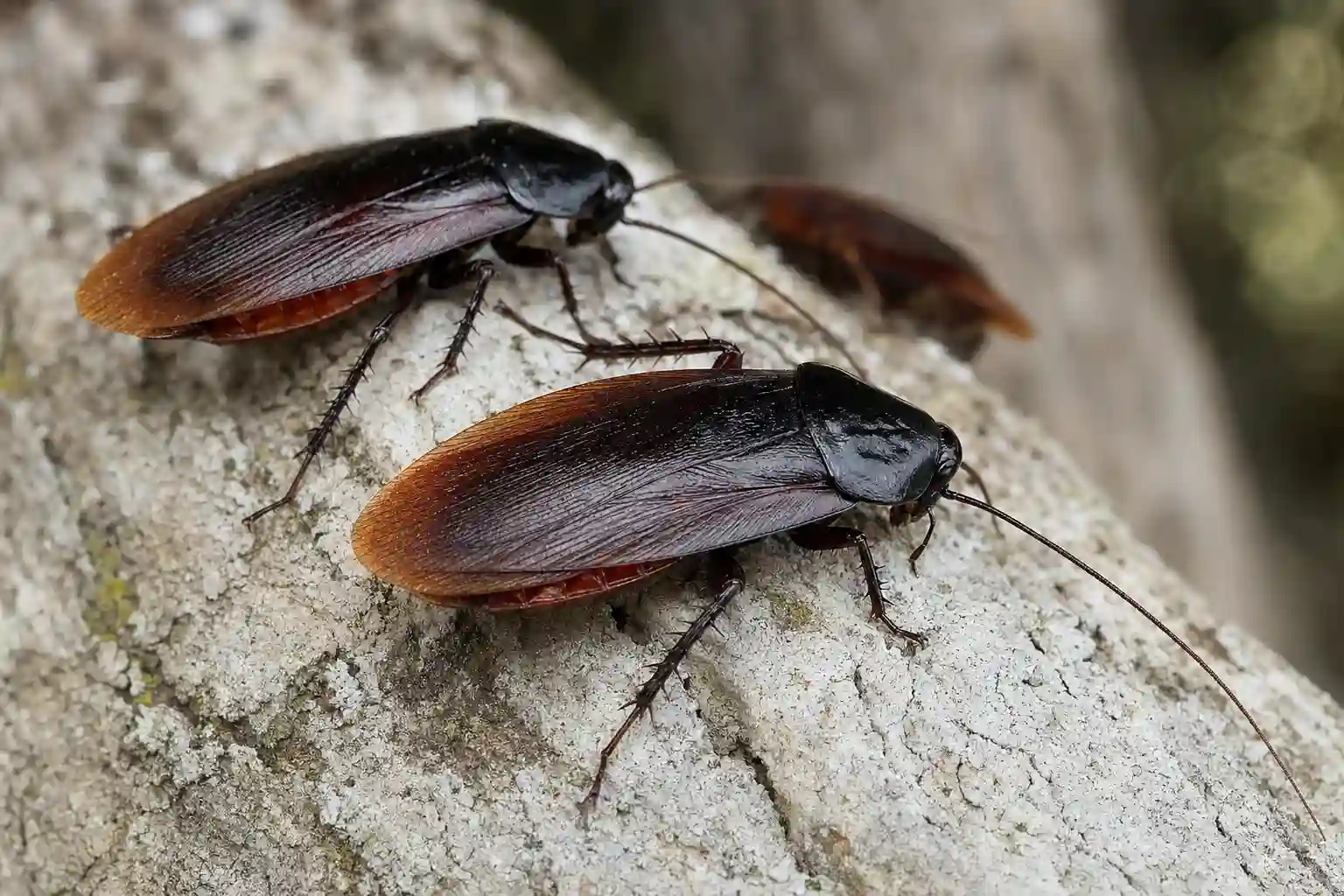
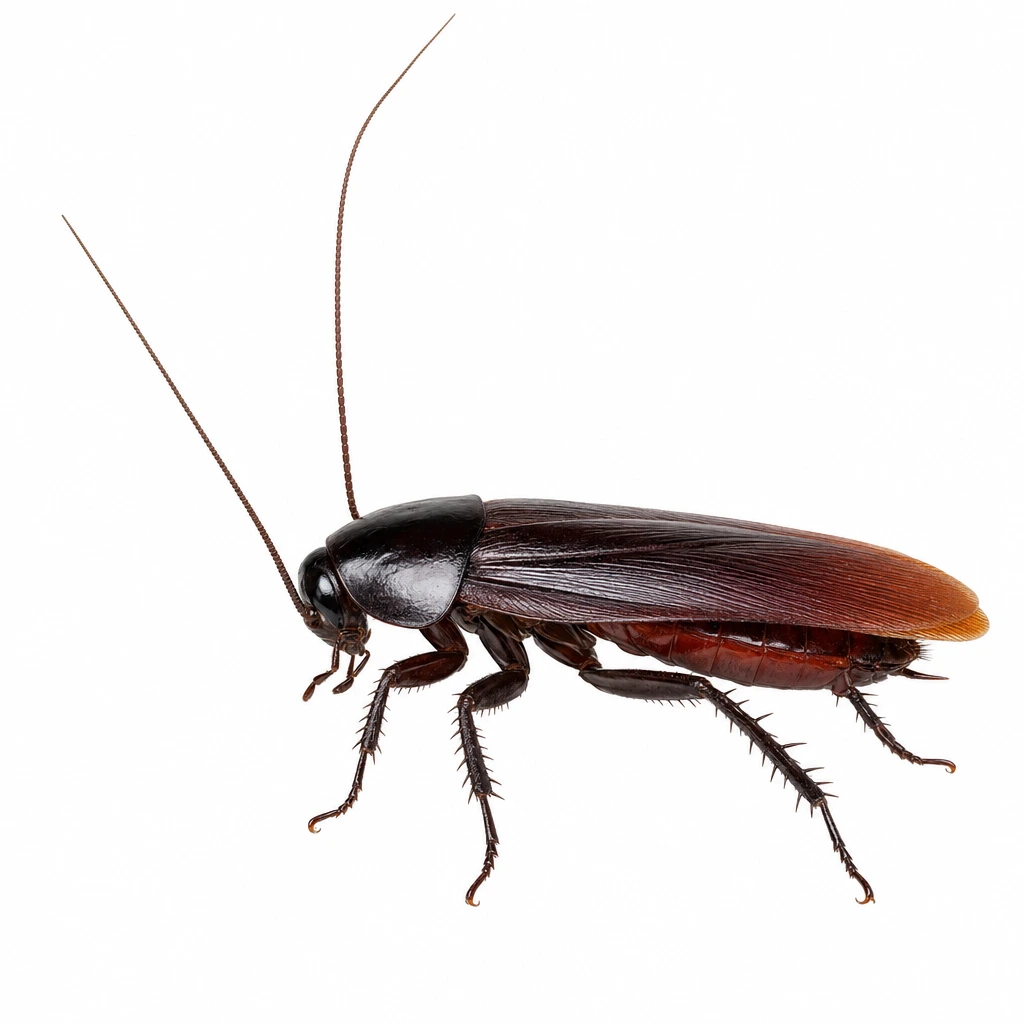
The large dark mahogany roach that flies straight at your porch light and sneaks into your attic through the soffit, not through your drains. Strongly attracted to exterior lights. Enters McKinney slab homes primarily through ridge vents, gable vents, and soffit gaps.
Smoky Brown cockroaches are a seasonal outdoor species in Collin County. They are most active when temperatures are warm and humidity is elevated. Activity drops sharply in winter as the species retreats to protected tree holes, attic voids, and moist hiding spots near structures. The peak August and September window is when indoor pressure is highest, as the species moves toward structures seeking moisture as outdoor conditions become less hospitable. Activity is confirmed in southern Collin County (Plano, Allen, south McKinney). Northern Collin pressure (Celina, Anna, Farmersville) is lower and less documented.
Pattern consistent with Smoky Brown cockroach biology documentation and Pest Me Off service call records in southern Collin County 2023 to 2026.
What Smoky Brown Cockroaches Look Like
One color, head to tail: uniform dark mahogany, no yellow, no bands, no markings
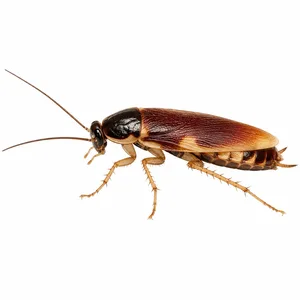
Smoky Brown cockroach adults are large: 25 to 38 mm long (1 to 1.5 inches), placing them in the same size class as the American cockroach. The fastest identification is what is absent, not what is present. The American cockroach has a distinct light yellow to cream margin running around the edge of the pronotum (the shield-like plate behind the head). The Smoky Brown has none. No yellow margin. No banding. No light markings of any kind. The entire body is a uniform shiny dark mahogany to dark brown from the front of the head to the tip of the wings. Comparison guides for common urban cockroaches confirm this uniformity as the species-defining feature that separates it from every similar-sized roach in our service area.
Both male and female adults are strong fliers. The wings extend past the tip of the body in both sexes, which is another distinction from the American cockroach (where the male’s wings reach the tip and the female’s wings fall short). This species flies readily and is strongly attracted to exterior lights at night. Nymphs look very different from adults: early growth stages display white banding on the midsection and white-tipped antennae before darkening to the uniform adult color through successive molts. Homeowners frequently believe they are looking at two different species when they find both nymphs and adults in the same area.
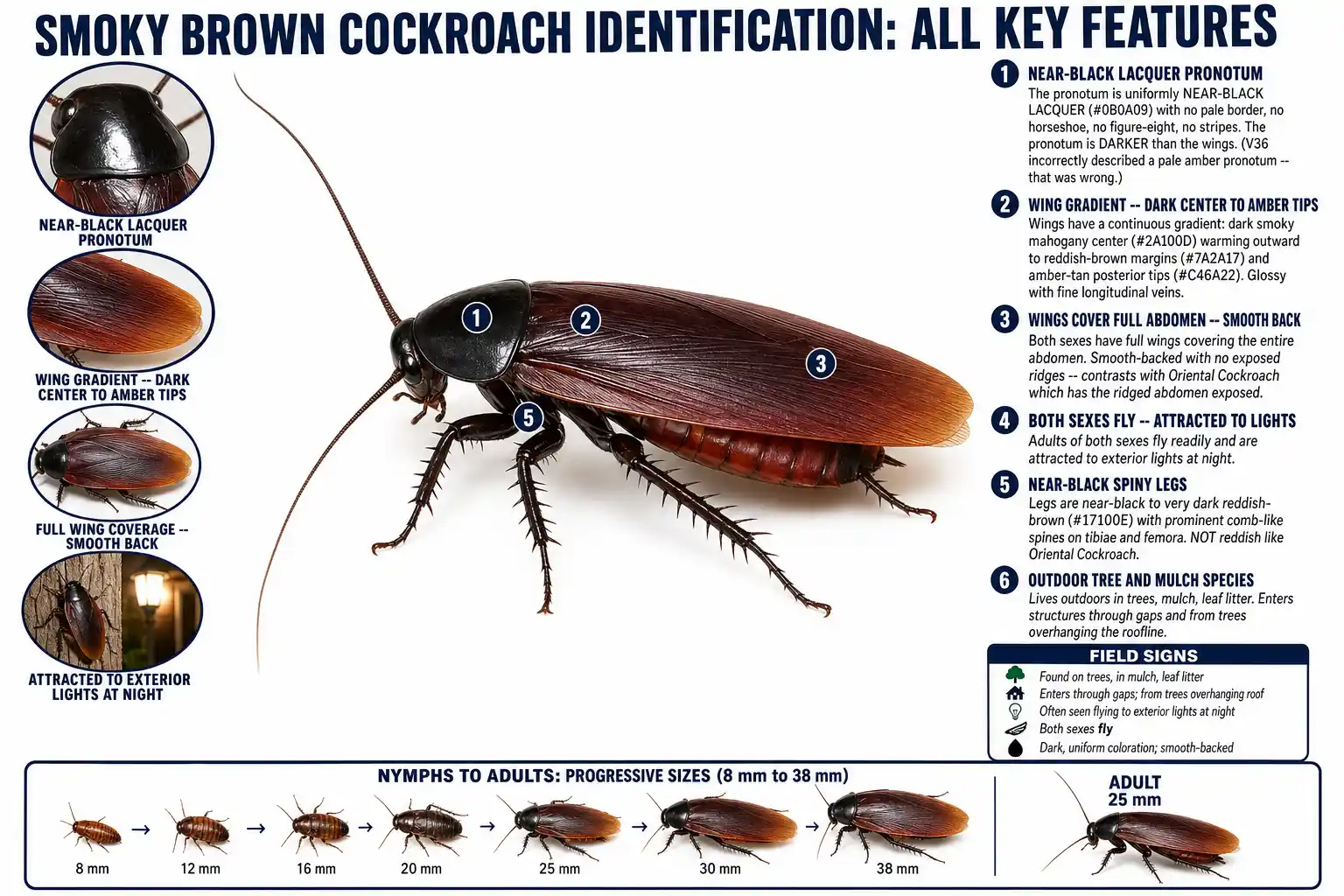
Smoky Brown cockroach identification diagram: uniform mahogany color, wings extending beyond the body, no light markings
- Uniform dark mahogany color with zero light markings anywhere
- Wings extend visibly past the tip of the body in both sexes
- Flying or near exterior lights at night
- Found in attic, near ridge vents or soffit gaps (not near floor drains)
- Size 1 to 1.5 inches, similar to American cockroach but with no yellow pronotum margin
- Nymphs with white midsection bands and white-tipped antennae found in mulch or attic
Tree Roach, Flying Cockroach, Mahogany Roach, Attic Roach, Porch Roach
The name “tree roach” comes from the species’ primary outdoor nesting in tree holes, especially in live oaks and pecans. “Flying cockroach” reflects its strong flight capability: this species actually flies, unlike American and Oriental cockroaches which rarely do. “Mahogany roach” is a color reference to the uniform dark reddish-brown body. “Attic roach” is a field-accurate name: the attic is where McKinney slab-home populations establish indoors, coming through ridge vents and soffit gaps rather than through floor drains. All of these names refer to the same species. Field observations for Smoky Brown cockroach in Texas document the species throughout the Dallas-Fort Worth region year-round.
Smoky Brown Cockroach vs. Similar Species
Size alone does not identify a cockroach. Color and flight behavior are the fastest separators.
| Species | Size | Key Feature | Nesting Habit |
|---|---|---|---|
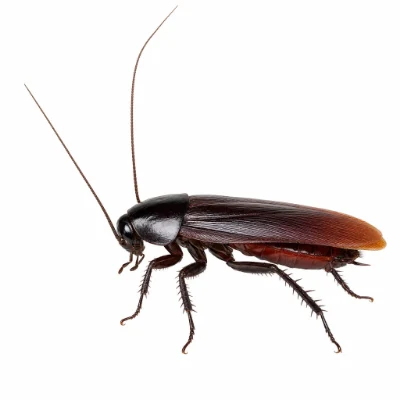
Smoky Brown Cockroach
This species
AKA: Tree Roach, Flying Cockroach, Mahogany Roach
Periplaneta fuliginosa
|
25 to 38 mm (1 to 1.5 in). Uniform shiny dark mahogany to dark brown with no light markings, no banding, no yellow margin anywhere on the body. Large and shiny enough to look almost lacquered under a flashlight. | Wings extend visibly past the tip of the body in both males and females: the species is a strong, willing flier. Strongly attracted to exterior lights at night. No yellow pronotal margin and no light banding distinguish it immediately from every similar-sized cockroach in Collin County. | Outdoors: tree holes, dense mulch beds, gutters clogged with leaf litter, wood piles, and organic debris near the foundation. Indoors: attic voids adjacent to ridge vents, gable vents, and soffit gaps. Attic insulation near entry points is the primary indoor nesting zone; this species almost never establishes in kitchen or bathroom areas. |
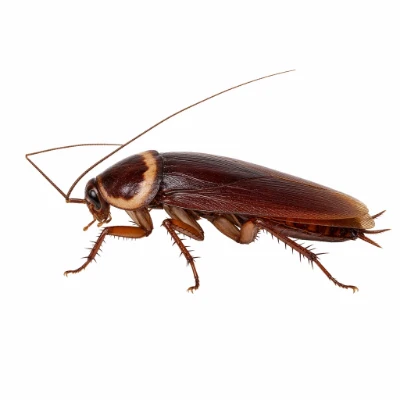
American Cockroach
AKA: Water Bug, Palmetto Bug, Sewer Roach
Periplaneta americana
|
35 to 50 mm (1.4 to 2 in). Reddish-brown body with a distinctive light yellow to cream margin running around the edge of the pronotum. Slightly larger on average than the Smoky Brown and notably lighter in color. | The yellow pronotal margin is the single fastest separator from Smoky Brown. American cockroach wings reach the tip of the body in males and fall slightly short in females; neither sex is as willing a flier as Smoky Brown. Does not actively fly toward exterior lights. | Outdoors: sewer systems, storm drains, utility vaults, and moist areas below grade. Indoors: enters through floor drains, main water line penetrations, and foundation gaps at grade level (ground-level entry, not attic entry). Prefers warm, moist areas like utility rooms and garage floors. |
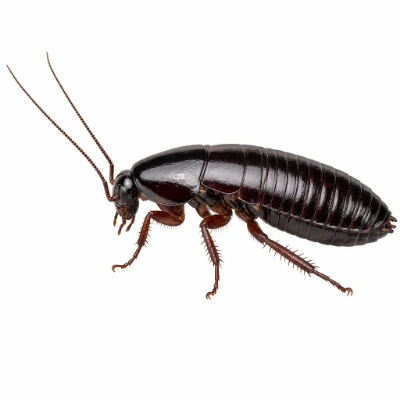
Oriental Cockroach
AKA: Water Bug, Black Beetle, Shad Roach
Blatta orientalis
|
20 to 27 mm (0.75 to 1.1 in). Dark brown to nearly black, often appearing matte rather than shiny. Noticeably smaller than Smoky Brown and more squat in body shape. The darker coloration can cause initial confusion with Smoky Brown, especially in poor lighting. | Flightless. Male has short wings covering about two-thirds of the body; female has only wing pads and cannot fly at all. This is the clearest separator: if the dark roach is flying or found near exterior lights, it is not Oriental cockroach. Slow-moving compared to the other large species. | Outdoors: sanitary sewers, storm drains, decaying plant matter, and cool moist soil under slabs and pavement. Indoors: enters through floor drains and low-level gaps; strongly favors cool, damp areas like garage floors, utility room drains, and crawl spaces. Does not enter through attic vents. |
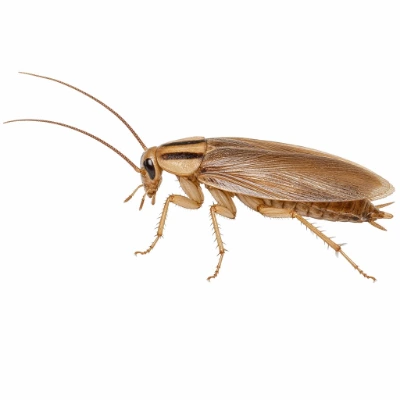
German Cockroach
AKA: Croton Bug, Kitchen Cockroach
Blattella germanica
|
13 to 16 mm (0.5 to 0.625 in). Light brown to tan body with two dark parallel stripes running lengthwise on the pronotum. At roughly one-third the length of a Smoky Brown adult, the size difference alone ends most confusion, though nymphs of Smoky Brown and adults of German cockroach can be similar in length during certain growth stages. | Two dark parallel longitudinal stripes on a tan pronotum. Neither sex flies in any practical sense. Strictly indoor species that stays near kitchen appliances, cabinet hinges, and plumbing chases. Does not fly toward exterior lights and is never found in attic insulation. | Exclusively indoor. Kitchens and bathrooms are primary zones. Hides in appliance voids, cabinet hinge pockets, refrigerator motor housings, and plumbing chases. Does not maintain outdoor populations and does not enter through attic or roof-level openings. |
Smoky Brown Cockroach Allergens and Pathogen Transfer
Smoky Brown cockroach does not bite and is not venomous. The medical concern is twofold: allergen exposure and transfer of bacteria picked up from outdoor foraging. The species forages in gutters clogged with bird droppings and leaf litter, in tree holes, and in moist organic debris: environments that host pathogens that a cockroach can then track onto food preparation surfaces. The bacterial transfer risk is lower than German cockroach (which lives directly in kitchens) but is not zero. Cockroach body proteins produce allergens that can trigger asthma and allergic rhinitis in sensitized individuals. Because Smoky Brown establishes in attic voids that connect to return air pathways, allergen particles can distribute through HVAC systems to rooms where the cockroach itself has never appeared. Households with members who have asthma or diagnosed cockroach sensitivity should treat Smoky Brown activity with the same urgency as any allergen-producing pest indoors.
For most households without known cockroach sensitivity, the direct health risk from Smoky Brown is lower than German cockroach. The practical framing: you would not want any cockroach foraging in gutters and bird debris and then walking across your countertop. The treatment case is solid on basic sanitation grounds independent of any allergen concern. PestWorld’s Smoky Brown cockroach profile confirms allergen sensitization and bacterial transfer as the two documented health concerns for this species.
Smoky Brown cockroaches establish in attic voids directly above return air pathways. Allergen particles from droppings and shed material in the attic can enter the HVAC return and distribute through every room in the house, including bedrooms where family members sleep. If anyone in your home has asthma or diagnosed cockroach allergen sensitivity, Smoky Brown attic activity is not just a nuisance problem. Treat it on the same timeline as German cockroach, check HVAC filters, and ask your healthcare provider about cockroach-specific IgE testing if respiratory symptoms have increased.
Smoky Brown cockroach does not damage wood, insulation materials, wiring, or structural components. The property concern is contamination: droppings and shed skins accumulate in attic insulation near entry points (ridge vents, gable vents, soffit gaps), and items stored in attic spaces can be fouled by cockroach activity. For homes with finished attic spaces or attic storage, this is worth treating proactively. For homes where the attic is purely mechanical space, the property impact is minimal beyond the presence of the pest itself.
How Smoky Brown Cockroach Populations Build and Sustain
The key distinction from German cockroach persistence: Smoky Brown does not build populations at the explosive indoor breeding rate of German cockroach. The problem is reinvasion pressure from a sustained outdoor population, not an ever-expanding indoor colony. Address the outdoor source, close the entry points, and indoor pressure drops significantly. Leave either untreated and the call comes back on the same seasonal schedule each summer.
How Pest Me Off Treats Smoky Brown Cockroach Infestations
Smoky Brown cockroach treatment is a 4-step protocol that addresses the outdoor source population, the attic hiding zones, and the entry points at the same time. A technician who treats only where you see them (the porch, the ceiling light, the occasional kitchen visitor) is treating the symptom, not the source. The population in the trees and in the attic is the engine. This protocol shuts it down at the entry point and reduces the outdoor hiding zones that sustain pressure.
Inspect & Map Entry Points
Confirm species and identify every entry pathway: walk the exterior roofline looking at ridge vent screens (present, absent, torn), soffit gaps at panel intersections and fascia joints, gable vent screens, and any gaps around plumbing vent pipes or chimney flashing. Walk the perimeter for outdoor hiding zones: thick mulch beds within 6 feet of the foundation, wood piles, leaf litter accumulation, and any tree branches overhanging or touching the roofline.
Exterior Perimeter & Landscape Reduction
Apply detailed bait in mulch beds and around tree bases at the structure perimeter. Apply a non-repellent residual spray (products that roaches walk over and carry back to their hiding spots, rather than products they detect and avoid) on the foundation perimeter, eaves, and soffits. Recommend or perform landscape reduction: leaf litter removal, mulch depth reduction to under 2 inches, firewood relocation at least 20 feet from the structure, and pruning of any tree branches that touch or overhang the roofline.
Attic Treatment & Exclusion
Apply insecticidal dust to attic voids near ridge vents, gable vents, and soffit intersection points. Place detailed bait in attic corners adjacent to entry areas. Install fine mesh screening over any unscreened or torn soffit vents and ridge vents to physically block entry while maintaining required attic airflow. Seal gaps around plumbing vent pipes where they penetrate the roof decking.
Lighting Audit & Follow-Up
Recommend switching unshielded white exterior lights to yellow-spectrum LED or motion-activated fixtures. Attraction to bright white exterior lights (a behavior called phototaxis, the tendency to fly toward light) is a primary driver of roof-level entry. A 30-day follow-up inspection checks attic entry points, confirms bait uptake in mulch zones, and identifies any missed outdoor hiding areas. Properties with severe tree canopy overhang may need a second perimeter treatment before the August pressure peak.
& Other Companies
What Homeowners Can Do to Reduce Smoky Brown Cockroach Pressure
Smoky Brown cockroach prevention is mostly about reducing outdoor nesting spots and closing the aerial entry points. These steps do not eliminate an existing attic population, but they materially reduce the reinvasion pressure that makes this pest a recurring problem on the same seasonal schedule every year.
Why DIY Can Fail for Smoky Brown Cockroaches
The most common DIY failure for Smoky Brown cockroach comes from misidentifying where the entry is. Homeowners buy drain treatments and baseboard sprays because that is what they associate with “cockroach control.” Smoky Brown does not use drains. It uses your attic. The product went in the wrong place.
Drain Treatments and Floor-Level Products
Drain treatment gel, floor drain covers, and foundation-perimeter baseboard sprays are designed for American and Oriental cockroach entry pathways: ground-level gaps, floor drains, and utility penetrations below slab height. Smoky Brown cockroach does not use any of these entry points. Applying drain products to a Smoky Brown problem is treating the wrong species protocol entirely, and produces zero reduction in roof-level entry.
Repellent Sprays Near Exterior Lights and Entry Points
Over-the-counter spray products (a chemical family called pyrethroids) applied near exterior light fixtures and around exterior doors work as repellents: they push cockroaches away from the treated surface rather than eliminating them. Applied near roofline entry points, repellent products redirect cockroaches into wall voids and gaps rather than preventing entry. The cockroach that would have sat on the soffit instead pushes further inside. Control guidance for Smoky Brown cockroach consistently emphasizes non-repellent products and exclusion over perimeter spray for this species.
Kitchen and Bathroom Interior Treatments
German cockroach protocols focus on kitchens and bathrooms because that species lives in those rooms. Smoky Brown cockroach almost never establishes in kitchen or bathroom areas. It nests in the attic, near ridge vents, and in outdoor tree holes and mulch beds. Applying gel bait to kitchen cabinet hinges or spraying bathroom baseboards addresses a space this species does not occupy. The treatment is correct for the wrong pest.
Killing Individuals Without Addressing the Entry Points
Spray products that kill individual cockroaches on contact do not address the entry pathways or the outdoor population. Ridge vents without screens, torn soffit panels, and gable vent gaps remain open after every contact kill. The same outdoor population in the adjacent trees and mulch beds sends new individuals through the same openings on the same warm-weather schedule. Without physical exclusion at the roof-level entry points, the cycle repeats every season regardless of how many individual cockroaches are killed.
One-Time Treatment Without Landscape Reduction
A single exterior perimeter treatment without addressing the landscape hiding zones produces short-term reduction followed by a return to baseline pressure. The mulch beds, gutters clogged with leaf litter, and tree holes within flying distance of the roofline are the source population. They continue breeding and producing adults that fly toward exterior lights and walk to attic entry points throughout the warm season. Landscape reduction, not repeat product applications, is what breaks the annual reinvasion cycle for this species.
Smoky Brown Cockroach Questions
Flying Roaches from Your Oak Tree Landing in Your Attic. We Know the Entry Point and We Close It.
We identify the species first so the protocol matches the entry pathway. Smoky Brown cockroach enters through your attic, not your drains. We treat the exterior perimeter, the attic, and the landscape nesting zones in the same visit, then screen the ridge vents and soffit gaps that keep letting them back in. Cockroach Crackdown across McKinney, Allen, Frisco, Plano, and the rest of Collin County.