Carpenter Ants in Collin County, TX | Identification and Control
Carpenter ants (Camponotus spp.), called big black ants by most Collin County homeowners, are the largest ant species you will encounter indoors, running 6 to 13 mm and all black or red-and-black. They do not eat wood. They excavate galleries through wood that moisture damage has already softened, and the indoor satellite colonies they build can stay active for years while the parent queen lives undisturbed in a tree stump or dead wood outside.
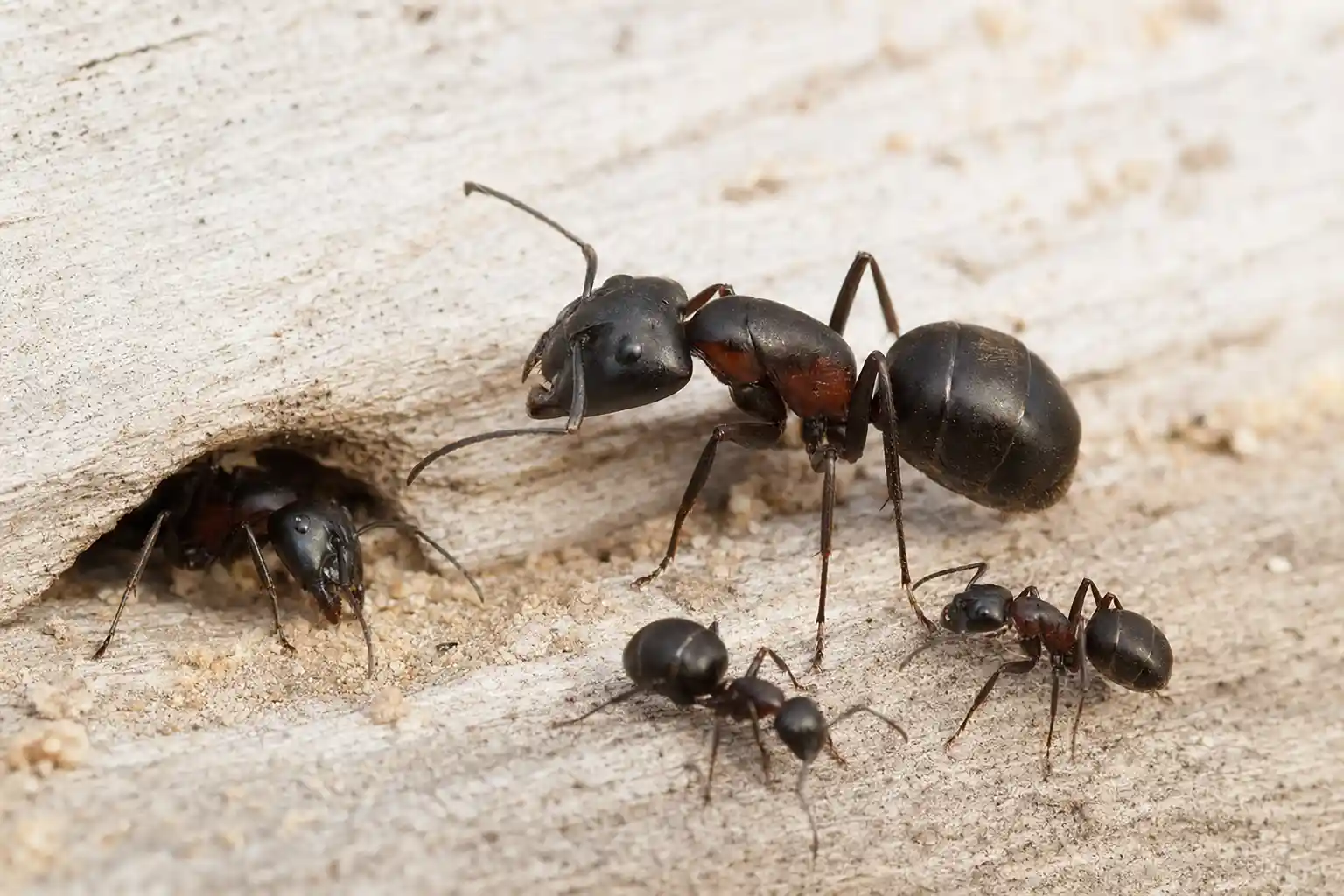
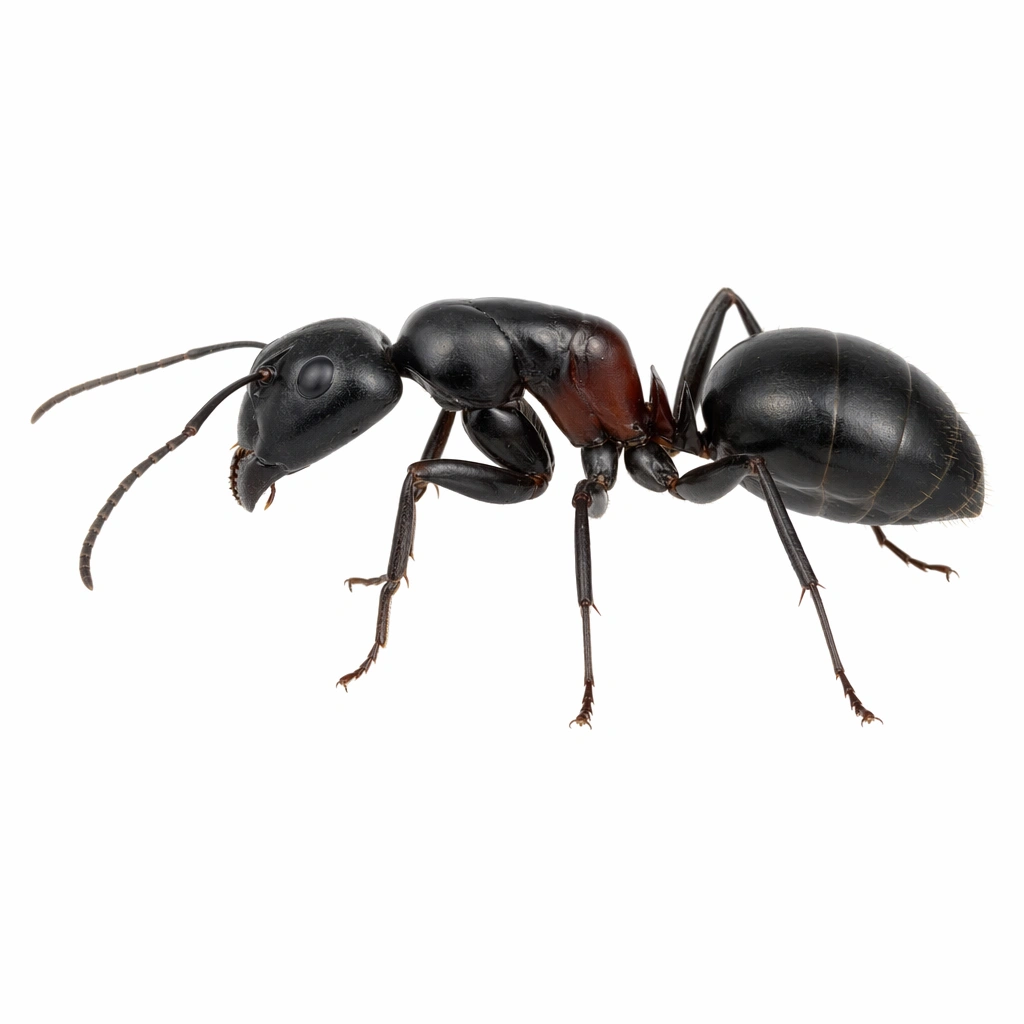
Texas’s largest commonly encountered ant. Excavates galleries in wood already compromised by moisture damage. The indoor satellite colony you find is not the queen’s home.
Workers emerge in March as temperatures warm and become most active foraging at night through spring and early summer. Activity continues through fall before colony metabolism slows in November.
Pattern from Texas A&M AgriLife extension data on carpenter ant seasonal behavior and Pest Me Off service call records across Collin County, 2023 to 2026.
What Carpenter Ants Look Like
Texas’s largest ant, with a body plan that sets them apart before you get close
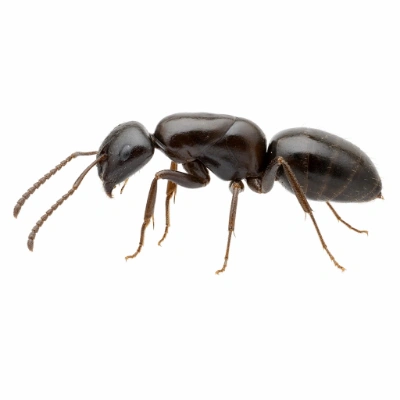
Carpenter ants are the largest ant you are likely to see in a Collin County home. Workers run 6 to 13 mm in an evenly graded size range, meaning the same colony produces workers at multiple sizes but all in the same body pattern. The most common Texas species is all black, though some workers have a reddish-orange head and midsection with a dark rear section. The waist has a single node (petiole) rather than two segments. No other local ant runs this large indoors. carpenter ant identification research for the Southern Plains documents the single-node waist as the most reliable structural separator from other large dark ants in the region.
Movement sets them apart as much as size. Carpenter ants move in steady, purposeful lines after dark. They do not swarm aggressively and they do not sting. Foraging workers found in a kitchen or on a windowsill at night are almost never a random encounter. They are using an established gallery route inside the wall.
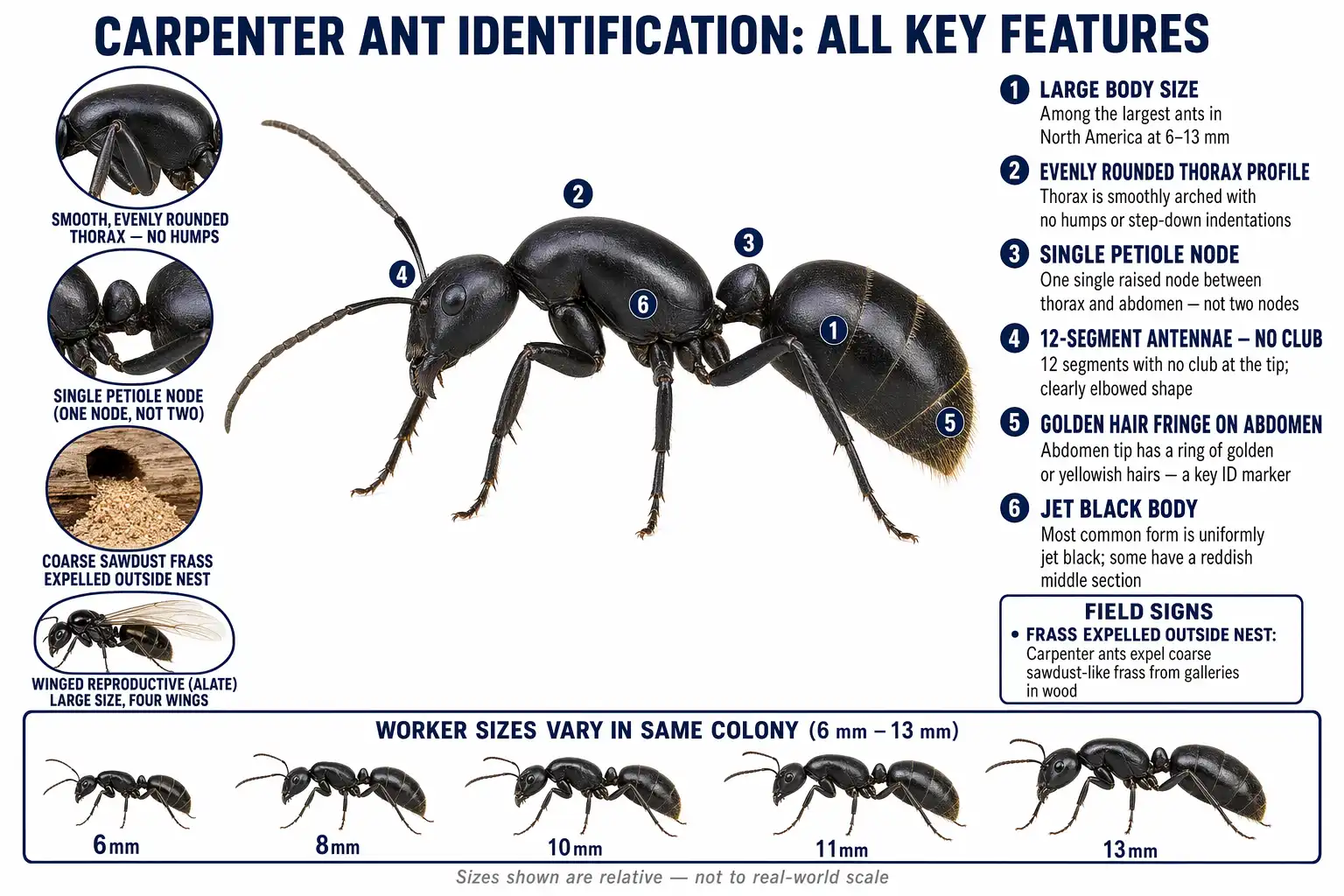
Carpenter ant identification diagram with labeled anatomical features
- Called big black ants or large black ants by most homeowners: the largest ant in Collin County at 6 to 13 mm, nearly always all black or red-and-black
- All black, or red-orange head and midsection with dark rear section
- Single-node waist (one petiole segment, not two)
- Evenly arched, spine-free midsection profile
- Coarse, fibrous sawdust-like wood shavings near window frames, door frames, or deck boards
- Faint ticking or rustling sound inside walls at night when the house is quiet
- Workers foraging indoors after dark, moving in deliberate single-file lines
Why Collin County Calls Them Big Black Ants
The name big black ant is not creative. It is exactly what the ant looks like: the largest ant most homeowners ever encounter indoors, and nearly always all black. When someone calls and says they have a big black ant problem, that caller has carpenter ants about 90 percent of the time. The unofficial name came naturally and stuck because it does a better job of describing what people actually see than “carpenter ant” does.
The formal name “carpenter ant” comes from what the ant does rather than what it looks like. Carpenter ants excavate galleries in wood to build nesting space, working the material the way a carpenter would, clearing and shaping rather than consuming it. The wood shavings pile pushed out of a gallery opening looks like coarse sawdust mixed with insect debris: evidence of wood being worked, not eaten.
The difference between eating and excavating tells you what you are looking at. Termites digest wood. Carpenter ants clear it. Termite damage tends to follow the grain in a soft, layered pattern. Carpenter ant galleries are smooth-walled channels following the grain of softer wood. Both produce structural damage, but the wood shavings pile is visible where termite evidence is often hidden. If you see a coarse fibrous pile near a door frame or window sill, you have carpenter ant evidence, not termite evidence.
How to Tell Carpenter Ants from Other Ants in Collin County
Size gets you most of the way there. Carpenter ants are much larger than any other ant found indoors. The confusion usually comes from color or from finding a large dark ant and assuming the worst.
| Species | Size | Key Feature | Nesting Habit |
|---|---|---|---|
|
Carpenter Ant
This species
AKA: Big Black Ant, Large Black Ant
Camponotus spp.
|
6 to 13 mm, evenly graded across the colony with workers at multiple sizes. All black or red-and-black coloring. The largest of any ant species homeowners encounter indoors in Collin County by a wide margin. | Single-node waist (one petiole segment, not two) with an evenly arched, spine-free midsection profile. No sting apparatus; bites only with mandibles. Moves in slow, deliberate single-file lines after dark. | Galleries run along wood grain inside moisture-softened wood at door frames, window trim, fascia boards, and deck lumber. A coarse fibrous wood shavings pile at a gap or crack marks the gallery exit; no outdoor mound is present. |
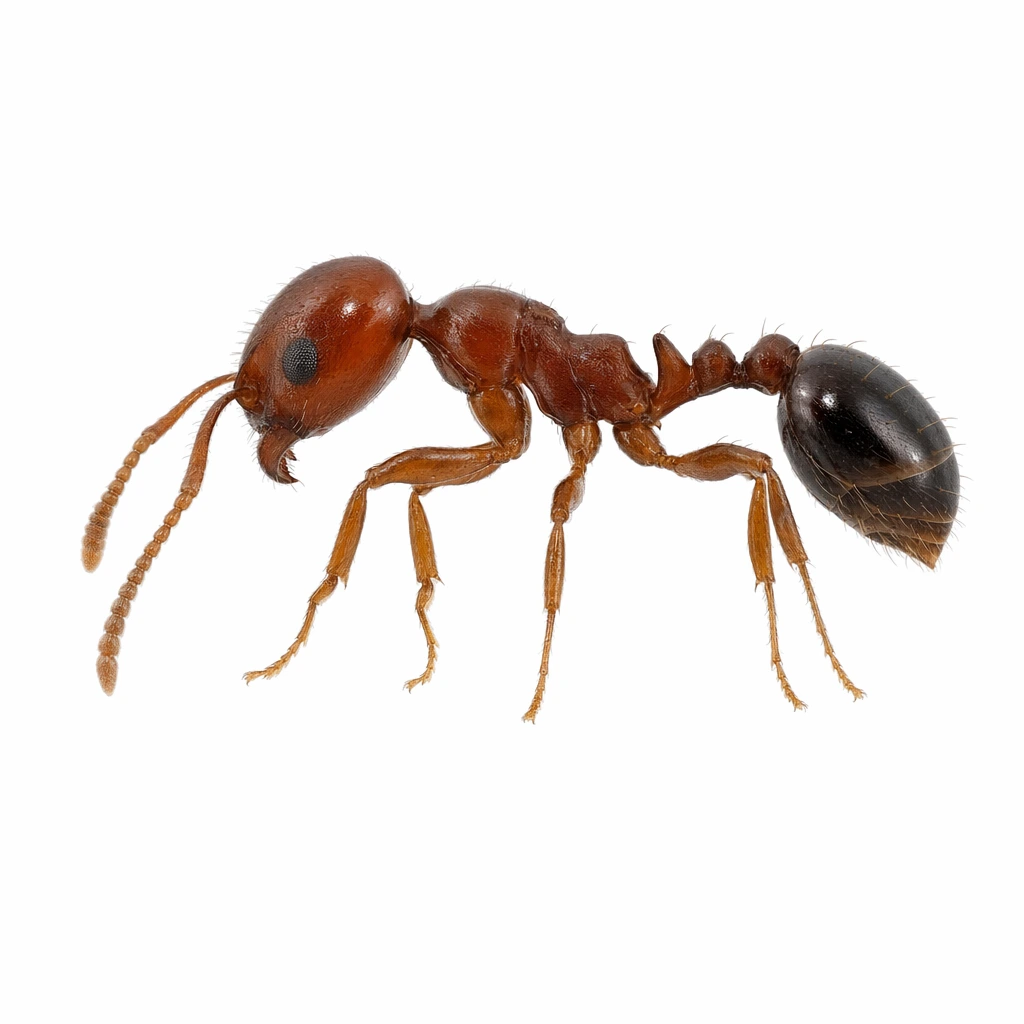
Fire Ant
AKA: Red Ant, Mound Ant
Solenopsis invicta
|
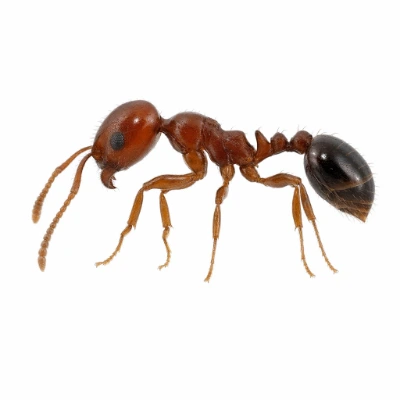
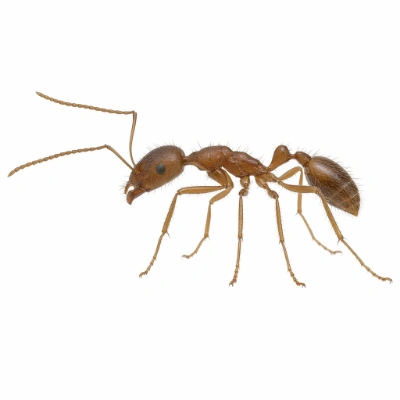
1.6 to 6 mm with mixed sizes in a single colony, all significantly smaller than the smallest carpenter ant worker. Reddish-brown body color with a darker rear section; not all black. | Sting apparatus active; fire ants swarm and sting aggressively within seconds of mound disturbance, producing a burning sensation followed by a white pustule within 24 hours. Carpenter ants never produce this response. | Builds a dome-shaped outdoor mound with no visible central opening from above. Mound feels fluffy and loose after rain. Never excavates wood galleries and never produces wood shavings. |
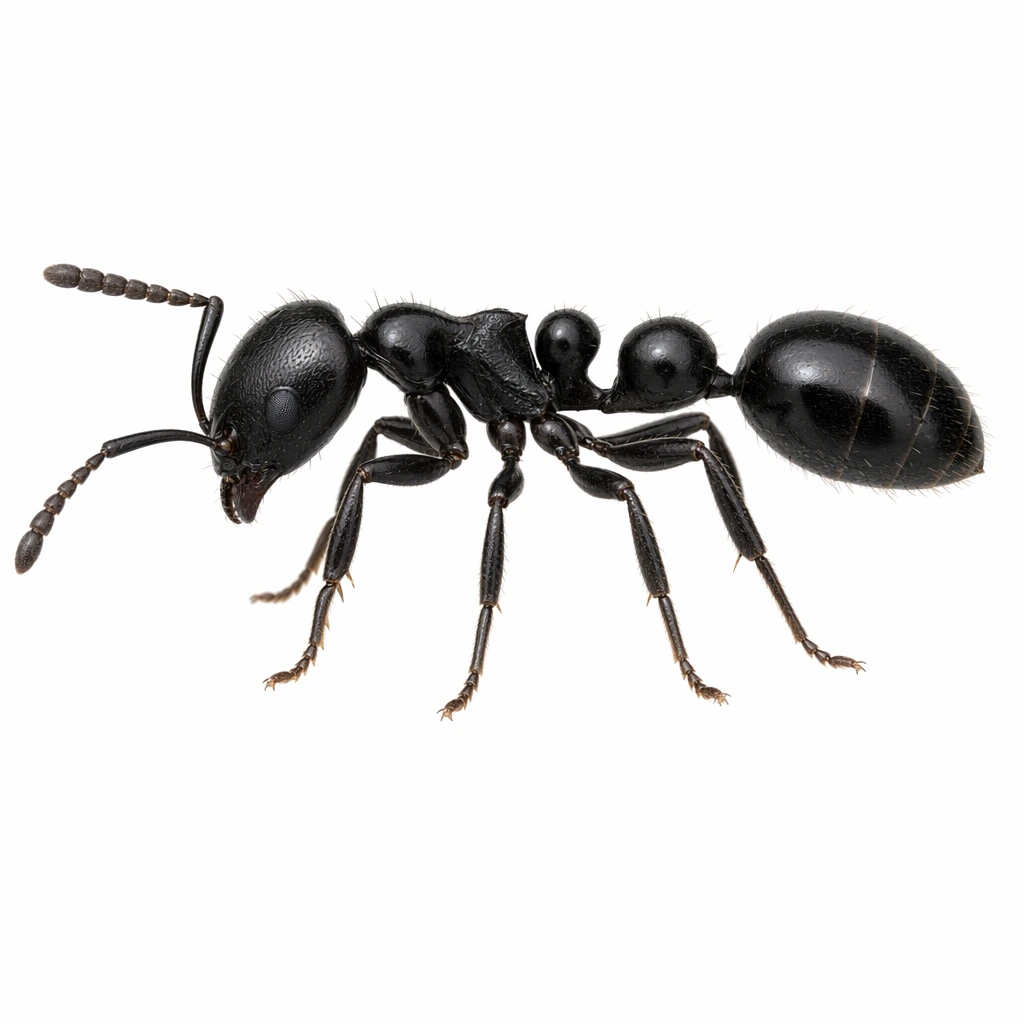
Little Black Ant
AKA: Black Ant, Tiny Black Ant
Monomorium minimum
|
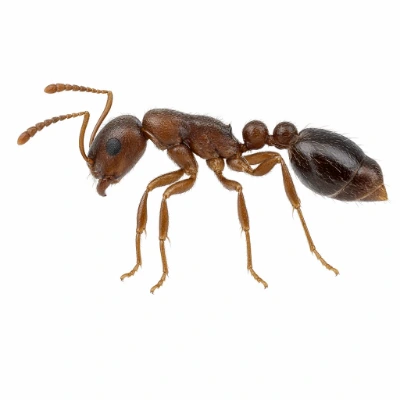
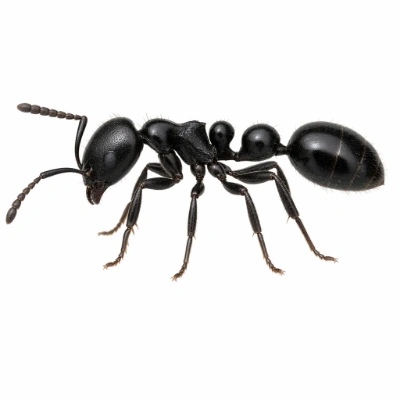
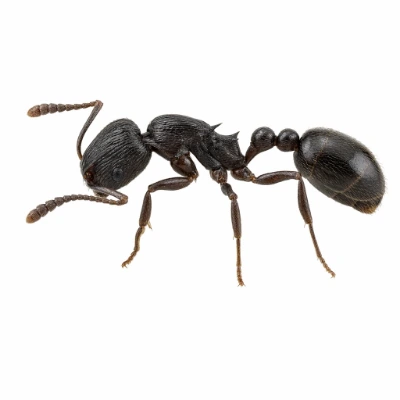
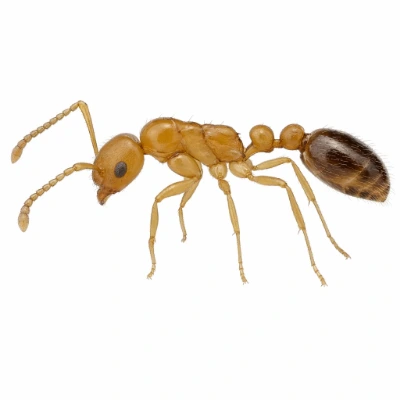
1.5 to 2 mm, uniformly sized across the colony; jet black body with no color variation. Workers are roughly one-eighth the size of the largest carpenter ant workers, making the size contrast immediately visible. | Two-node waist (two petiole segments, not one) is the structural separator from carpenter ant. Moves in slow foraging trails indoors and produces no wood shavings, no sting, and no structural damage of any kind. | Nests in outdoor soil, rotting wood debris, and occasionally in wall voids near moisture. Does not excavate structural wood and leaves no wood shavings pile at any entry point. |
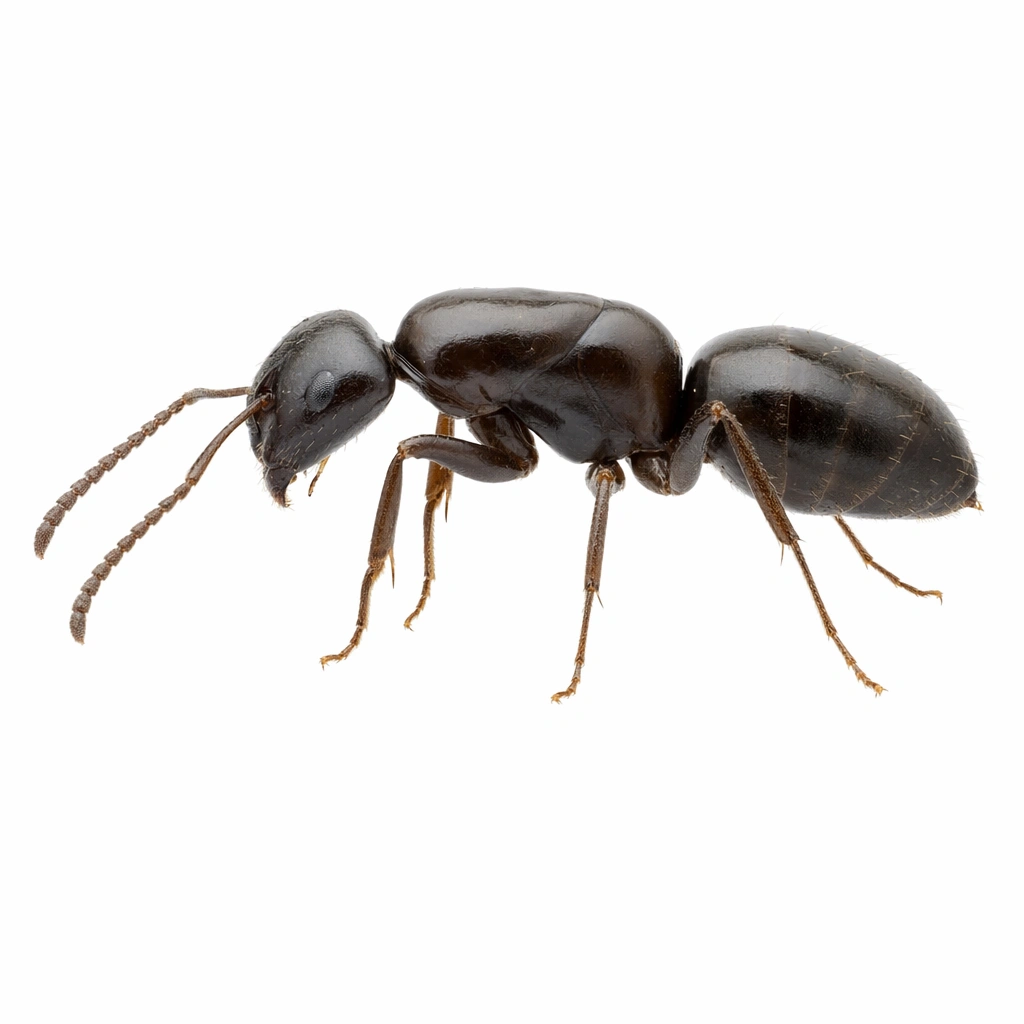
Odorous House Ant
AKA: Sugar Ant, Stink Ant
Tapinoma sessile
|
2.4 to 3.3 mm, uniformly sized across workers; dark brown to black body color, similar in appearance to a miniature carpenter ant. Much smaller than any carpenter ant worker and with no size variation within the colony. | One-node waist (same as carpenter ant), but the crush test separates them: crushed workers produce a strong blue cheese or rotten coconut odor. Kitchen and pantry forager that does not produce wood shavings and causes no structural damage. | Nests in wall voids, insulation, and under flooring, moving colonies frequently when disturbed. Does not excavate wood galleries; trails are often visible along wall edges and countertops in kitchens. |
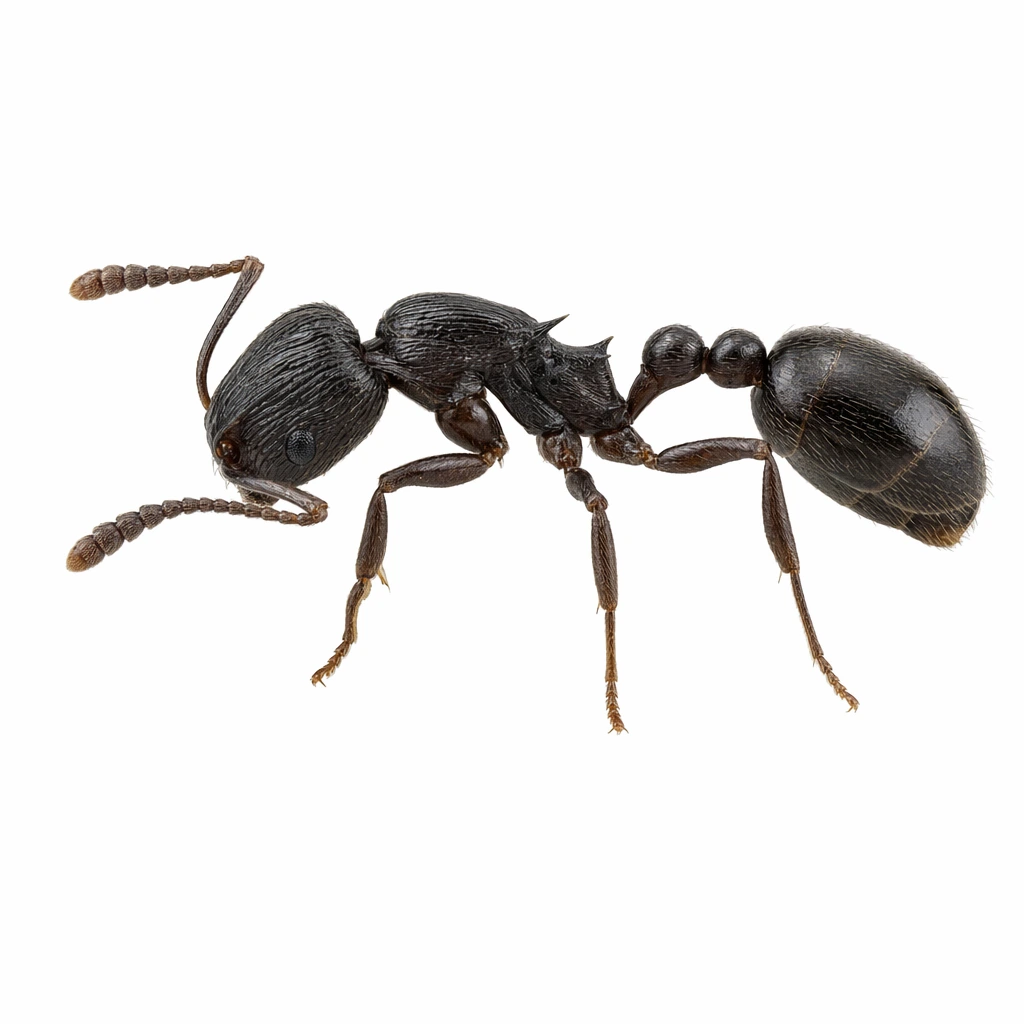
Pavement Ant
AKA: Sidewalk Ant
Tetramorium immigrans
|
2.5 to 3 mm, uniformly sized; dark brown to nearly black body with a lighter leg color. Noticeably smaller than carpenter ants and less than half the size of the largest carpenter ant workers in a single colony. | Two-node waist and a grooved midsection with parallel ridges (striations) visible under close inspection. Does not sting, does not excavate wood, and does not produce wood shavings. The grooved midsection is absent on carpenter ants. | Nests under concrete slabs, sidewalk edges, and pavement cracks; fine soil pushed to the surface at entry points is the visible sign. Does not build gallery networks inside structural wood. |
Carpenter Ants and Human Health
If a carpenter ant bites you, wash the area with soap and water. There is no venom injection, no pustule formation, and no follow-on reaction to watch for. Children and pets that startle a foraging worker indoors may get a pinch, but it is not a medical event. Carpenter ants are not disease carriers and have no documented role in transmitting illness to people or pets.
Workers foraging indoors at night along a regular route are not random stragglers. They are following a gallery path from an established satellite colony in the wall, trim, or structural framing. Finding them indoors consistently is the signal to address the property issue, not a people issue.
Where Carpenter Ants Nest and Excavate
Carpenter ants require a moisture precondition. They do not excavate dry, structurally sound wood. The galleries you find inside a home are almost always in wood that was already compromised: fascia boards where a gutter backed up, window frames where caulk failed, door frames where water sat after repeated rain, deck boards where post bases held moisture against the grain, or roof trim where a small leak went undetected for a season. carpenter ant nesting biology and wood damage research confirms that structurally sound, dry wood is not at risk. The framing behind exterior surfaces is the secondary target once the exterior entry point is open.
The earliest warning sign is coarse, fibrous wood shavings pushed out of a gallery opening. Unlike termite wood shavings, which is pellet-shaped and hard, carpenter ant gallery wood shavings versus termite confirms the visual difference: carpenter ant wood shavings looks like a pile of damp sawdust mixed with insect debris. Finding this material near door frames, window sills, or at the base of a deck post is the first sign that active excavation is underway.
Carpenter Ant Pressure Across Collin County
Carpenter ant pressure in Collin County concentrates around two conditions: mature tree canopy close to the roofline and older wood-frame construction. Historic Downtown McKinney draws consistent call volume because of its pre-1960 housing stock with aging window and door frames. Properties in Allen and Fairview with large established oaks running branches over the roofline are a repeating pattern in our service records. Any branch that makes contact with the roofline or fascia becomes a direct bridge for workers moving from a parent colony in the tree to a satellite inside the structure.
Creek corridor properties adjacent to Slayter Creek and Rowlett Creek hold the most mature standing dead wood in the county, which provides the parent colony substrate that sustains year-round pressure on nearby homes. New construction in Prosper, Anna, and Frisco is less affected unless the lot had existing mature trees preserved in the final grade. Homes with wood decks anywhere in the county are a target when the deck post bases or ledger boards hold moisture against the structure.
Cost of Doing Nothing
Carpenter ant galleries do not stop on their own, and homeowner’s insurance does not cover the repair. Insurers classify carpenter ant damage as a maintenance issue, not a sudden covered loss. Structural repair for damaged fascia boards, window frames, and door trim runs $2,000 to $6,000 depending on extent and material. When gallery excavation reaches the structural framing behind the trim, repairs begin at $5,000 and move upward quickly. A queen that lives 10 to 25 years can sustain a colony that expands gallery networks over multiple seasons while the visible damage on the surface looks minor.
How Carpenter Ant Colonies Establish and Spread
A carpenter ant colony starts outdoors. The parent queen establishes her first gallery in a tree stump, a dead section of a live tree, a log pile, or any standing dead wood with enough moisture content to excavate. That parent colony grows slowly over several years. Once it exceeds a few hundred workers, the colony sends satellite groups to establish secondary nest locations in structures along consistent travel routes, typically following tree branches that contact the roofline, utility lines, or wood-to-ground contact points at the foundation. carpenter ant satellite colony behavior and entry routes documents the branch-to-roofline travel route as the primary confirmed entry point pattern in residential construction across the Upper Midwest and South.
How Pest Me Off Treats Carpenter Ant Colonies
Ant-nihilation is our proprietary ant protocol that combines queen-targeted bait broadcasting with a foundation barrier system called the Scorched Earth Barrier. For carpenter ants, the protocol starts with a full inspection to locate both the satellite colony inside the structure and the likely parent colony source outside. Identifying the travel route between satellite and parent colony before product application is what separates effective treatment from temporary worker suppression.
Full Property Inspection
A thorough inspection covers the structure exterior and accessible roof trim for wood shavings and gallery openings, all branches making contact with roofline or fascia, tree stumps and log piles within 50 feet of the foundation, and deck post bases and ledger boards. The inspection maps the likely travel route between the satellite and the parent colony before any product is applied.
Gallery Treatment with Non-Repellent Product
Active gallery zones receive targeted application of a non-repellent active ingredient (the kind workers cannot detect on contact and carry back to the parent colony rather than routing around). Identified gallery entry points and confirmed foraging trail surfaces receive direct application. The parent colony source outdoors receives direct treatment where accessible.
Scorched Earth Barrier
The Scorched Earth Barrier is a non-repellent perimeter application placed around the foundation, along irrigation infrastructure, and at property edges. Scout workers from neighboring properties encounter the barrier as they test the perimeter and carry the product back to their colony. The barrier is reapplied quarterly because foraging pressure from neighboring yards is continuous.
Moisture Source Documentation
Every carpenter ant inspection includes identifying and documenting the moisture precondition that made the wood hospitable. We note failing caulk at window or door frames, gutter drainage issues at fascia boards, deck post base conditions, and roof trim leaks. Written documentation goes with the service record. Addressing these conditions is the structural prevention layer that keeps treatment results from being temporary.
& Other Companies
DIY Carpenter Ant Prevention for Your Property
Carpenter ant prevention is primarily about eliminating the two conditions they require: a moisture precondition in the wood and a travel route from the parent colony to the structure. Both can be significantly reduced with property maintenance that costs more time than money.
Why DIY Can Fail for Carpenter Ants
Finding large black ants indoors at night triggers an understandable response: spray the area, seal the gap, and declare the problem solved. For carpenter ants, each of these instincts tends to make treatment harder without reaching the queen.
Contact Sprays on Visible Workers
Kills the workers you can see. Leaves the satellite colony intact and the parent queen untouched. Workers are replaced within days along the same travel route because the source was never reached. This is the most common reason carpenter ant problems appear to resolve and then return within two to four weeks.
Repellent Sprays at Entry Points
Repellent formulations push the travel route to a different wall gap rather than eliminating the colony. The problem moves rather than resolves, and the new entry route is often harder to locate because workers do not return to the treated gap. Calling for service after repellent application requires a longer inspection because the original foraging trail is masked.
Sealing Gaps Before Treatment
Sealing while the satellite colony is still active traps workers inside the wall, which can expand gallery excavation as workers look for alternate routes out. Entry gaps should be sealed only after treatment has confirmed the colony is inactive. Sealing first and treating second is a common sequence that produces worsening gallery damage before the colony is addressed.
Treating the Satellite Without Finding the Parent Colony
The workers you see trailing across your kitchen counter at night are almost certainly from a satellite colony inside the wall void, not the parent colony. The parent colony is outdoors in a dead stump, wood pile, or moisture-damaged structural lumber. Eliminating the indoor satellite without locating the outdoor parent does not stop the infestation. The parent colony produces new workers continuously and will re-establish the indoor satellite at the same moisture-damaged entry point within one to two seasons. Parent colony location requires exterior inspection, not just interior trail-following.
Skipping the Moisture and Wood Damage Inspection
Carpenter ants do not create moisture problems: they find them. Every carpenter ant infestation in a Collin County slab home has a moisture or wood damage component: a leaking roof valley, a soffit absorbing irrigation overspray, a window frame with failed caulk, or structural wood in contact with wet soil at the foundation. Treating the ant without identifying and correcting that moisture source leaves the structural damage growing and guarantees a new colony will locate the same spot after treatment. The ant is the symptom; the wet wood is the problem.
Carpenter Ant Questions from Collin County Homeowners
The Gallery Doesn't Stop Growing on Its Own.
We locate the satellite gallery, identify and treat the parent colony source, and run the Scorched Earth Barrier foundation barrier system across McKinney, Allen, Frisco, Plano, and the rest of Collin County.