Odorous House Ants in Collin County, TX | Identification and Control
The odorous house ant (Tapinoma sessile), commonly called the sugar ant by Collin County homeowners, is the most common indoor nuisance ant in the area. Identify it by the rotten coconut smell when workers are crushed. Multi-queen colonies nest in wall voids and satellite nests throughout the structure, and every repellent spray you apply splits the colony into new nests rather than eliminating it. The colony does not die from spraying trails. It dies from bait the workers carry home.
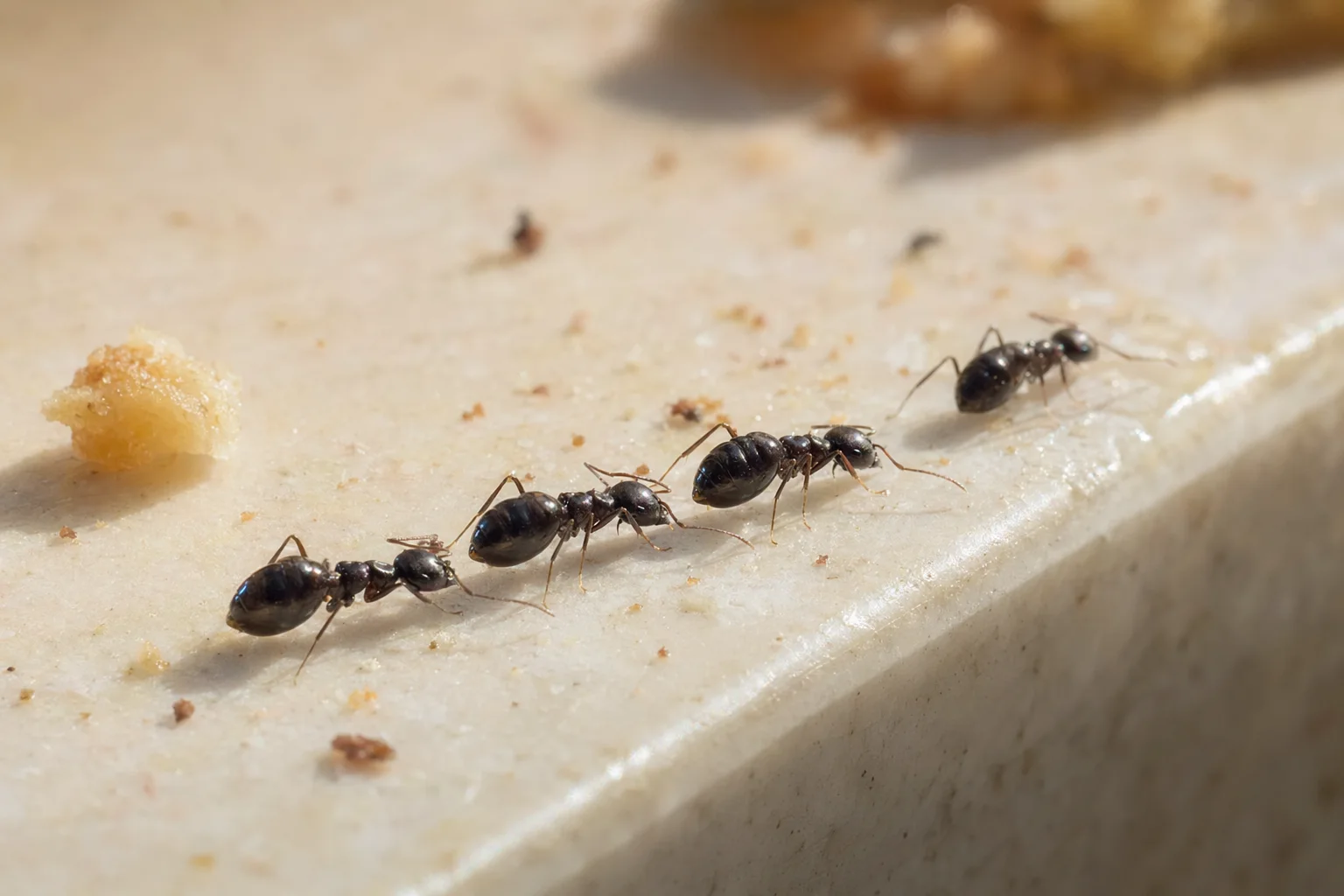
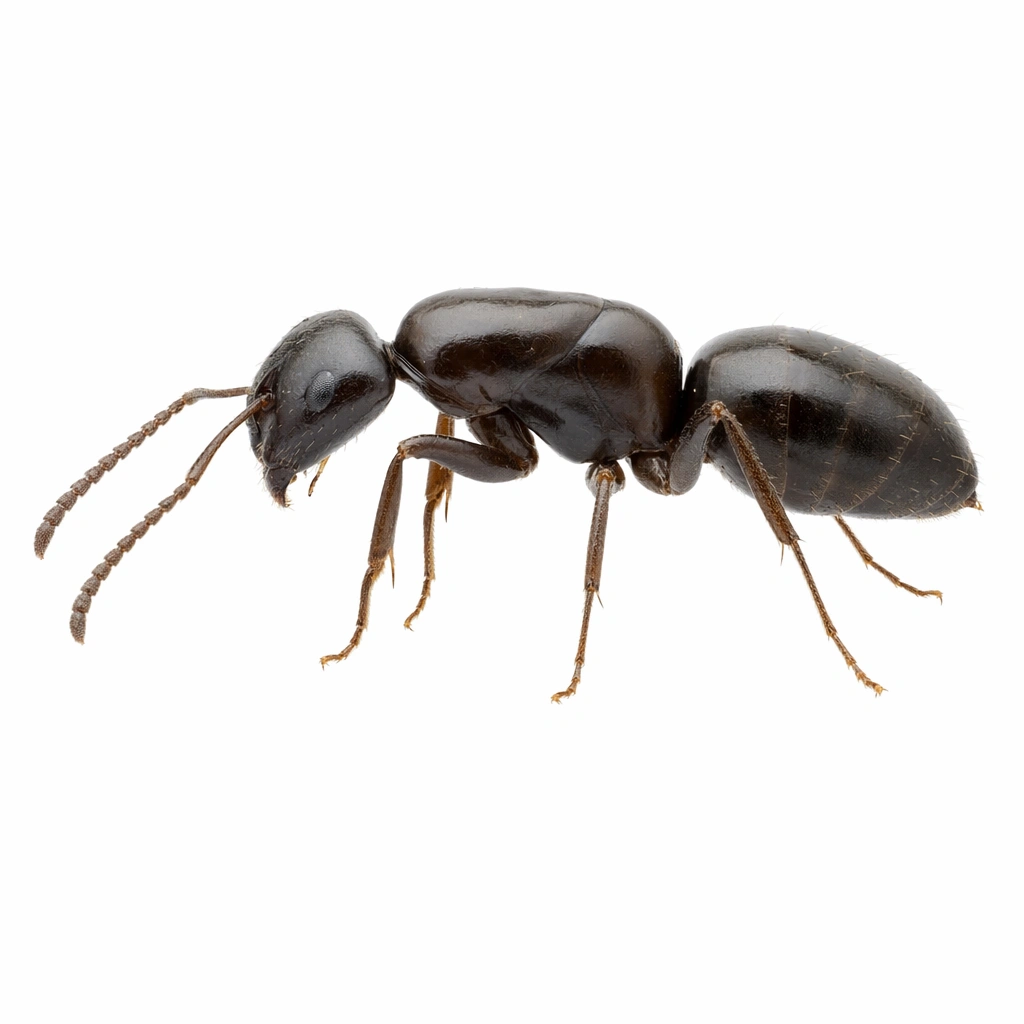
A small, dark, monomorphic ant native to North America and established across Collin County. Named for the methyl ketone released when workers are crushed. Multi-queen colonies establish satellite nests in wall voids and pose no structural or medical risk, only food contamination and persistent indoor presence.
Outdoor foraging peaks mid-summer following the April aphid season on landscape plants. Indoor pressure runs year-round because established wall-void satellite nests do not go dormant in Collin County winters.
Pattern from Pest Me Off service call records across Collin County, 2023 to 2026, and published Tapinoma sessile seasonal biology literature.
What Odorous House Ants Look Like
The coconut smell that makes them unmistakable
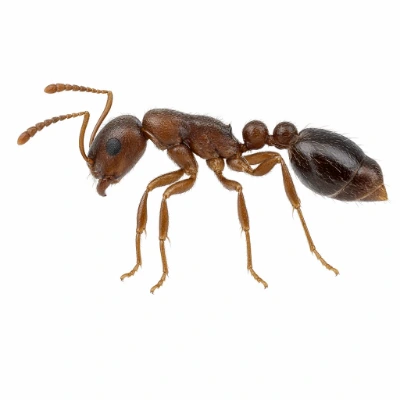
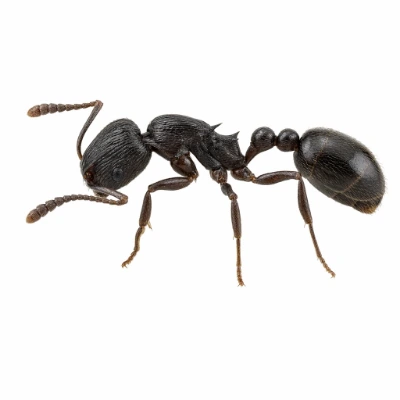
Odorous house ant workers are 2.4 to 3.3 mm, dark brown to nearly black, and monomorphic, meaning every worker in the colony is roughly the same size. There is no mixed-size lineup and no two-tone coloration. The body is a single uniform dark color with no banding, no red segment, and no pale legs.
The most important structural feature is the waist. Odorous house ants have a single petiole node (one-segment waist) that is hidden under the rear section, so from above the ant appears to have no visible waist constriction at all. The midsection profile in side view is evenly rounded with no humps or notches. Antennae have 12 segments with no club at the tip. odorous house ant identification and biology reference data confirms the hidden single-node waist as the primary structural separator from pavement ants and little black ants in the same size range.
The fastest field identification requires no tools at all. Crush a worker between your fingers. The rotten coconut smell, sometimes described as overripe banana, blue cheese, or fruity fermentation, confirms the species immediately. No other common ant in Collin County produces this odor.
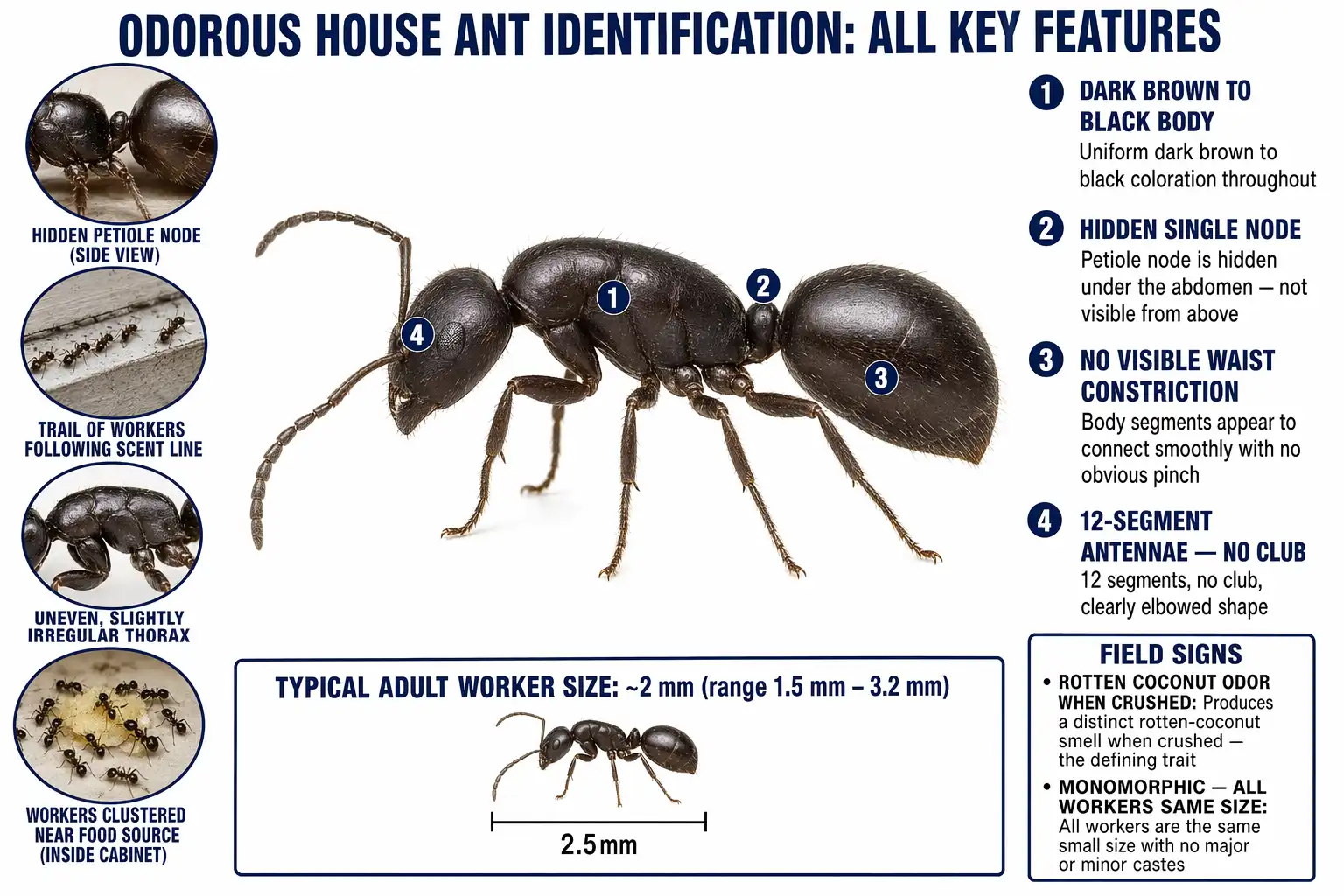
Odorous house ant identification diagram. Click to zoom.
- Commonly called sugar ants, stink ants, or coconut ants; the names all come from the same trait: crush one worker and you will smell rotten coconut immediately
- Rotten coconut or overripe banana smell when crushed is the fastest species confirmation, no tools required
- Dark brown to nearly black, uniform color with no banding or red segment
- All workers the same small size, 2.4 to 3.3 mm (no mixed sizing)
- Trails along baseboards, countertops, and pipe runs in tight lines
- Single petiole node hidden under the rear section (no visible waist from above)
- 12-segment antennae with no club at the tip
- No coarse sawdust wood shavings near wood, no outdoor mound
Why Collin County Calls Them Sugar Ants, Stink Ants, and Coconut Ants
The name sugar ant comes from foraging behavior. Workers trail to sweet food sources with reliable precision, and the trail running from a baseboard to the sugar bowl or honey jar is what most homeowners notice first. The behavior earns the label even though the ant is not structurally specialized for sweets.
“Stink ant” and “coconut ant” both come from the same diagnostic odor: the rotten coconut or overripe fruit smell workers release when crushed. That smell is also the fastest way to tell an odorous house ant from every other small dark ant in Collin County without a microscope.
Two species share the sugar ant label in Collin County, and this matters for treatment. The pavement ant (Tetramorium immigrans) also trails to sweet food sources and also gets called a sugar ant. The separation is the crush test: pavement ants have no odor. If there is no smell, check the waist: pavement ants have two nodes; odorous house ants have one node hidden under the rear section. Both are called sugar ants. The biology and treatment approach are different enough that the correct identification matters before treatment begins.
How to Tell Odorous House Ants from Other Ants in Collin County
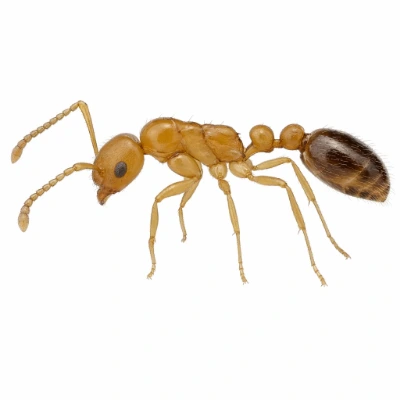
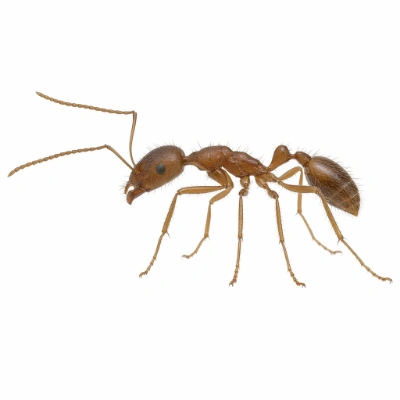
Three ants are regularly mistaken for odorous house ants or share the sugar ant nickname. The crush test rules out two of them in ten seconds.
| Species | Size | Key Feature | Nesting Habit |
|---|---|---|---|
|
Odorous House Ant
This species
AKA: Sugar Ant, Stink Ant, Coconut Ant
Tapinoma sessile
|
2.4 to 3.3 mm, uniform across all workers; dark brown to nearly black body with no banding or pale legs. Workers do not vary in size within the same colony. | Single petiole node hidden under the rear section, making the waist invisible from above. Produces a strong rotten coconut odor when workers are crushed, which is the fastest and most reliable field identification available without magnification. | Wall voids, insulation, and under-sink spaces indoors; outdoor soil and mulch adjacent to the foundation. No outdoor mound and no coarse sawdust wood shavings. Expands by budding into new satellite nests rather than by swarm flight. |
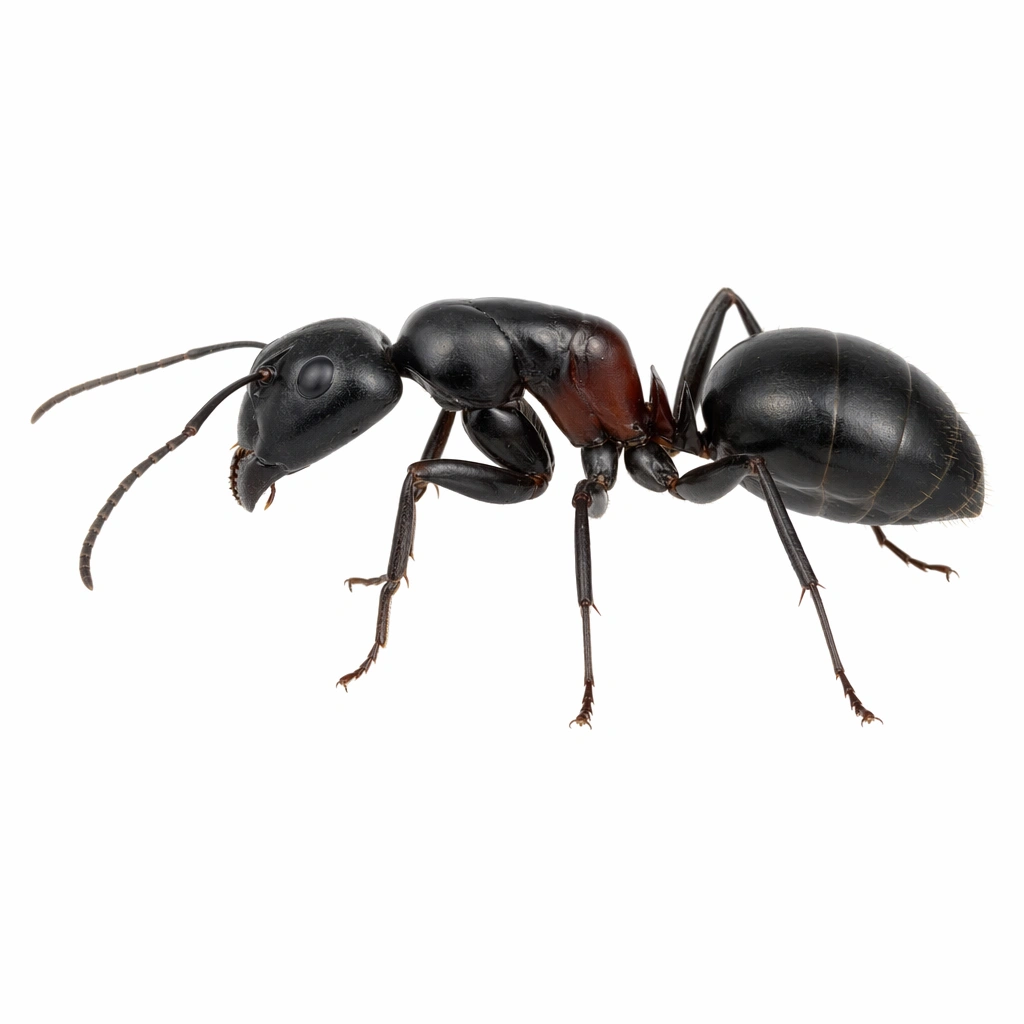
Carpenter Ant
AKA: Big Black Ant, Large Black Ant
Camponotus spp.
|
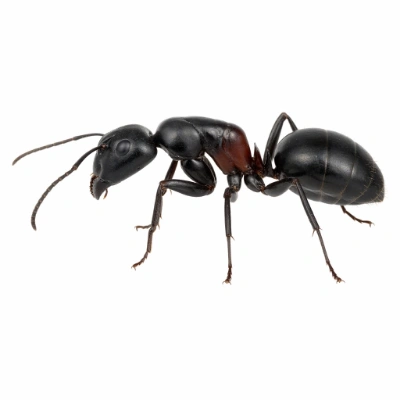
6 to 13 mm with evenly graded worker sizes across the colony: noticeably larger than any odorous house ant worker. All black or red-and-black body color; size contrast alone makes the separation immediate. | Single visible node at the waist (the petiole is not hidden); no odor when crushed. Leaves coarse fibrous wood shavings that looks like damp sawdust near door frames, window trim, or deck boards: a sign odorous house ants never produce. | Galleries excavated inside moisture-softened wood at door frames, fascia boards, and deck components. The indoor satellite colony connects back to a parent queen living in a tree stump or log pile outdoors. |
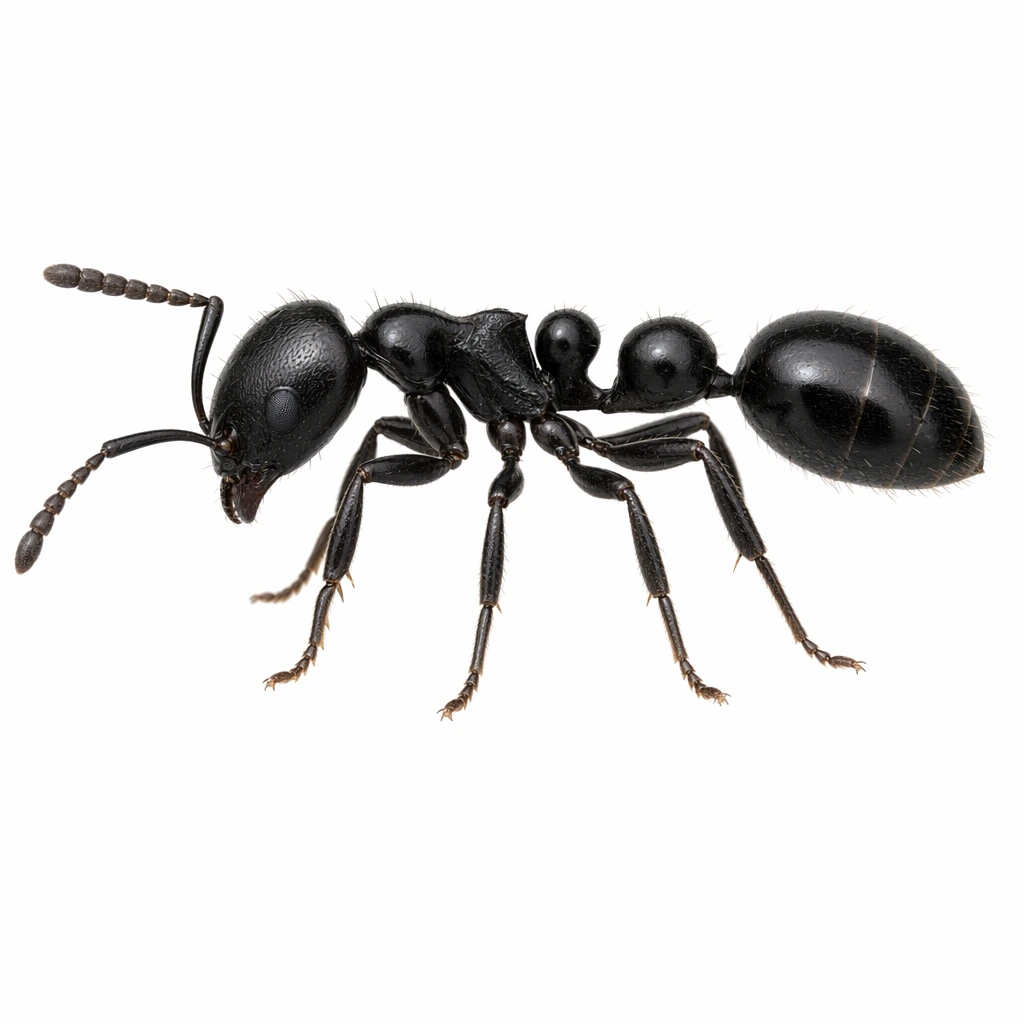
Little Black Ant
AKA: Black Ant, Tiny Black Ant
Monomorium minimum
|
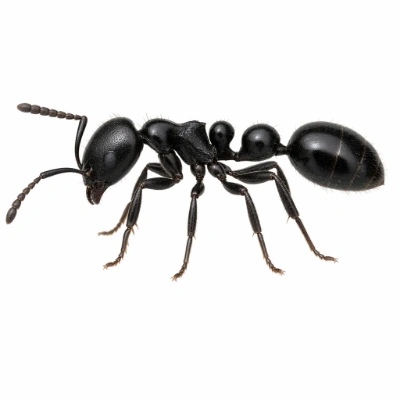
1.5 to 2 mm, uniformly sized and jet black with a noticeably shiny surface. Visibly smaller than odorous house ants; the size difference is apparent without magnification when both species are seen side by side. | Two-node waist (two petiole segments, versus one hidden node on odorous house ants). No odor when crushed. Does not bud when disturbed by repellent products, making it far less likely to spread indoors after a spray application. | Outdoor soil, rotting wood, and ground debris; foraging trails enter indoors but the colony does not establish wall-void satellites. No coarse wood shavings at entry points. |
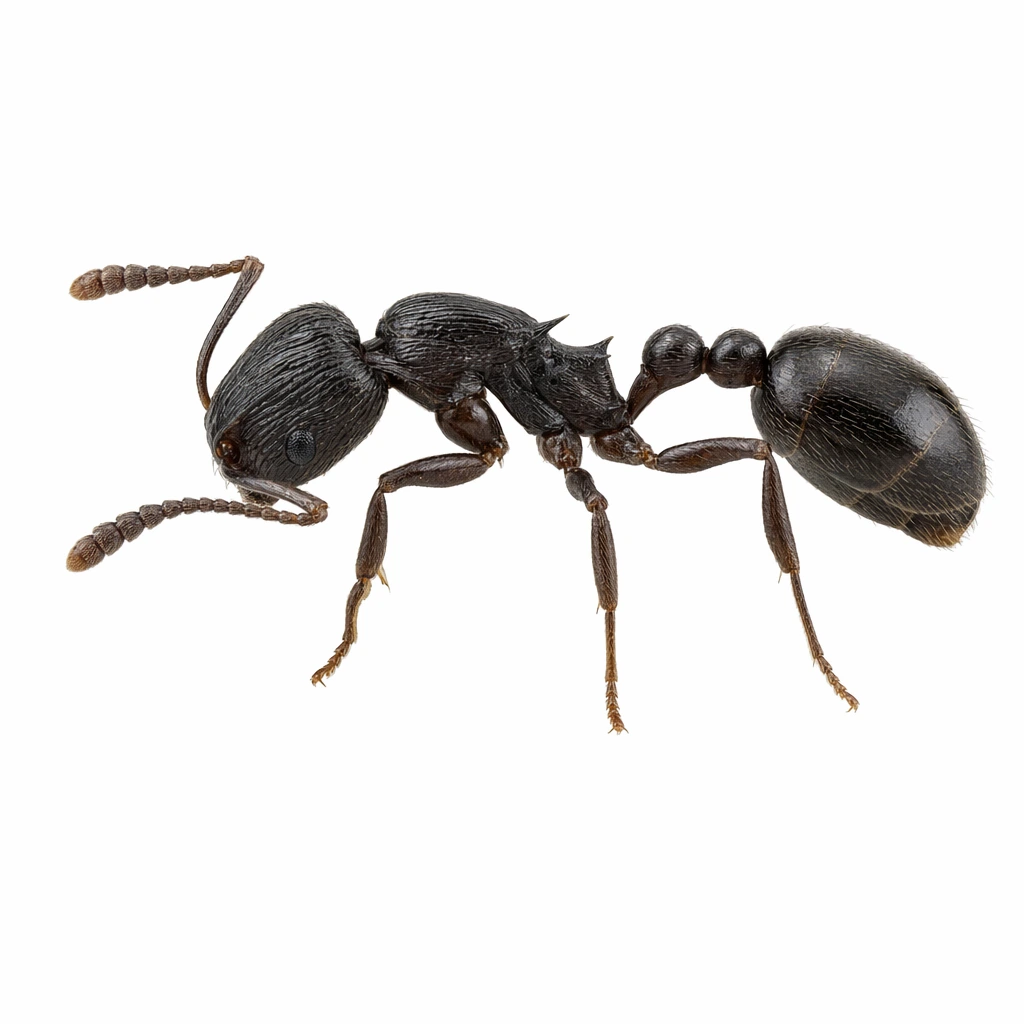
Pavement Ant
AKA: Sugar Ant, Sweet Ant
Tetramorium immigrans
|
2.5 to 3 mm, uniformly sized; dark brown to nearly black body with a lighter leg color. Similar in size to odorous house ants, which is why the crush test is essential for separation : size alone is not enough. | Two-node waist with parallel grooves (striations) on the head and midsection visible under close inspection. Produces no odor when crushed. Single-queen colony that does not bud, so one service visit typically resolves the infestation. | Sub-slab soil beneath driveways, sidewalks, and concrete slabs; fine sandy soil pushed to the surface at a crack entrance is the visible sign. Does not establish indoor wall-void satellites. |
Odorous House Ants Are a Nuisance, Not a Health Threat
The primary concern with odorous house ants in a McKinney or Allen kitchen is food contamination, not personal safety. Workers forage across food preparation surfaces, over pantry shelving, and through any food package with a gap in the seal. Any food that an active trail has crossed should be discarded. For families with infants, elderly members, or immunocompromised individuals, this food-safety concern justifies prompt treatment even though the ant itself poses no direct medical risk.
Pets face no toxicity risk from incidental contact or ingestion of small numbers of workers. There is no documented allergic reaction pathway from odorous house ant exposure in dogs or cats. The management priority is eliminating the infestation before it compromises food storage or spreads to additional rooms.
Where Odorous House Ants Nest in Collin County Homes
Outdoor primary colonies nest in soil, under mulch, in the root zones of ornamental shrubs, and beneath any debris, stone, or landscaping material that holds moisture. They tend aphid colonies on foundation shrubs, collecting honeydew as a primary sugar source. This outdoor-to-indoor food chain is the reason odorous house ants trail from yard vegetation directly through weep holes and under door sweeps into the structure.
Indoor satellite nests locate near moisture. The three most consistent sites are wall voids adjacent to kitchen and bathroom plumbing, insulation along exterior-facing walls on the shaded north and east sides of the structure, and inside appliance motor housings that generate consistent warmth. Workers trail from those satellite sites along baseboards, behind cabinet toe kicks, and up pipe runs to reach kitchen and pantry surfaces. The trail you see at the counter is rarely the nest. The nest is typically 5 to 15 feet away inside a wall or cabinet void.
How Odorous House Ant Colonies Spread
Odorous house ants do not reproduce by swarming. They expand by budding: a queen and a subset of workers separate from the parent colony and relocate to a new nest site, typically within 10 to 30 feet of the original. This process happens without any visible external sign and can be triggered by a perceived threat, including a repellent pesticide application to an active trail. The result is that one established nest becomes two or three, now distributed across a wider zone inside the structure. odorous house ant budding behavior and colony expansion documents the repellent-triggered budding response as the primary reason infestations grow larger after homeowner spray applications.
Odorous House Ant Pressure Across Collin County
Odorous house ants generate the highest volume of indoor ant service calls in McKinney, Allen, and Frisco. Year-round indoor pressure confirms that established satellite nests are widespread in residential structures across the county. The species thrives in Collin County’s mix of mature landscaping, irrigated lawns, and high-density foundation planting, all of which support aphid colonies that supply outdoor primary nests.
Pressure runs highest in neighborhoods with dense ornamental plantings along the foundation, mature crape myrtles and roses (high aphid hosts), and homes with older plumbing that has slow drips inside wall voids. McKinney, Allen, and Plano produce the majority of calls. New construction in Prosper and Anna disturbs soil colonies during grading and drives them to establish satellite nests indoors earlier in the construction phase.
How Pest Me Off Treats Odorous House Ants
Ant-nihilation is our proprietary ant protocol combining queen-targeted bait broadcasting with a foundation barrier system called the Scorched Earth Barrier. For odorous house ants, the protocol runs on non-repellent chemistry throughout (active ingredients that workers carry back to queens without detecting as a threat, rather than products they detect and route around). odorous house ant treatment and non-repellent bait confirms that any repellent active ingredient applied to active trails triggers the budding response that expands rather than eliminates the infestation. No exceptions to non-repellent chemistry.
Trail Mapping and Satellite Identification
Every active indoor trail is followed back to its wall entry point. We identify the number of distinct satellite zones, note moisture sources inside wall voids (dripping supply lines, HVAC condensate), and map the foraging pattern from satellite to food source before any product is applied. Satellite count determines bait volume and placement strategy.
Indoor Non-Repellent Gel Bait Placement
Non-repellent gel bait (the kind workers pick up, carry back to queens, and transfer through the colony via contact and grooming without detecting it as a threat) is placed directly along every active indoor trail and at all confirmed entry points into wall voids. Slow-acting chemistry allows bait-carrying workers to reach queens before they die. This is the mechanism that reaches distributed queen populations across multiple satellite sites.
Outdoor Non-Repellent Bait Broadcast
A non-repellent broadcast bait is broadcast in the outdoor foraging zone around the foundation, targeting the primary soil colony and any aphid-tending satellite nests in landscape plantings. Eliminating the outdoor colony cuts the resupply line to indoor satellites. Any aphid colonies on foundation shrubs are documented and communicated for removal.
Scorched Earth Barrier and Timeline
The Scorched Earth Barrier (our non-repellent perimeter application around the foundation, irrigation infrastructure, and property edges) is applied on a quarterly schedule after initial colony collapse. Timeline expectations: single-satellite infestations typically show trail reduction within 10 to 14 days and full elimination within 3 to 4 weeks. Multi-satellite infestations require 4 to 8 weeks of active bait maintenance plus the outdoor broadcast. We assess scope at the first visit and give you the realistic timeline before we treat.
& Other Companies
DIY Prevention for Odorous House Ants
Odorous house ant prevention targets two conditions: the moisture that attracts satellite nesting and the outdoor food supply that sustains the primary colony. Both can be reduced without professional intervention.
Why DIY Can Fail for Odorous House Ants
Odorous house ants are the species most likely to get worse when homeowners treat them. The biology is counterintuitive: the same products that work on most insects actively expand this infestation.
Repellent Sprays on Active Trails
Over-the-counter sprays contain repellent chemistry that workers detect and route around. The colony reads the treated zone as unsafe and triggers budding: a queen and worker contingent relocate to a new satellite in a different room. One trail in the kitchen becomes two trails in two rooms within a week. Each spray application expands the infestation footprint rather than shrinking it.
Wiping Trails Before Bait Is Placed
Wiping an active trail with a sponge or cleaner removes the scent path temporarily, and the trail re-establishes within hours. More critically, a non-repellent bait works by workers carrying it back along the trail to queens. Wiping the trail before bait is in place removes the highway the treatment needs to reach the colony. Do not disrupt active trails if bait has been or will be placed nearby.
Contact Killers and “Natural” Repellents
Diatomaceous earth, essential oil sprays (peppermint, tea tree), and contact killer aerosols all share the same problem: they are repellent. Workers detect and route around them, which triggers budding into new satellites. The correct chemistry for odorous house ants is the opposite of fast-acting: slow-acting, non-repellent gel bait that workers carry back to queens before it affects them.
Baiting One Trail While Others Stay Active
Odorous house ant colonies maintain multiple satellite nests connected by multiple foraging trails, often running along different walls and entering through different cracks. Placing bait on one visible trail in the kitchen while two other trails are active along the garage wall and bathroom baseboard does not collapse the colony. Each satellite receiving bait must get full coverage simultaneously for the transfer mechanism to reach the queens. Partial bait coverage on a multi-satellite colony produces partial results and leaves active population centers that rebuild the treated locations.
Removing Bait Before the Cycle Completes
Non-repellent bait takes 7 to 21 days to work through an odorous house ant colony. The trail stays visibly active during that entire window while workers carry product back to queens. Most homeowners interpret ongoing trail activity as proof the bait is not working and either remove it, switch products, or spray the trail to stop seeing ants. Any of these actions breaks the transfer cycle and resets the clock. The trail must remain active and undisturbed for bait to reach every queen in the satellite network. Patience through visible activity is the single hardest part of a correct DIY attempt with this species.
Odorous House Ant Questions from Collin County Homeowners
Repellent Sprays Split the Colony. Bait Reaches Every Queen.
We bait every active indoor trail, broadcast non-repellent bait around the foundation, and run the Scorched Earth Barrier foundation treatment across McKinney, Allen, Frisco, Plano, and the rest of Collin County.