Same-Day Appointments Available

 – Call Now!

Rodent Control for McKinney, Allen & Frisco Homes

Roof rats in Stonebridge Ranch and Craig Ranch attics. House mice migrating into new construction throughout Prosper, Celina, and Anna every fall. We identify the species before we treat.

📞 Call (972) 866-4720
Every Review, 5.0 Stars on Google
🏆Best of McKinney 2025
🐱Pet-Safe Treatments
📋No-Contract Options
Same-Day Available
E-Rat-ication: It’s What We Do

Mouse & Rat Exterminator in McKinney, Allen, Frisco & Collin County

If you are hearing scratching in the walls at night, the trap you bought at the hardware store is unlikely to reach it. Over-the-counter snap traps placed without first locating active travel routes sit untouched for weeks. Rodents are neophobic and avoid unfamiliar objects until they become accustomed to them, which means a trap in the wrong position wastes two weeks while the population keeps growing. The result is not a resolved problem. It is a prolonged one. Pest Me Off identifies the species before treating, because species determines placement, bait selection, and whether exclusion sealing is part of the same visit. Roof rat activity in an attic requires a different approach than Norway rat burrowing near a foundation, and both differ from house mice entering through gaps in recently poured construction.

Roof rats are the most consistent service call across McKinney, Frisco, and Allen. These neighborhoods have the mature tree canopy and wood privacy fencing that form the primary roof rat travel network in suburban Collin County. In Carrollton's commercial corridor along Belt Line Road, Norway rat populations establish near restaurant dumpster enclosures and the Indian Creek drainage system. New subdivisions throughout Prosper, Celina, and Anna face a separate pressure: house mice moving from adjacent undeveloped acreage each fall, entering through foundation gaps in recently poured construction before those openings have been sealed.

Pest Me Off handles rodent removal and exclusion sealing from the same team, so there is no coordination gap between removing the active population and closing the entry points that let them in. Our Get Bent Academy certification in Advanced Wildlife Exclusion and Custom Metal Fabrication covers complex structural sealing that standard pest companies cannot perform. All rodent services include no-contract options and a free re-service guarantee. See our full exclusion service at Pest Exclusion and Rodent Proofing.

💡 Pro Tips for Rodent Control
Where There’s One, There Are More.
A single mouse found in the kitchen is the visible sign of a larger population already established in the walls, attic, or storage areas. Rodents rarely occupy a space alone. One confirmed sighting is enough to warrant a full inspection.
Your Roofline Is Their Highway.
Roof rats do not dig into a home from below. Any tree branch or large shrub making contact with the roofline is a direct access ramp. Trim all branches back at least three feet from any roof surface, and clear overgrown vegetation from fence lines running to the structure.
Eliminate the Invitation First.
Pet food left outside overnight, accessible garbage lids, and uncovered compost are three of the most reliable ways to sustain a rodent population near a structure. Removing these does not resolve an active infestation on its own, but it stops reinforcing it and reduces the pressure drawing new rodents from neighboring properties.
Identification Guide

Rodent Species in McKinney TX & Collin County

Three species account for nearly all residential and commercial rodent calls across Collin County. Correct identification determines treatment. Getting this wrong wastes time and leaves the infestation active.

Roof Rat McKinney TX

Roof Rat

AKA: Tree Rat, Black Rat

The most common attic rodent in McKinney. Travels fence lines and tree canopy to reach your roofline. Most active between 10pm and 4am.

FOUND

Attics, insulation, upper wall cavities, and along roofline rafters. Slender body, 6–8 inches, with a tail equal to or longer than its body. Skilled climbers.

NEIGHBORHOODS

Stonebridge Ranch and Craig Ranch in McKinney have the densest tree canopy and wood fence infrastructure for roof rat travel. Heritage Ranch in Fairview reports consistent attic activity near wooded creek corridors.

TREATMENT

Snap traps and bait stations positioned along confirmed attic travel routes after a full inspection maps activity. Entry point sealing at soffit junctions, gable vents, and roofline gaps follows population control.

CAUTIONRoof rats gnaw electrical wiring inside attic spaces. A colony active for more than four to six weeks creates measurable wiring damage risk. Do not delay inspection if you are hearing nightly attic activity.
Norway Rat McKinney TX

Norway Rat

AKA: Sewer Rat, Brown Rat

Ground-level burrowers. Less common in residential neighborhoods than roof rats, but concentrated near commercial corridors, drainage channels, and older commercial infrastructure.

FOUND

Ground burrows along foundation edges, crawl spaces, drainage pipes, and under concrete pads. Stocky body, 7–10 inches, with a tail shorter than its body. Poor climbers.

NEIGHBORHOODS

Carrollton's Belt Line Road restaurant corridor and Indian Creek drainage system. Allen's Exchange Pkwy commercial district. Plano's Legacy West restaurant infrastructure and East Plano older commercial zones.

TREATMENT

Exterior bait stations anchored along identified burrow corridors. Foundation gap sealing and pipe penetration exclusion at ground level. Differs significantly from roof rat treatment in both placement and bait format.

CAUTIONNorway rats spread leptospirosis through urine on surfaces including garage floors and utility areas. Do not handle dead rodents without gloves, and clean urine-contaminated surfaces with a diluted bleach solution before wiping.
House Mouse McKinney TX

House Mouse

AKA: Field Mouse

The fastest-breeding rodent Pest Me Off treats. A single pair can produce up to 60 young in 12 months. Can squeeze through a gap as small as a quarter inch.

FOUND

Behind appliances, inside wall cavities, pantry cabinets, utility rooms, and attic insulation. Much smaller than rats at 2.5–4 inches in body length. Leaves small rounded droppings the size of a grain of rice.

NEIGHBORHOODS

New construction throughout Prosper, Celina, Anna, and Melissa sees predictable fall movement from adjacent undeveloped acreage. Farmersville properties near agricultural operations experience the highest house mouse density in the service area.

TREATMENT

Snap traps inside along confirmed travel runways. Exterior bait stations at foundation corners. Exclusion sealing at foundation sill gaps, pipe penetrations, and garage door threshold gaps is critical to long-term control.

CAUTIONHouse mice contaminate every surface they travel. A confirmed infestation near the pantry means everything on open shelving in that area should be treated as contaminated, not just the shelves where droppings are visible.
The Most Common Attic Pest in Collin County

Roof Rats in McKinney TX

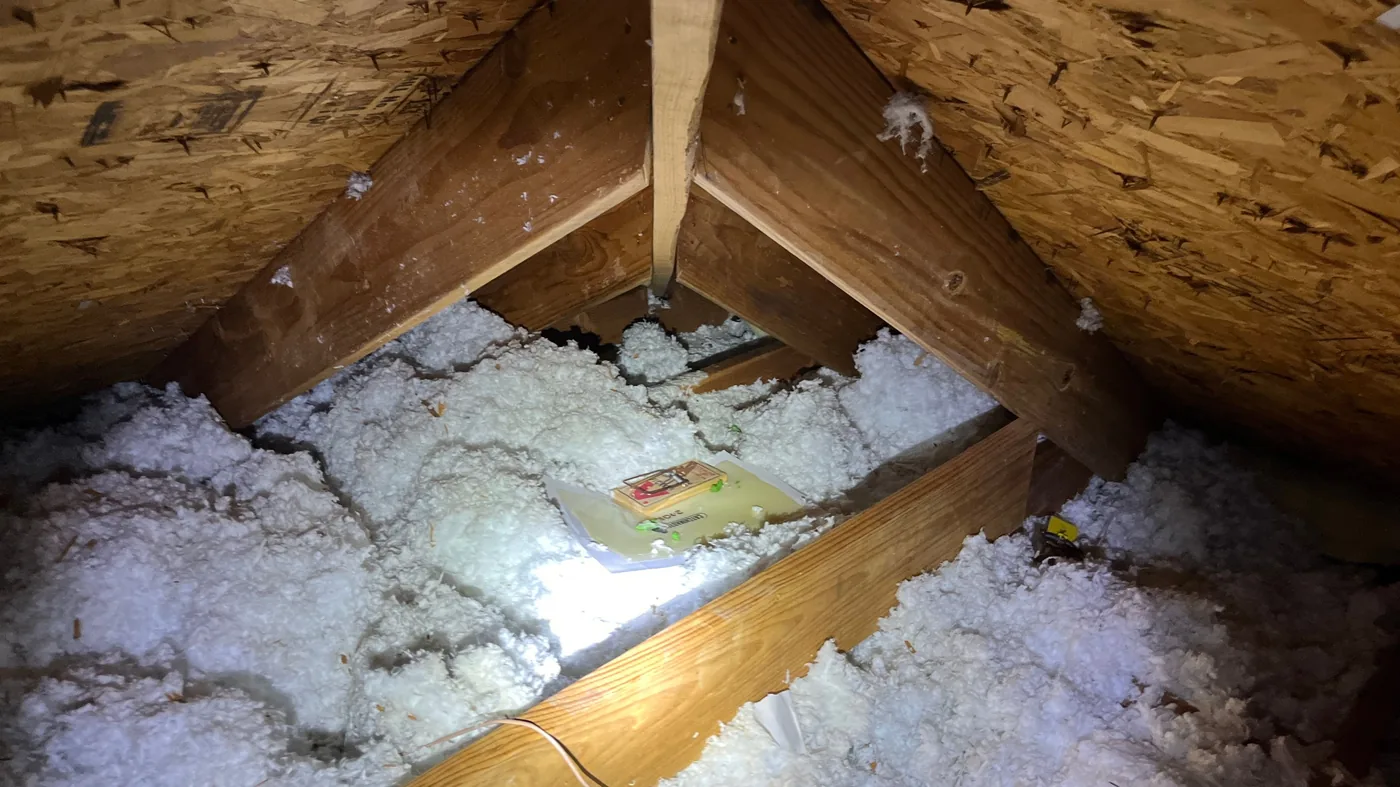
Roof rats reach your roofline by traveling along it, not burrowing up to it. A wood fence line running to the house structure is a direct highway. A tree branch with any contact to the roof is a ramp. These are not accidental entries, they are consistent travel routes used nightly. Pest Me Off's inspection begins outside, mapping the travel network before entering the structure, because removing rodents from the attic without eliminating the travel route guarantees the same problem within weeks.

Once inside, roof rats move through attic insulation and along wall cavities. They are most active between 10pm and 4am, which is when homeowners hear the scratching, rolling, and scurrying sounds in the ceiling. By the time scratching is audible, the population is already established. A single pair produces 4–6 litters per year with up to 8 young per litter.

Bait and snap traps placed by homeowners often fail for one specific reason: rodent neophobia. Rats avoid unfamiliar objects for days to two weeks after placement. Traps positioned in the wrong location, without knowledge of active runways, will sit untouched indefinitely. Placement along confirmed travel routes, identified during inspection, is what determines whether the service works.

The Hidden Cost

Roof rats gnaw on electrical wiring inside attic insulation. Contaminated insulation loses thermal effectiveness and requires replacement once urine and droppings accumulate. The repair bill for wiring remediation and insulation replacement in a typical McKinney attic routinely runs several times the cost of treatment. There is a more immediate problem. Every rodent that entered your home came through a specific gap. That gap is still open after removal. Without identifying and sealing every entry point, the next population begins the moment outside pressure builds again. Removal and exclusion are one job, not two. See Pest Exclusion and Rodent Proofing for the full exclusion service.

40 FT Nightly Territory Roof rats travel up to 40 feet from their nest nightly along fence lines and tree canopy, using the same routes consistently.
5–8 Young Per Litter A single female produces 4–6 litters per year. One undetected female in an attic means dozens of offspring within months.
14 DAYS Neophobia Window Rodents avoid unfamiliar objects for up to two weeks. Traps placed without knowledge of active travel routes are ignored.

Roof rat activity in McKinney follows a predictable seasonal pattern, with populations moving into structures between September and November as temperatures drop and outdoor food sources diminish. Craig Ranch, Stonebridge Ranch, and the wooded streets adjacent to Erwin Park and Towne Lake see the highest activity due to established tree canopy density. If you are hearing scratching in the walls or ceiling between 10pm and 4am and have mature trees within ten feet of your roofline, the species and entry route are both consistent with a roof rat infestation. The entry points are still open until they are identified and sealed.

One Treatment or Ongoing Protection?

Why Rodents Come Back After Treatment

Rapid Breeding
Population Rebuilds Faster Than One-Time Trapping Removes It

A single house mouse pair produces up to 60 young in 12 months, with each new generation reaching reproductive age in 6–8 weeks. A roof rat female produces up to 40 young per year under normal conditions. A one-time service removes the rodents visible during inspection and those that encounter the bait and traps placed that day. It does not catch a pregnant female already inside a wall cavity. That female will rebuild the population within weeks. Without a follow-up inspection visit to confirm zero activity and address any remaining population, a partial removal simply delays the next infestation cycle rather than ending it.

Every October, field mice and roof rats move toward occupied structures as temperatures drop and outdoor food sources decline. New development throughout Prosper, Celina, Anna, and Melissa has placed thousands of acres of undeveloped land directly adjacent to finished residential neighborhoods. That land serves as a reservoir for field rodent populations throughout the warm season. When the temperature drops, that population moves. Drainage corridors, fence lines, and mature tree canopy provide the travel routes. A property treated in July can have documented new activity by November, not because the July treatment failed, but because external pressure is continuous and seasonal. Read more at Why Winter Is Prime Time for Rat Infestations.

The September inspection visit is the most critical. Catching early seasonal activity before it reaches the attic is significantly less expensive than addressing an established colony in February. The Defend step in our RID system keeps monitoring active between visits and ensures new entry points are found and sealed before the next wave establishes.

One-Time Treatment
Works for Isolated, Contained Occurrences

A single visit removes active rodents, identifies visible entry points, and applies exterior deterrents. This works when the infestation is recent, clearly limited in scope, and entry points are few and straightforward to seal. The limitation is what it cannot address: a pregnant female hidden inside a wall cavity, or fall pressure arriving two months later from adjacent undeveloped land. No-contract options available on all Pest Me Off service plans.

Recurring Protection
Built for Collin County’s Fall Rodent Season

Recurring visits include quarterly checks that confirm zero bait station activity, reseal any new entry points that have opened since the last visit, and renew the exterior barrier before fall activity begins. The pre-fall September visit is timed to intercept the annual migration wave before it reaches the roofline. No-contract options available.

Pest Me Off’s Branded Methodology

How Our Rodent Exterminator Service Works: The RID Method

Every initial rodent service follows all three steps. Ongoing recurring subscribers get the full RID system on every visit, including the Defend step that keeps the Scorched Earth Barrier active year-round.

R

Remove

We remove rodents from your property by flushing out active populations using strategically placed snap traps and bait stations along confirmed travel routes identified during inspection.

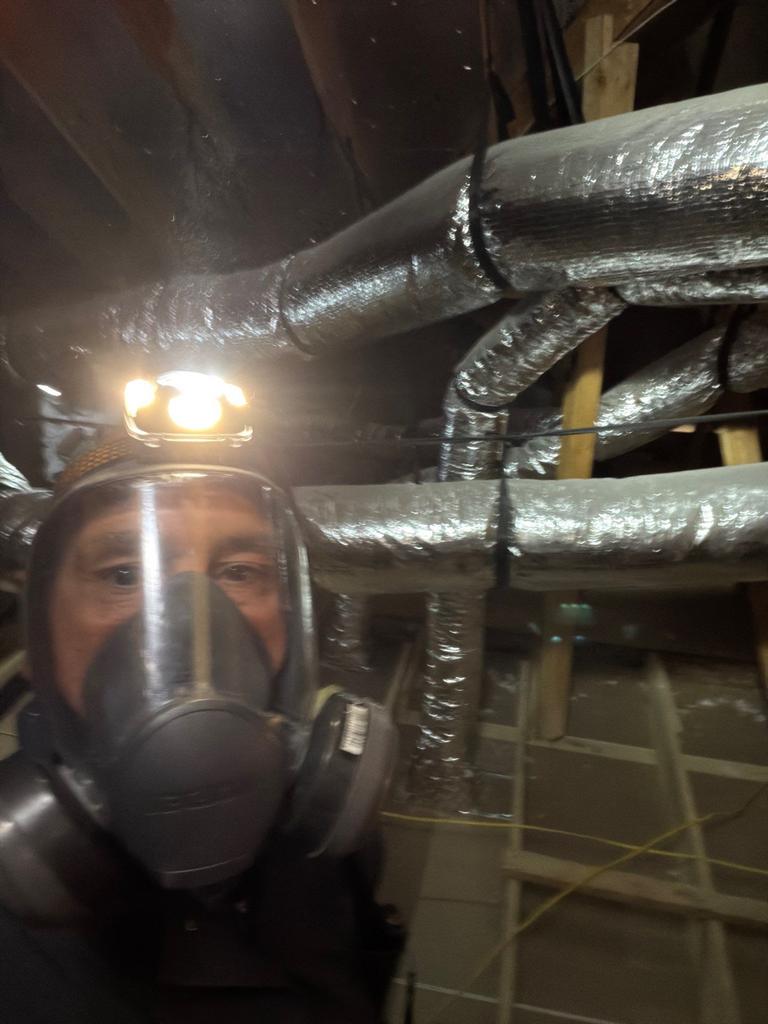
  • Full interior and exterior inspection to map active runways, nesting zones, and entry points
  • Snap traps and bait stations placed along confirmed attic runways and in identified activity zones
  • Norway rat burrow locations identified at the exterior and treated directly at the source
  • Follow-up visit scheduled at 7–10 days to collect traps and confirm population control
I

Install

We install our Scorched Earth Barrier at the foundation perimeter and seal every identified rodent entry point to stop new access into the structure.

  • Scorched Earth Barrier applied at the foundation perimeter, drain and pipe penetrations, and utility entry zones
  • Metal exclusion screening installed at attic vents, weep holes, and soffit gaps where rodents actively enter
  • Exterior bait stations anchored at foundation corners and along fence lines in high-activity corridors
  • Entry point map provided to homeowner documenting every sealed location
D

Defend

The Defend step is included with every recurring service visit, not one-time treatments. This is what keeps the barrier working between seasons and ahead of Collin County’s predictable fall rodent season.

  • Quarterly inspection visits confirm zero bait station activity and identify any new entry points
  • Pre-fall visit in September targets seasonal pressure before it reaches the roofline or attic
  • Barrier renewal applied after significant weather events that can shift soil at foundation seal points
  • Activity report provided after every visit
Schedule Rodent Inspection
24–48 HRS Active rodents begin encountering bait stations within the first 24–48 hours of service 14 DAYS Significant population reduction as bait works through the active colony over the first two weeks
What McKinney Homeowners Say

Every Review, 5.0 Stars on Google

Roof Rat Activity: Confirmed in Collin County Attics

Schedule a Rodent Inspection
Same-Day Still Available

Roof rat populations in McKinney, Allen, and Frisco are active year-round in structures with mature tree canopy. Every week without an inspection is another week of potential wiring damage and population growth inside your attic.

Same-day appointments available No-contract options available Free re-service guarantee Best of McKinney 2025
14 Cities Across Collin County and Surrounding Areas

Rodent Exterminator Near Me

Same-day rodent control service available across all 14 cities. Roof rat, Norway rat, and house mouse treatment tailored to the specific pressure patterns in each community.

Allen TX

Exchange Pkwy restaurant corridor generates Norway rat pressure near dumpster enclosures and utility areas after close. Twin Creeks and Waterford Parks neighborhoods report roof rat activity consistent with their mature greenbelt oak canopy running behind rear property lines.

Anna TX

Liberty Hills and Sherley Farms neighborhoods are surrounded by undeveloped land that sustains high field rodent populations throughout the warm season. New construction foundation work in these subdivisions regularly surfaces rodent activity at the slab level before landscaping and grading are complete.

Carrollton TX

Korean restaurant corridor along Belt Line Road generates year-round Norway rat pressure near commercial dumpster infrastructure and drainage corridors. Indian Creek greenbelt creates a consistent travel route connecting commercial and residential rodent populations through the eastern portion of the service area.

Celina TX

Rural properties near Light Farms and Mustang Lakes back directly to active agricultural land. House mouse activity from adjacent crop fields is a consistent and predictable pattern beginning each October. Residents within half a mile of undeveloped acreage see the most concentrated seasonal activity.

Fairview TX

Heritage Ranch's 575-acre championship course with mature creek beds and aged pecan and oak canopy creates ideal roof rat travel conditions across the community. Large estate properties with long rooflines and wooded perimeter landscaping represent the most consistent service call type in this area.

Farmersville TX

Highest field rodent density in the Pest Me Off service area. Properties adjacent to active agricultural operations near Copeville and Lavon Beach Estates face house mouse activity throughout harvest season and a concentrated fall influx. Rural properties near grain storage structures draw rodents from surrounding acreage year-round.

Frisco TX

New construction throughout Fields, Lexington, and Phillips Creek Ranch leaves foundation sill gaps in recently poured slabs before those openings are sealed, creating house mouse access points in the first season. The Star and Toyota Stadium commercial corridor attracts Norway rat activity near adjacent restaurant operations.

Little Elm TX

Union Park and the lakeside communities adjacent to Lewisville Lake report roof rat activity consistent with their mature tree cover and wooded greenbelt edges along the shoreline. Storm drain corridors connecting newer subdivisions to the lake create Norway rat travel routes through these neighborhoods.

McKinney TX

Stonebridge Ranch and Craig Ranch have the most mature tree canopy and continuous wood fence infrastructure in the service area, creating consistent roof rat travel routes to attic access points. Historic Downtown McKinney homes built before 2000 have roofline gaps at soffit joints that have not been addressed since original construction.

Melissa TX

Z-Plex and Melissa Ridge neighborhoods back up to rural ranch corridors with active agricultural character. House mouse activity in fall aligns with the pastoral character of this area. Attached garages in new construction without fully sealed thresholds are the most common documented entry point.

Plano TX

Legacy West's dense restaurant corridor creates Norway rat populations near dumpster infrastructure throughout the year. East Plano neighborhoods built in the 1970s and 1980s have aged rooflines with unsealed soffit joints and gable vent gaps that serve as consistent roof rat entry points.

Princeton TX

Rural Blackland Prairie properties near Lake Lavon and surrounding agricultural operations create the highest field mouse density in the eastern end of the service area. Norway rat activity has been confirmed near older commercial structures along the main corridor during the annual survey.

Prosper TX

Windsong Ranch, Star Trail, and Whitley Place are built adjacent to undeveloped acreage that serves as a field rodent reservoir. Every fall, house mice move from that adjacent land into new construction through foundation gaps in recently poured slabs that have not fully settled.

The Colony TX

Grandscape's restaurant district creates concentrated Norway rat pressure near dumpster enclosures and loading areas after closing hours. Stewart Creek Estates and Peninsula neighborhoods report roof rat activity consistent with their lakefront tree canopy and wooded shoreline proximity.

Common Questions

Frequently Asked Questions: Rodent Control McKinney TX

Scratching in the walls or ceiling, especially between 10pm and 4am, is the most consistent first sign of roof rat activity. Roof rats are nocturnal and move through attic insulation and wall cavities at night, creating sounds homeowners describe as scratching, scurrying, or a soft rolling sound. One rat can sound like several. If you can hear it regularly, the population has already established in the structure. A professional inspection is needed to locate the active travel routes, confirm the species, and identify the entry points. Removal without finding and sealing those gaps means the same problem returns.
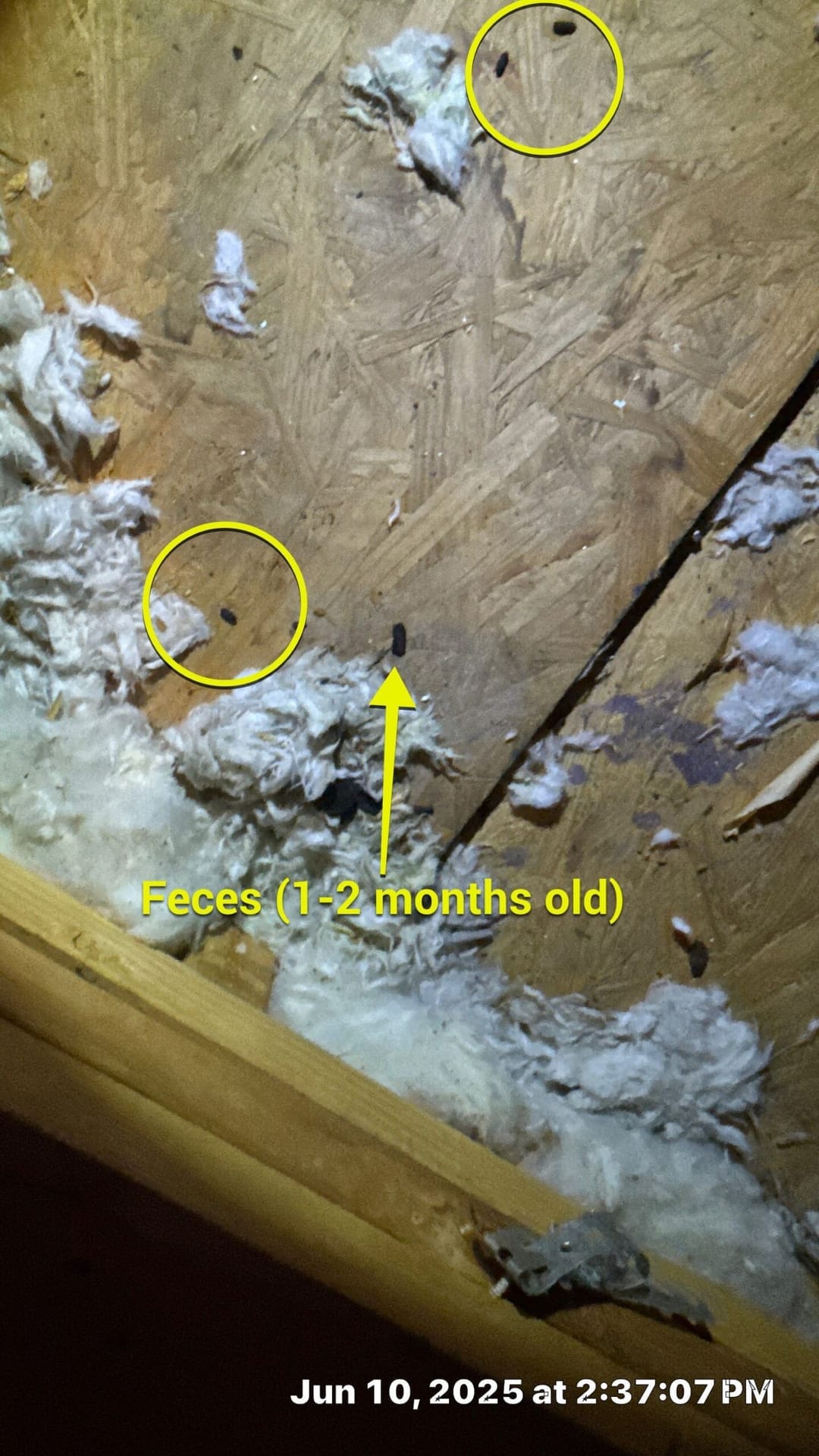
Size is the main distinction. Roof rat droppings are roughly half an inch long with pointed ends. House mouse droppings are smaller, about a quarter inch, and more rounded. Rats leave greasy smudge marks along wall surfaces from their oily fur. Mice leave smaller chewing damage near food storage and can enter through a gap as small as a quarter inch. A professional inspection confirms the species before treatment begins, which matters because bait size, trap type, and placement strategy differ significantly between rats and mice.
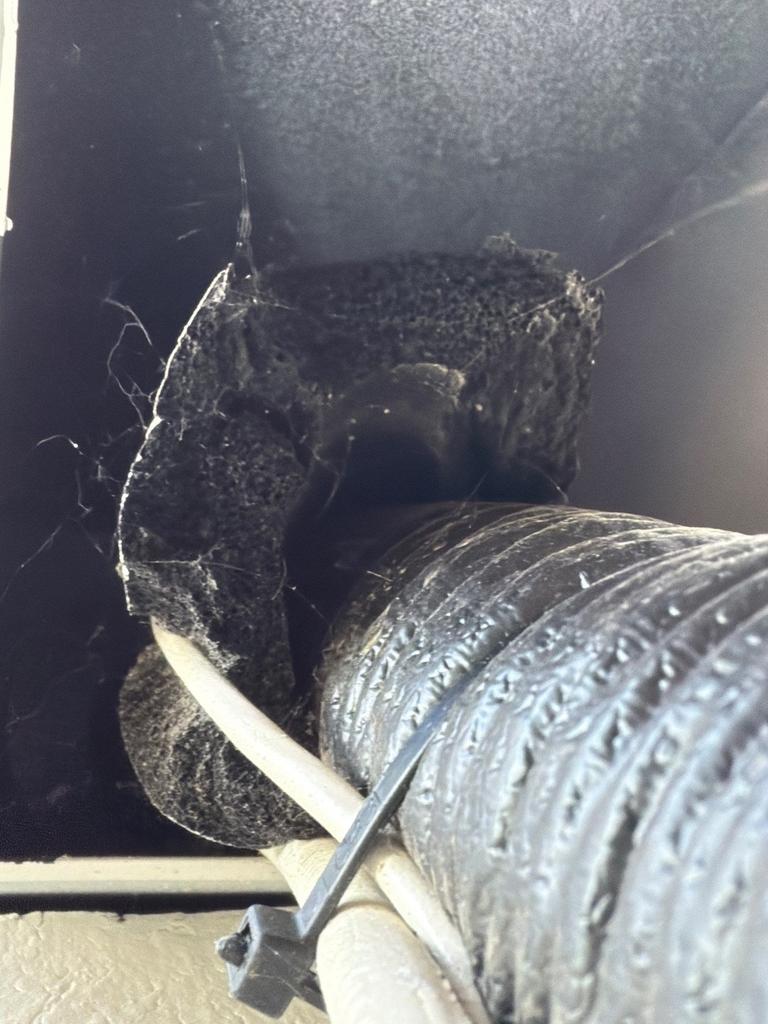
Yes. Rodent droppings and urine can transmit hantavirus, salmonella, and leptospirosis. Droppings should never be swept or vacuumed, as this aerosolizes particles and increases inhalation risk. Use a diluted bleach solution, gloves, and a mask to soak the area before wiping. Droppings inside air ducts or attic insulation present ongoing contamination risk and may require professional remediation. Any droppings found in a kitchen or pantry should be treated as indicating that food and surfaces throughout the area are contaminated.
Common signs include droppings in drawers, along baseboards, or inside cabinet corners; gnaw marks on food packaging, wood trim, or electrical wiring; oily smudge marks along walls and baseboards; nesting material made from shredded insulation, fabric, or paper; and scratching or scurrying sounds at night. A distinctive musky odor in enclosed spaces like utility rooms or garages often indicates an active infestation. For a full breakdown, see our guide: Signs of Mice Infestation and Risks to Your Home.
Roof rats access attics by traveling along fence lines and tree branches that overhang or contact the roofline, then entering through gaps at the soffit junction, fascia, gable vents, or where utility lines penetrate the roof. A gap as small as half an inch is sufficient entry for a rat. House mice need only a quarter inch. Common entry zones in McKinney homes include wood fence junctions at the roofline, HVAC duct penetrations at the roof deck, and older soffit intersections where wood has warped or separated over time.
Three actions reduce rodent pressure significantly. Trim any tree branches or large shrubs that make contact with the roofline. Seal gaps around pipes and wiring where they enter the foundation or walls. Eliminate exterior food sources including pet food left outside overnight, accessible garbage lids, and uncovered compost. Wood privacy fencing that runs directly to the home's exterior is a common roof rat travel highway. A six-inch break between fence end and structure removes that direct access point. Inside, keep pantry items in sealed containers and remove accumulated cardboard and clutter from utility rooms and garage floors.
Do not handle a dead rodent with bare hands. Wear gloves and use a plastic bag or tongs to contain and double-bag the carcass for disposal in an outdoor bin. Spray the surrounding area with diluted bleach solution and allow it to soak for several minutes before wiping. Wash hands thoroughly. A dead rat found indoors almost always signals an active infestation nearby. Rodents found dead inside a structure have typically died of natural causes after a period of sustained habitation, which means the population has been present long enough for that to occur.
Pricing for rodent control in McKinney varies based on the size of the infestation, the number of entry points requiring sealing, and whether the service is one-time removal or an ongoing recurring plan. Pest Me Off provides free estimates after an in-person inspection, because pricing without knowing the species, population size, and number of entry points produces a quote that may not reflect the actual scope of the work. Use the form at the top of this page to schedule a free inspection.
Store-bought traps can catch individual mice but rarely resolve an active infestation. They do not address the entry points that allowed rodents in, the population inside wall cavities, or the travel runways where traps need to be placed to be effective. Rodents are also neophobic and will avoid newly placed traps for days to two weeks unless positioned along active runways. For a detailed breakdown of where do-it-yourself approaches fall short: Why DIY Rodent Control Methods Don't Work.
Attached garages are one of the most common rodent entry points in McKinney homes because garage doors rarely seal completely at the bottom corners and the threshold seal often develops gaps over time. Check the sweep at the bottom of the garage door for visible daylight gaps along the entire width. Seal openings where wiring, water lines, and the gas line enter the garage from the exterior. Wall-mounted shelving keeps items off the floor and removes the flat, protected surfaces mice use for travel and nesting. Cardboard boxes on the floor are primary staging and nesting material.
The initial service visit typically takes one to two hours, covering a full interior and exterior inspection, trap and bait station placement, and a review of every identified entry point. The follow-up visit at 7–10 days is shorter, generally 30 to 45 minutes, focused on collection and confirming population reduction. Full population control for a moderate infestation typically takes two to three weeks. Pest Me Off walks through every step before beginning so there are no surprises on either visit.
The roof rat is the most common attic-dwelling rodent in North Texas suburbs. Unlike Norway rats, which burrow at ground level, roof rats are agile climbers that travel along fence lines and tree canopy to access rooflines. They are slender, typically 6–8 inches in body length with a tail as long as their body, and are most active at night. McKinney's mature tree canopy in neighborhoods like Stonebridge Ranch, Craig Ranch, and along the corridors near Erwin Park and Towne Lake creates ideal travel conditions. If you are hearing scratching in the ceiling at night and have mature trees within ten feet of your roofline, roof rats are the most likely cause.
Rodent exclusion refers to the permanent sealing of the structural entry points rodents use to access a property. This goes beyond bait and trapping. Exclusion closes gaps, cracks, attic vent openings, and pipe penetrations so rodents cannot re-enter after removal. Pest Me Off offers full exclusion services including metal screening installation at attic vents and weep holes, caulking and expanding foam at foundation penetrations, and custom metal fabrication for complex entry zones. Pest Me Off holds a Get Bent Academy certification in Advanced Wildlife Exclusion and Custom Metal Fabrication. See the dedicated page: Pest Exclusion and Rodent Proofing.
Yes, unless the entry points are found and sealed as part of the same service. Every rodent that entered your home came through a specific gap, whether a soffit junction, a pipe penetration, a garage threshold gap, or a gable vent without a screen. That gap remains open after removal. Once the current population is gone, the next wave of seasonal pressure finds the same access it always had. Removal without exclusion sealing is a temporary fix. Pest Me Off identifies and seals every documented entry point as part of the rodent service, and offers full structural exclusion including custom metal fabrication for complex gaps. See the full service at Pest Exclusion and Rodent Proofing.
Yes. Pest Me Off offers same-day rodent control service across McKinney, Allen, Frisco, and 14 cities throughout Collin County and surrounding areas. If you are hearing scratching at night or have found evidence of rodent activity, earlier action prevents the population from growing and limits structural exposure. Call or text (972) 866-4720 to confirm same-day availability for your area. No-contract options available.

Ready to get rid of rodents?

Same-day rat and mouse control available throughout McKinney, Allen, Frisco, and all of Collin County. No-contract options available.

📞 (972) 866-4720 💬 Text Us Get a Free Estimate