
What Happens If You Ignore a Pest Infestation?
An ignored pest infestation keeps multiplying, and the damage and health risk grow with it. Penn State Extension says one German cockroach can lead to over 10,000 descendants a year, assuming two generations, and the University of California says a house mouse can have 5 to 10 litters a year. Droppings build allergens the EPA links to asthma.
In Pest Me Off’s inspections across Collin County, a roach or mouse problem that somebody decided to wait on is usually found in more rooms than the one where it was first seen.
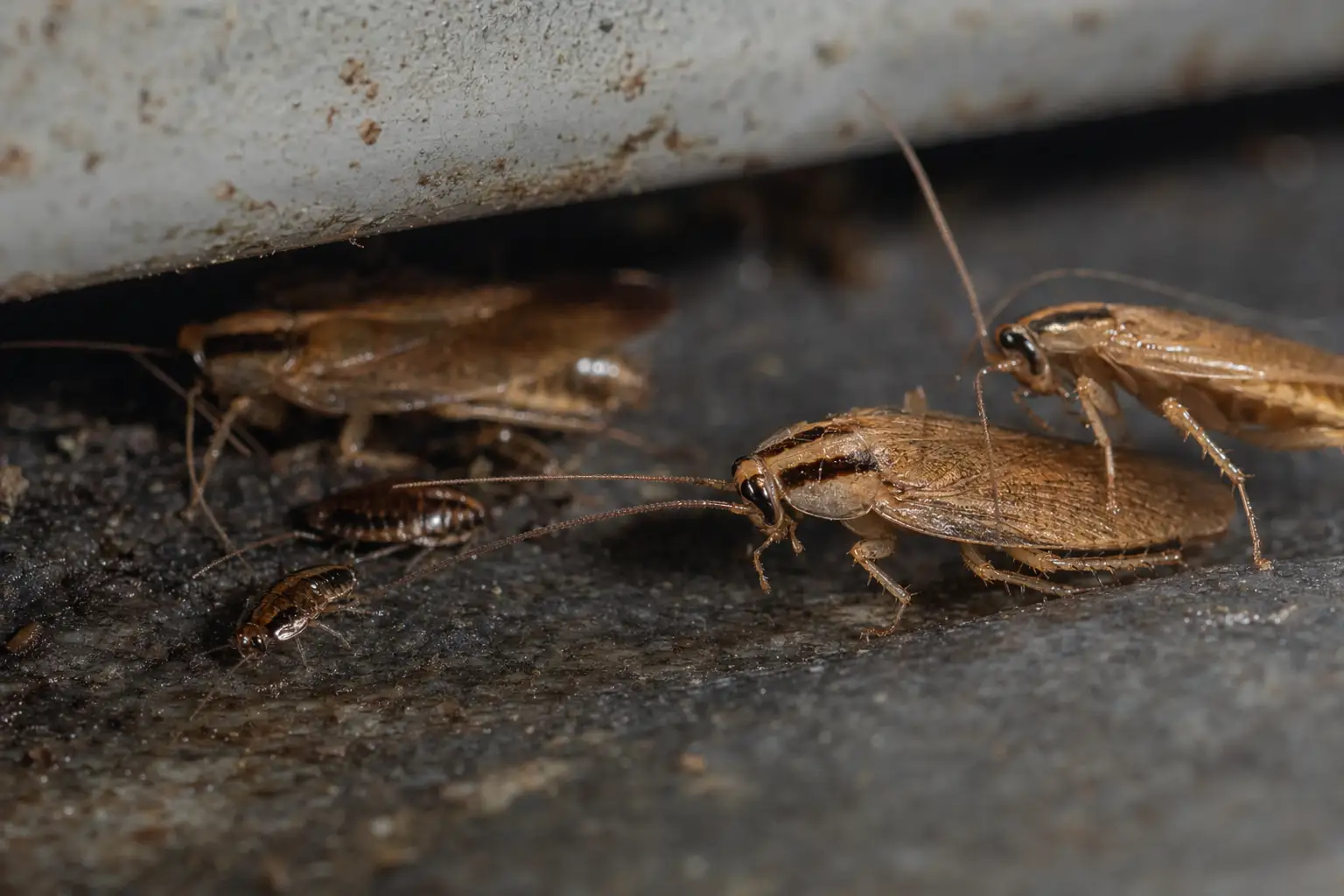

- A German cockroach egg capsule usually holds 30 to 48 eggs, and a new one forms about every 6 weeks.
- A female house mouse may have 5 to 10 litters a year of about 5 or 6 pups each.
- The average female Norway rat has 4 to 6 litters a year and can wean 20 or more young.
- The EPA says cockroach droppings and body parts can trigger asthma.
- Most homeowners do not know subterranean termites are there until something significant turns up, such as damaged wood found in a remodel.





How fast do cockroaches multiply?
German cockroaches multiply faster than any other common house roach. Each egg capsule usually holds 30 to 48 eggs, a female makes a new capsule about every 6 weeks at room temperature, and Penn State Extension says over 10,000 descendants can come from one female in a year, assuming two generations.

The speed comes from how the German cockroach carries its eggs. The female holds the capsule on her body until it hatches, about 28 days after it starts to form, so more of the young survive, and those young grow to adults in 6 to 31 weeks, according to the Penn State Extension page on German cockroaches. That is also why nothing seems to change in the first 14 days. The next round is still inside the capsule.
Other extension pages put the figure even higher. The University of Kentucky guide to cockroach elimination says a single mated female can produce thousands of new cockroaches in less than a year, with up to 40 young from each egg case, and the University of California estimates over 30,000 in a year. Our German cockroach control page covers what a treatment involves.
What cockroaches do to your health while you wait
Cockroach allergens build up as the numbers grow. The University of California’s Pest Notes on cockroaches say allergen levels have been directly correlated to cockroach density, and that indoor infestations have been identified as risk factors for asthma in children. The EPA’s page on asthma triggers says proteins in cockroach feces and saliva can cause allergic reactions or trigger asthma symptoms, and the National Institute of Environmental Health Sciences, part of the NIH, reports a link between cockroaches and more severe asthma symptoms.
Penn State Extension adds that German cockroaches carry the organisms behind food poisoning, dysentery and diarrhea on their legs and bodies and leave them on food and utensils. The University of Kentucky says asthma triggered by cockroaches is especially common among children in densely populated housing, where infestations are often severe.
The CDC’s advice in controlling asthma is a good first step while you wait for help: clean crumbs and spills right away, store food in airtight containers, keep trash closed, seal cracks around cabinets and plumbing, and avoid sprays and foggers, which the CDC says can cause asthma attacks.
Will cockroaches go away on their own?
No. German cockroaches live and breed indoors, so a kitchen that still offers crumbs, water and cracks to hide in keeps them going. The University of California says good sanitation and exclusion are both needed, because pesticides alone will not solve a cockroach problem, and that baits can take 7 days or longer to show fewer roaches.
Waiting also lets the next capsules hatch. The same UC Pest Notes page says female cockroaches carrying egg cases do very little feeding and avoid open spaces, so they are less likely to take a bait right away, and that removing other food sources greatly improves how well baits work. That is why a licensed Pest Me Off technician pairs bait with cleanup advice and sealing gaps, rather than spraying a room once.
How fast do mice multiply?
House mice multiply quickly once they have food and a nest. The University of California’s Pest Notes say a female may have 5 to 10 litters a year of about 5 or 6 pups each, the young are born 18 to 21 days after mating, and the young mice can breed themselves 5 to 6 weeks after birth.
Inside a house there is no winter break. When a house mouse has plentiful and stable food and shelter it can breed year round, which keeps numbers high for months to years, according to the UC Pest Notes on the house mouse. Wall voids, the space under kitchen cabinets and the gap behind the dishwasher are the quiet, warm places where Pest Me Off’s technicians most often find mice breeding, and mice can get in through openings as small as 1/4 inch.
How long before a mouse problem gets bad?
About 2 months, by the University of California’s figures. A house mouse’s young are born 18 to 21 days after mating and can breed themselves 5 to 6 weeks after birth, so the first litter of a mouse that moves in can be breeding about 53 to 63 days later, while the mother keeps having more litters.
The same University of California page says that maturity can be delayed to as late as 12 weeks, so 2 months is the fast case, not a schedule. The sign that a mouse problem has been going for a while is the smell: house mice have a musky odor that UC says is common in large or long-term infestations. Droppings, fresh gnaw marks and tracks show where mice are active, and that is where traps belong, along walls, behind objects and in dark corners.
Will mice go away on their own?
No. The University of California says house mice can survive in very small areas with limited amounts of food, and that cleaning and decluttering will seldom completely control them. What keeps mice out is closing the way in, which is why UC calls sealing every gap larger than 1/4 inch the most successful form of house mouse control.
The University of Kentucky’s page on control of mice says mice can squeeze through openings narrower than a dime, and that cracks in the foundation 1/4 inch and larger should be sealed, along with gaps under doors and where utility pipes enter. Our rodent proofing page shows how those gaps are closed with materials mice cannot chew through.
How fast do rats multiply?
Rats multiply more slowly than mice but still breed 3 to 6 times a year. According to the University of California, the average female Norway rat has 4 to 6 litters a year and can wean 20 or more young annually, while roof rats average 3 to 5 litters with up to 8 young in each.
A Norway rat usually forages 100 to 500 feet from its nest, according to the UC Pest Notes on rats, and young rats can squeeze under a door with only a 1/2 inch gap. Our guide to rats in the house in winter covers the signs and the ways they get in, and our rodent control page covers what a visit involves.
What mice and rats damage while you wait
The longer rodents stay, the more they gnaw. The UC Pest Notes on rats say rats gnaw on electrical wires, doors and wall trim, shred the insulation in walls and ceilings for their nests, and may chew natural gas lines, and that roof rats in an attic can cause electrical sparks and fires. The same source says many fires of unknown origin are believed to be caused by rodents gnawing on wires, and the University of Kentucky adds that house mice gnaw through wiring, causing fires and failure of freezers and clothes dryers.
Droppings and urine carry the health risk. The UC Pest Notes on the house mouse say house mice carry leptospirosis, salmonella and LCM, that about 5% of house mice in the United States carry the LCM virus, and that mouse urine is a major source of allergens linked to early onset of asthma in sensitive children. The CDC’s page on hantavirus says people get it from contact with rats and mice, especially their urine, droppings and saliva.
When you clean up, the CDC’s page on how to clean up after rodents says never to sweep or vacuum droppings, because that puts tiny droplets into the air. Wear rubber or plastic gloves, spray the droppings with a bleach solution or an EPA-registered disinfectant until very wet, and let it soak for 5 minutes or as the label directs before wiping up.
How fast do termites spread?
Slowly at first, then out of sight for years. The University of California says a new subterranean termite colony may hold only 75 termites after its first year, but colonies that reach maturity can hold hundreds of thousands and pose a serious threat to structures. Most homeowners do not know until something significant turns up, such as damaged wood.
An eastern subterranean termite colony nests in the soil and feeds on wood hidden behind walls and under slab foundations, so there is nothing to see while it eats. The UC Pest Notes on subterranean termites say a home with a 2400 square feet footprint could have several colonies with hundreds of thousands of termites looking for food, and recommend a professional inspection every 3 to 5 years to catch an infestation before it becomes damaging.
The signs to watch for, from the University of Kentucky’s page on protecting your home against termites, are pencil-wide mud tubes on the foundation, winged termites or their shed wings on windowsills, and wood hollowed out along the grain with bits of soil inside. The same page says wood siding and door and window frames should sit at least 6 inches above the ground, so termites have no hidden way in. Our page on the signs of subterranean termite infestation shows each one, and our termite treatment page covers what happens after a find.
What each pest brings while you wait, side by side
The extension figures for German cockroaches, house mice, Norway rats and subterranean termites line up like this.
| Pest | How fast it multiplies | What grows while you wait |
|---|---|---|
| German cockroach | A new egg capsule about every 6 weeks, usually 30 to 48 eggs in each (Penn State Extension) | Allergens in droppings and saliva that can trigger asthma (EPA) |
| House mouse | 5 to 10 litters a year, about 5 or 6 pups each (University of California) | Gnawed wires, droppings, and urine allergens linked to asthma in children (University of California) |
| Norway rat | 4 to 6 litters a year, 20 or more young weaned (University of California) | Gnawed wires and gas lines, and shredded wall insulation (University of California) |
| Subterranean termite | Only 75 termites after year one, hundreds of thousands at maturity (University of California) | Hidden wood damage that most homeowners find late (University of California) |
Each row is what a single female or colony can do while food, water and shelter stay in reach.
How Pest Me Off handles a problem caught early
Pest Me Off’s pest control starts with finding where the pest is breeding, not just where it was seen, and every visit is done by a licensed Pest Me Off technician. For German cockroaches a technician checks the kitchen and bathrooms, behind appliances and under sinks, then places gel bait in the cracks where they hide and seals the gaps around pipes. For mice and rats we find the entry points around the foundation, garage door and utility lines, seal them, and trap the ones already inside. For termites we look for mud tubes and damaged wood along the foundation and in the garage. Our guide to how and why German roaches get into your home explains where a cockroach problem usually starts.
A problem caught in one room takes less work to clear than the same problem spread through the house. Same-day service is available for McKinney and the surrounding cities when you call before noon, with a free estimate and no-contract options.
Seeing more roaches or mice every week? Same-day pest control in McKinney and the surrounding cities when you call before noon.
We find where they are breeding and how they get in, treat the hiding places and seal the gaps, starting with a free estimate. No-contract options.