Rodent Proofing & Pest Exclusion in McKinney, Allen & Frisco
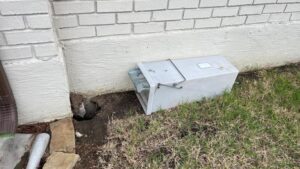
Weep holes in Craig Ranch brick. AC line gaps in Prosper new construction. Attic vents in Stonebridge Ranch. We find every entry point and seal it permanently.
📞 Call (972) 866-4720

Pest Exclusion Exterminator in McKinney, Allen, Frisco & Collin County
Rodent proofing in McKinney TX starts with one question: where did they get in? Trapping removes rodents from your home. It does not close the door. Every mouse or rat found inside entered through a specific gap. A weep hole with no wire mesh. An open space around the AC lines. A worn garage door seal. A separation along the roofline. That gap stays open after the trap is collected, and the next rodent arrives through the same opening. Pest exclusion identifies and seals every confirmed entry point, because that is the only step that ends the cycle.
Roof rats are the primary exclusion target across McKinney, Allen, and Frisco. Stonebridge Ranch and Craig Ranch have the mature tree canopy and wood privacy fencing that form the main roof rat travel network throughout suburban Collin County. Weep holes in brick exterior walls are the most overlooked entry point in this housing stock. Every brick home built to Texas code has them. Unscreened, they are approximately the size of a dime. In Prosper, Celina, and Anna, new construction displaces field mouse populations from adjacent acreage. Those mice enter through foundation gaps that were never sealed during the build.
Pest Me Off holds a Get Bent Academy certification in Advanced Wildlife Exclusion and Custom Metal Fabrication. This covers structural sealing work that standard pest companies cannot perform. Rodent removal and exclusion are handled by the same team, so there is no coordination gap between removing the active population and closing the entry points. For homeowners with an active infestation, see the rodent control page for species identification and treatment details.
- The Tree Branch Is the Bridge.
- Roof rats do not fly. They climb the oak tree in your backyard, walk along the branch, step onto the roofline, and find the gap they were looking for. Any branch within four feet of the roofline is a rodent highway. Trim it back before the fall migration begins, and check again in spring when growth resumes.
- The Pet Food Bowl Is an Open Invitation.
- A bag of dog food left in the garage overnight is one of the most reliable ways to sustain a rodent population near your home. Move pet food into sealed hard-sided containers. This does not resolve an active infestation on its own, but it removes the food source that keeps drawing new rodents to the structure between service visits.
- Mouse in the House? Start at the Garage Door Corners.
- If you see a mouse or find droppings in the garage, get down and look at the lower corners of the garage door where it meets the floor. If you see daylight, mice are using it. The bottom seal gets replaced, but the corners are a separate issue that is almost always missed. Tell your technician exactly where you saw the signs and that gap gets sealed on the same visit.
Common Rodent Entry Points in McKinney TX Homes
Every home has the same structural vulnerabilities. Pest Me Off inspects every zone from the foundation to the roofline, documents every entry point with photos, and seals each one with rodent-resistant materials rated for that specific location.
Foundation & Slab
The most consistent entry zone on North Texas brick homes. Weep holes, expansion joints, and foundation cracks all open at ground level where rodent pressure is highest.
Doors & Garage
Attached garages are the most common rodent staging area in Collin County homes. Ground-level gaps let mice in before they ever reach the living space.
Pipes & Wiring
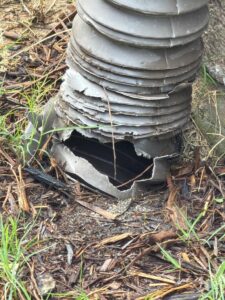
AC line penetrations are among the most common unsealed entry points on DFW area homes. HVAC subcontractors run the lines and rarely seal the opening behind them.
Roofline & Attic
The primary entry zone for roof rats. Soffit gaps, fascia separations, and unscreened vents along the roofline are how roof rats reach attic insulation and wiring.
Windows & Walls
Failed sealant around window frames and brick wall corners creates entry paths for insects. Less common for rodents but consistently present and frequently overlooked.
Perimeter & Landscaping
The perimeter sets the stage for everything else. Trees, shrubs, and fence lines determine whether rodents reach the home at all.
Trapping Without Sealing Is a Revolving Door
Snap traps and bait boxes are effective tools for reducing an existing rodent population. Pest Me Off uses them on every removal service. The problem is what they cannot do. A McKinney home with four active bait boxes but an open weep hole on the north elevation will always have rodents. The bait box becomes a toll booth, not a solution. Rodents removed are replaced within days by the next animals following the same travel routes through the same open gap.
North Texas clay soil expands and contracts with every wet and dry cycle. This causes slab movement that opens new gaps at foundation edges and around utility penetrations every year. A home that was properly sealed three years ago may have new entry points today from soil movement alone, which is why the Defend step in our RID system includes a re-inspection for new gaps at every recurring visit.
New construction in Prosper, Celina, Anna, and Melissa displaces the field mouse populations that lived on adjacent acreage before the land was cleared. Those mice do not disappear when the bulldozer arrives. They move to the nearest finished homes. Construction buyers assume their fresh-built home is sealed. The HVAC subcontractor who ran the AC lines on week three did not seal that penetration behind the brick. The plumber who roughed in the water line at the foundation did not pack steel wool around the sleeve. Sealing the structure correctly is the step the builder's subcontractors did not take.
A trap removes the rodents that encounter it during the service window. It does not address the entry point they used, the travel routes others are using, or the seasonal pressure arriving in October. A one-time removal without exclusion sealing requires another service call within a season.
We remove the existing population, seal every confirmed entry point with rodent-resistant materials, and monitor with the Defend step to catch any new gaps before they become infestations. Once the structure is properly sealed, rodents that are removed cannot be replaced. No-contract options available.
The Pest Me Off Exclusion Inspection in McKinney TX
Most pest companies tell you they found entry points. Pest Me Off shows you. We are the only pest control company in North Texas that delivers a full picture report before the invoice. Every entry point we find gets photographed and documented with a plain-English explanation of why it is a problem and exactly how we seal it. Previous work photos show what a properly sealed location looks like after the repair. You see every gap, every fix, and every before-and-after comparison before you decide anything.
The inspection starts at the foundation and works up to the roofline. Every elevation gets checked. Every utility penetration gets documented: AC lines, gas lines, cable, water lines. The attic inspection maps rub marks, droppings concentrations, and nesting locations to identify active travel routes before a single trap is placed. Placement along a confirmed runway is what makes the service work. Trap placement without an inspection first is guesswork.
The Get Bent Academy certification in Advanced Wildlife Exclusion and Custom Metal Fabrication means the team handles complex structural sealing that requires custom metal work at difficult roofline junctions and chimney transitions. This is work that standard pest companies refer out or skip entirely.
Before any work begins, you receive a photo report documenting every confirmed and probable entry point on your property. Each photo includes the location, why it is a problem, and how we fix it. After-repair photos from previous jobs show what the sealed location looks like when complete. No other pest company in North Texas delivers this. You know exactly what you are paying for before the invoice is written.
How Our Rodent Proofing Service Works: The RID Method
Every exclusion service follows all three steps. Ongoing rodent plan subscribers get the full RID system on every visit, including the Defend step that monitors your sealed entry points between seasons.
Remove
We Remove existing rodents from your home by placing snap traps along confirmed activity pathways in the attic, garage, and any other area showing active signs. We do not seal any entry point until we have confirmed no rodents remain inside. Sealing with an animal still present creates an entirely different problem.
- Full interior and exterior inspection to map activity, nesting zones, and entry points
- Snap traps placed along confirmed attic runways and in all identified activity zones
- Follow-up visit to collect traps and confirm population is fully removed
- Photo documentation of all active evidence provided to homeowner
Install
We Install permanent rodent-proof barriers at every confirmed entry point. Heavy-gauge wire screens on vents. Pest-resistant sealant and pipe covers at utility penetrations. New door sweeps and seals at ground-level access points. We can also apply our Scorched Earth Barrier at the foundation perimeter as part of an ongoing rodent plan. The physical sealing is the permanent answer. Product without sealing is a revolving door.
- Every confirmed entry point sealed with rodent-resistant materials rated for that location
- Heavy-gauge wire screens at all attic vents, gable vents, and soffit openings
- Pest-resistant sealant at all utility penetrations, pipe entries, and cable lines
- Written entry point map provided to homeowner documenting every sealed location
Defend
The Defend step is included with every recurring service visit. We return to check that seals are holding, inspect for any new entry points that have developed from settling or weather damage, and renew the exterior barrier. In North Texas, clay soil movement can open new foundation gaps over time. The Defend step catches those before they become a new infestation.
- Periodic inspection visits verify all sealed entry points are intact
- New gaps from foundation settling or weather damage are identified and sealed
- Pre-fall visit timed to intercept seasonal rodent pressure before it reaches the roofline
- Activity report provided after every visit
Every Review, 5.0 Stars on Google
All Pest Control Services in McKinney & Collin County
 Ant Control
 Cockroach Control
 Spider Control
 Rodent Control
 Mosquito Control
 Scorpion Control
 Wasp & Stinging Insect Control
 Flea & Tick Control
 Cricket & Centipede Control
 Pantry Moth & Beetle Control
 Bed Bug Exterminator
 Commercial Pest Control
Book a Same-Day Picture Inspection
We Document Everything Before We Bill
Trapping removes the rodents you have today. Sealing the home stops the ones arriving next month. Every week without exclusion is another week the entry point stays open.
Rodent Proofing Near Me
Same-day rodent proofing and pest exclusion service across all 14 cities in our service area. Inspection, sealing, and follow-up handled by the same team throughout Collin County and surrounding areas.
Twin Creeks and Waterford Parks have mature oak greenbelt canopy behind rear property lines, creating the primary roof rat travel corridor into attic spaces in this area. AC line penetrations on homes built along Exchange Pkwy commercial edge are among the most frequently unsealed entry points we document during inspections.
Anna TXLiberty Hills and Sherley Farms sit adjacent to undeveloped Blackland Prairie land with high field mouse populations throughout the warm season. Every fall, those populations move toward finished homes through foundation gaps in recently poured construction that were never sealed during the build.
Carrollton TXHomes in the Elm Fork Nature Preserve area have some of the most consistent roofline exclusion needs in the service area, with older construction dating to the 1980s that has unsealed soffit junctions and gable vent gaps accumulated over decades. The Indian Creek drainage corridor creates a direct rodent travel route between the preserve and adjacent residential streets.
Celina TXLight Farms and Mustang Lakes back directly to active agricultural land where field mouse populations sustain through the growing season. New construction in these communities has foundation sill gaps and pipe penetrations that were not sealed during the build, creating immediate pressure once adjacent acreage is cleared for the next phase.
Fairview TXHeritage Ranch estate homes have large rooflines with multiple dormers and complex roofline-to-wall transitions that require custom metal fabrication for a complete seal. The wooded creek corridors behind Heritage Ranch perimeter properties are the primary roof rat travel network in this community.
Farmersville TXRural properties near Copeville and Lake Lavon face the highest field rodent density in the Pest Me Off service area. Properties adjacent to active agricultural operations see year-round house mouse pressure from grain storage and crop field activity, with the fall influx the most concentrated period.
Frisco TXNew construction throughout Fields Frisco, Lexington, and Phillips Creek Ranch has complex HVAC line penetrations that were left unsealed by subcontractors during the build. Stonebriar Centre and Legacy Drive commercial corridor generates Norway rat pressure that reaches adjacent residential streets through storm drain corridors connecting the two zones.
Little Elm TXValencia on the Lake and Sunset Pointe lakefront homes have dense mature landscaping adjacent to the shoreline that gives rodents both cover and a direct travel route to rooflines. Paloma Creek and Union Park have new construction foundation sill gaps consistent with the same pressure patterns seen throughout the Denton County growth corridor.
McKinney TXStonebridge Ranch and Craig Ranch have the most mature wood fence infrastructure and tree canopy density in the service area, creating the primary roof rat travel network in suburban Collin County. Weep holes on these brick homes are a consistent and well-documented entry point that remains unscreened on the majority of properties we inspect throughout McKinney.
Melissa TXLiberty and North Creek back to active ranch corridors on the eastern edge of development. House mouse pressure in fall correlates directly with the proximity to undeveloped land. New construction garage doors throughout Melissa frequently have threshold gaps that were not adjusted at final inspection.
Plano TXEast Plano neighborhoods built in the 1970s and 1980s have the oldest rooflines and accumulated settling gaps in the service area. Soffit junction separations and gable vent screens that have deteriorated over decades are the most common entry points documented during exclusion inspections in established Plano neighborhoods.
Princeton TXBridgewater and Whitewing Trails are built at the edge of Blackland Prairie acreage where Norway rat and field mouse populations sustain near Lake Lavon and agricultural operations. Foundation sill gaps on recently poured construction and weep holes with missing wire mesh are the primary documented entry points in this area.
Prosper TXWindsong Ranch and Star Trail sit directly adjacent to undeveloped land that was cleared for development within the last five years. That cleared land displaced large field mouse populations into the finished homes surrounding it. The AC line penetrations on these newer homes are among the most consistently unsealed entry points in the entire service area.
The Colony TXThe Tribute and Austin Ranch lakefront properties have mature shoreline landscaping with direct access to the roofline, which is the primary roof rat travel pattern in lakefront communities. Stewart Peninsula properties back to Lewisville Lake, and the shoreline tree canopy creates consistent roof rat access pathways documented across multiple properties in this zone.