Signs of Subterranean Termite Infestation in Collin County
Subterranean termites cause more structural damage than any other single pest in Collin County, and the damage starts invisibly, inside wall framing and subflooring, before any sign appears on the surface. Collin County has both Eastern subterranean termites and Formosan termites, with Formosan colonies capable of causing damage at a rate estimated at 3 to 5 times faster. Knowing what to look for is the difference between catching a problem early and discovering it after the structural damage is already done.

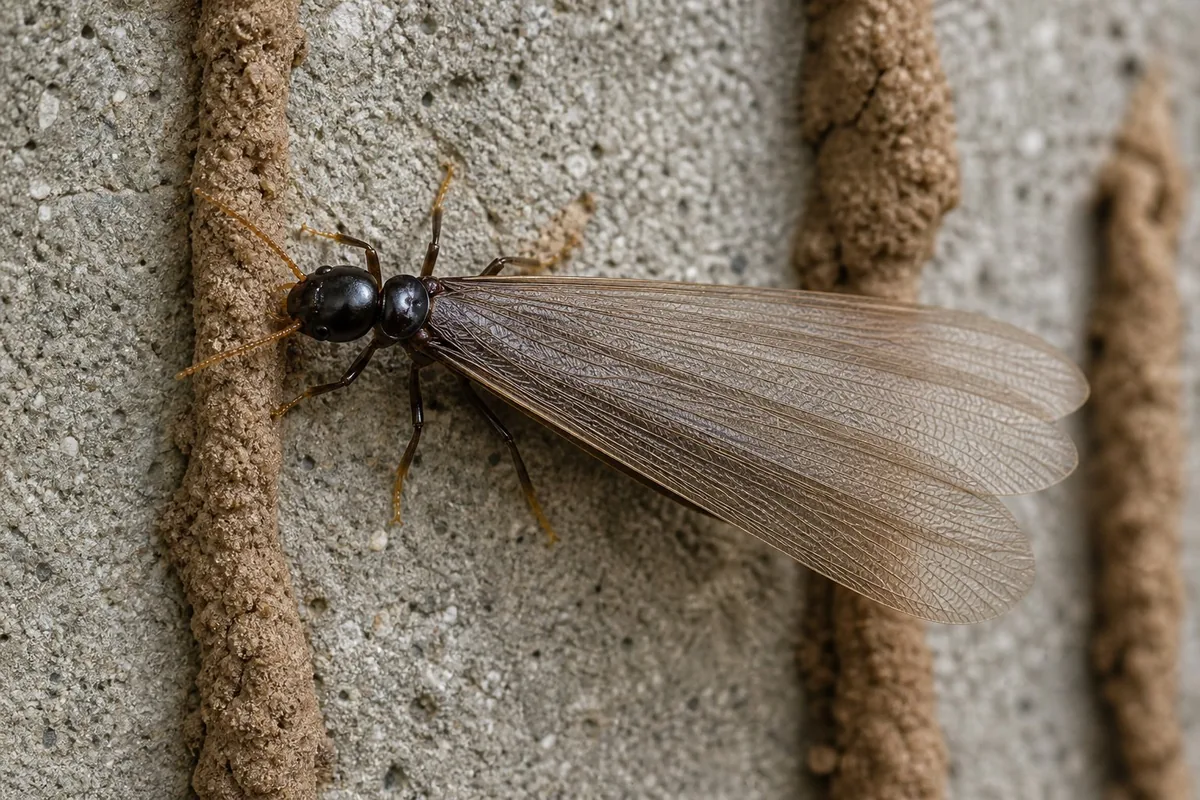
- Mud tubes on the foundation are the most reliable surface sign of an active colony.
- Winged termites typically appear in Collin County from February through May.
- A Formosan colony can hold several million workers, compared to 60,000 to 1 million in an Eastern subterranean colony.
- Formosan termites are estimated to cause damage 3 to 5 times faster than Eastern subterranean termites.
- Termite damage is typically excluded from homeowner’s insurance because it is treated as a maintenance issue, not a sudden loss.





The Signs of Subterranean Termite Activity
Subterranean termites work inside wood and soil and rarely expose themselves in the open. These are the signs that appear at the surface:
| Sign | What it means |
|---|---|
| Mud tubes on the foundation | Pencil-thin tubes running up the foundation mean termites are actively traveling between soil and wood. Break one open. Live termites inside confirm an active colony. |
| Winged termites or shed wings | Established colonies release winged termites each spring, typically February through May in Collin County. Often mistaken for flying ants, though the two need a different response. |
| Wood that sounds hollow | Termites hollow wood from the inside while leaving the surface intact, so beams, baseboards, or subfloor can look fine but sound or feel hollow underneath. |
| Blistered or buckled paint | Moisture from termite activity behind the drywall bubbles the paint, and homeowners often blame humidity before finding the real cause. |
| Droppings near baseboards | Small pellets that look like sawdust or coffee grounds point to drywood termites, not subterranean. Subterranean termites rarely leave visible droppings at the surface. |
The University of Kentucky, Termite Control: Answers for Homeowners describes the same mud tubes. They are usually about the width of a pencil, and termites build them for shelter as they travel between the colony underground and the house. Breaking a tube open and finding live workers proves it is in use. An empty tube does not prove the colony is gone.
Winged Termites and Flying Ants, Told Apart
Winged termites and flying ants appear at similar times of year and are frequently confused. The distinction determines the urgency and the response:
| Insect | Wings | Body | Antennae |
|---|---|---|---|
| Winged termite | Two pairs, equal length, extend well past the body | Straight, no waist | Straight and beaded |
| Flying ant | Front pair longer than the rear pair | Distinct pinched waist | Elbowed |
If you find wings piled on a windowsill in spring and cannot determine which it is, save a sample in a plastic bag. A professional can identify the species in seconds.
Formosan termites in Collin County. Formosan subterranean termites are established in the Dallas-Fort Worth metroplex and present in Collin County. A Formosan colony can contain several million workers, compared to the 60,000 to 1 million workers in an Eastern subterranean colony. Formosan termites cause structural damage at a rate estimated at 3 to 5 times faster than Eastern subterranean termites and can infest live trees in addition to structural wood. If you confirm the winged insects are Formosan, treat it as urgent and call the same week.
 Source:
 What Subterranean Termites Risk to Your Home
Subterranean termites consume cellulose: wood, paper, and plant fiber. Inside a structure they target:
- Wall framing studs and plates, which provide structural support
- Subfloor sheathing and floor joists, which support the floors you walk on
- Roof rafters and sheathing in areas with attic moisture
- Door and window frames
- Any wood in contact with or near the soil, including fence posts, deck posts, and wood mulch against the foundation
The only reliable protection is professional termite treatment: liquid termiticide applied to the soil around the foundation, bait station systems, or both. Annual inspections by a licensed termite professional catch activity before structural damage accumulates. Termite control in McKinney and Collin County is one of the highest-value pest services a homeowner can maintain.
Does Homeowner’s Insurance Cover Termite Damage?
No. Termite damage is typically excluded from standard homeowner’s insurance policies. Insurers classify it as a maintenance issue, not a sudden loss, and structural repair after significant termite damage commonly runs into tens of thousands of dollars. So the real protection is a yearly inspection and treatment at the first sign of termites.

Ryan has spent more than 16 years in pest control and wildlife management across McKinney and Collin County, from inspecting homes and treating infestations to sealing the entry points pests use to get in. He built Pest Me Off on that field experience, and every technician on the team is trained against it.
More about the Pest Me Off teamSigns of termites on your property? Same-day pest control in McKinney and the surrounding cities when you call before noon.
We identify the species, assess the extent of activity, and recommend the treatment that actually protects your structure.